
A PCT is assigned to transport a stable postoperative adult by stretcher from a same-floor holding room to a procedure suite down a busy corridor with narrow doorways. The patient has a peripheral IV with a pole, is covered for privacy with a blanket, and has side rails up. Which stretcher-transport technique for safe movement through doorways best protects the patient and equipment?
Select an answer to reveal the explanation.
Short Explanation
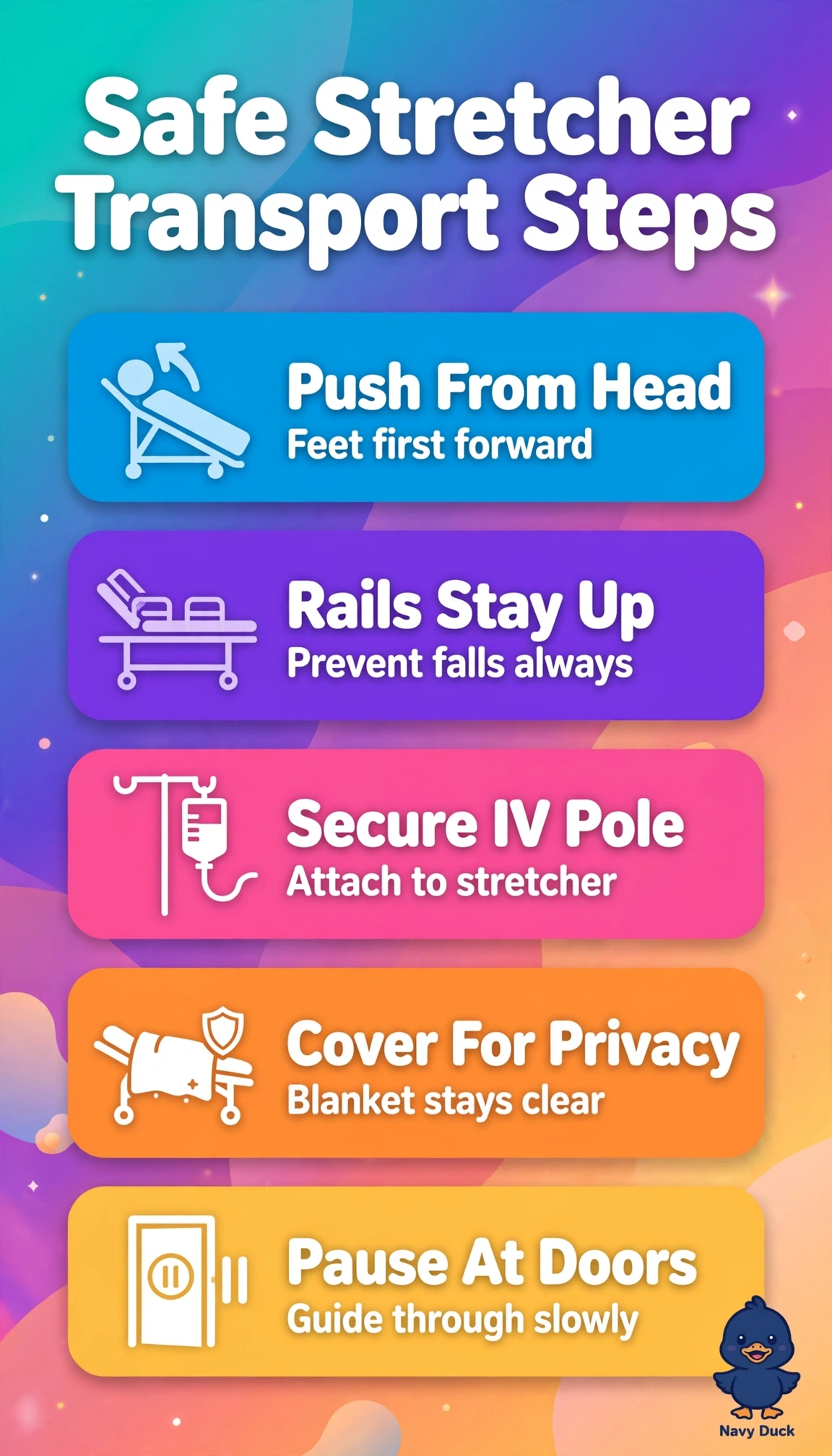
Steering a stretcher is like driving a wide truck through tight gates. You'll do best with feet-first travel, rails contained, lines secured, and a careful pause at each doorway.
Full Explanation
Safe stretcher transport depends on directional control, fall containment, and line security together, so pushing from the head end with the patient feet first gives the operator a clear view ahead and steering control, raised side rails contain the patient during movement and turns, an attached and secured IV pole prevents dislodgement and tripping, and pausing at doorways prevents strikes to the head, limbs, and equipment in narrow or busy spaces with privacy maintained. Head-first pulling fails by concept of direction and control because the operator visibility is reduced and the patient head leads into hazards rather than trailing under observation. Lowered rails fails by concept of fall containment because comfort lowering removes the barrier that prevents falls during motion, bumps, and turns even when the patient is stable and cooperative. Unattached pole without pausing fails by concept of equipment and doorway safety because a loose pole can snag, pull the IV site, and strike door frames when momentum carries the stretcher through. Exam caveat is not to confuse wheelchair rules with stretcher rules during transport questions, and practical check is to verify brakes release smoothly, lines have slack, blanket clears wheels, and you announce turns and doorways before proceeding.