
A hospital technician must collect a fasting glucose sample, deliver a breakfast tray to a patient with dysphagia, and transport a patient with a similar name on the same hall, under policy requiring two identifiers before any care. The wristband, chart, and verbal response are available but the room number is posted on the door. Which two-identifier verification should the technician perform before providing care or testing?
Select an answer to reveal the explanation.
Short Explanation
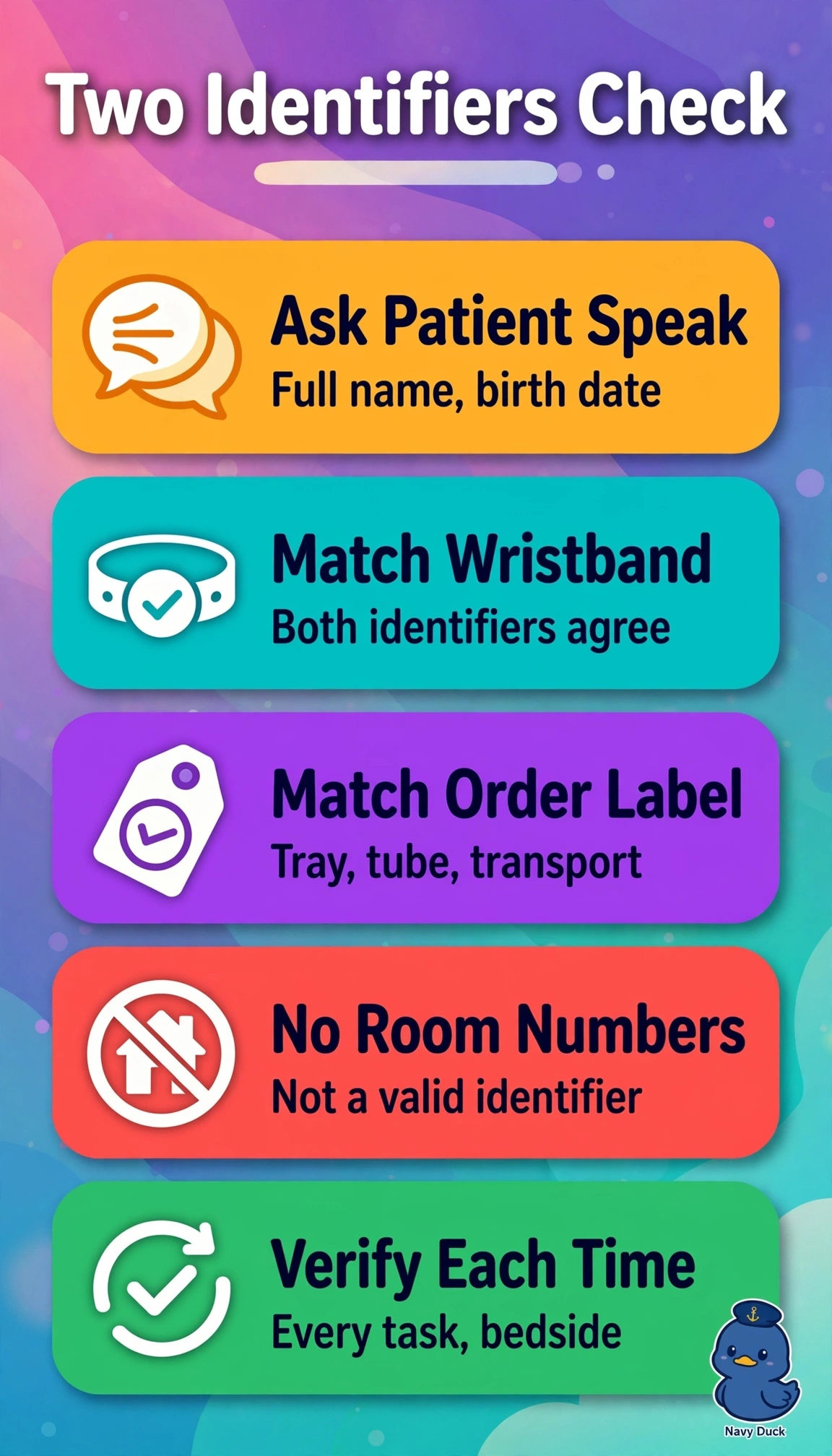
You need two facts only that patient truly owns, not a doorway. Asking for spoken name plus birth date matched to the wristband blocks similar-name mix-ups.
Full Explanation
Safe identification requires at least two person-specific identifiers such as full name and date of birth, actively obtained from the patient when possible and matched to the wristband and order or label before medications, specimen collection, feeding, or transport, because room, bed, diagnosis, and provider are location or encounter data that change or repeat and do not uniquely identify the individual. Asking the patient to state name and birth date and cross-checking both to band and order satisfies active participation and dual-source verification. Room and bed plus door sign fails identifier quality because rooms are reassigned and similar names on one hall create wrong-patient risk despite matching the tray location. Single confirmation of a printed name fails both count and active recall because yes-to-prompt bias and one identifier cannot detect band errors. Diagnosis and physician alone fail person specificity because multiple patients share conditions and providers and chart review without band comparison skips point-of-care verification. Exam caveat is that unresponsive patients still need two band-to-order identifiers with a second staff check per policy, and practical check is to re-verify at bedside immediately before the task and label specimens in the room.