
On a telemetry unit you are sitting with an adult patient who suddenly becomes confused, speaks with slurred words, has new facial droop, and breathes rapidly with shortness of breath and low oxygen saturation. Which change-in-condition response should the PCT take for altered consciousness, breathing distress, and stroke signs?
Select an answer to reveal the explanation.
Short Explanation
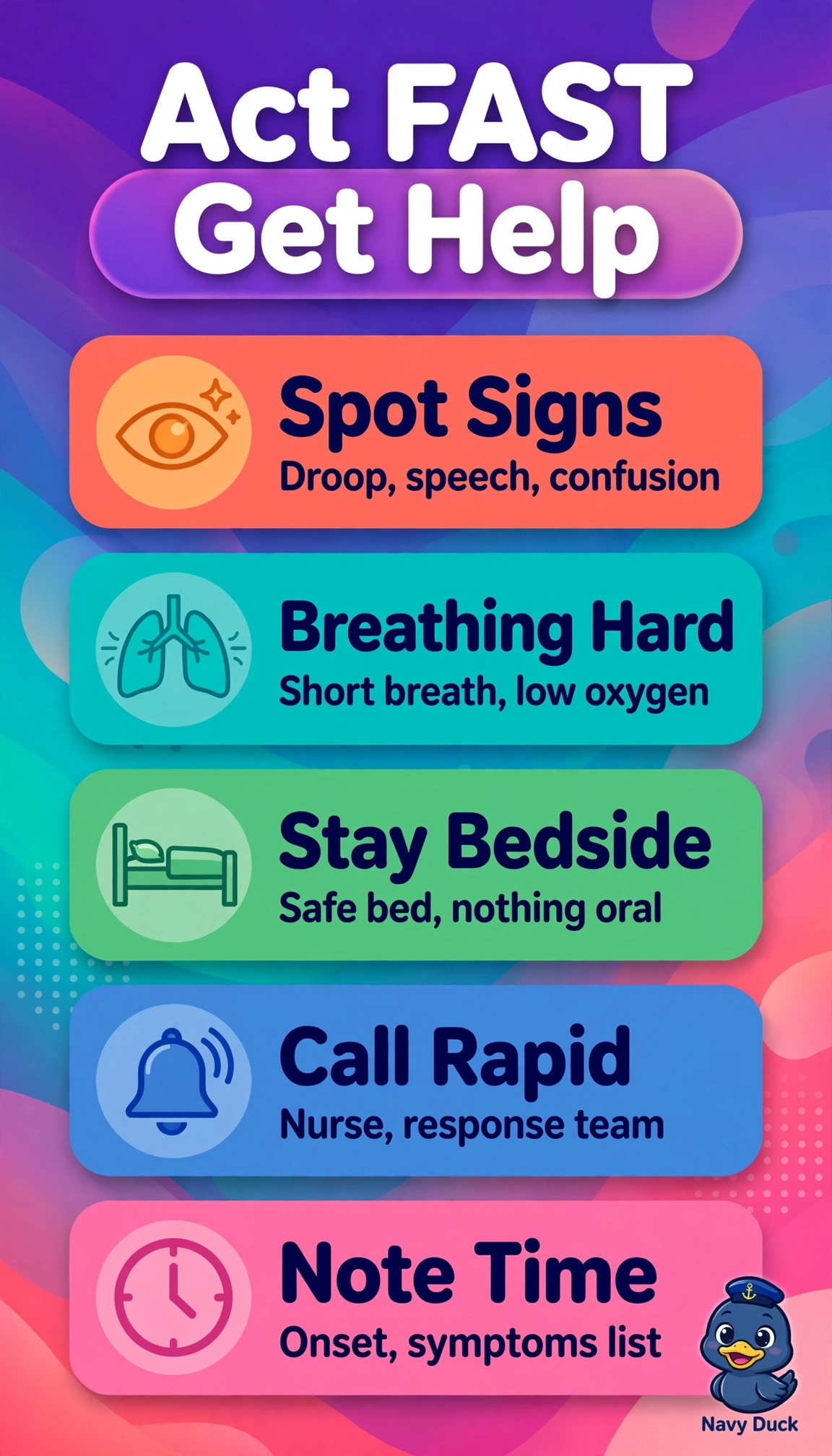
You're facing a scary cluster where minutes mean brain and breath. Staying close and triggering help fast is your rapid-call move that saves function. Note the time, keep them safe, get the team.
Full Explanation
The correct response addresses simultaneous neurologic and respiratory emergency priorities by combining immediate escalation, safety, and precise communication, since calling the nurse and rapid response mobilizes airway management, oxygen titration, and stroke protocol evaluation without delay, keeping the patient in bed prevents falls and injury during confusion and weakness, and reporting onset time with specific symptoms preserves eligibility for time-sensitive stroke treatment and clarifies respiratory urgency. Elevating the head of the bed with prescribed oxygen while monitoring saturation and providing reassurance is standard supportive care for stable dyspnea, yet it fails by escalation because comfort measures cannot replace rapid team activation when slurred speech, facial droop, and confusion suggest acute stroke with hypoxia. Placing the patient in a safe side-lying rest position with vital sign rechecks and documentation shows sound aspiration precautions and vigilance, yet it fails by response priority because observation and charting delay the immediate verbal handoff needed for multisystem deterioration. Performing a focused FAST examination with exact onset timing and frequent rechecks reflects strong assessment skill, yet it fails by intervention timing because prolonged bedside evaluation alone postpones definitive care. An exam caveat is that commonly correct actions become incorrect when stroke signs combine with breathing distress and altered consciousness requiring escalation first. A practical check is to remain with the patient, activate the call system, state last-known-well time and deficits, keep the bed low with rails up, and give nothing by mouth.