
A PCT finishes morning glucose checks and dressing changes for three medical patients in one room. The tray holds used lancets, bloodied gauze, an uncapped needle, and a full sharps box nearby. Which disposal action should the PCT take to meet OSHA biohazardous waste and sharps rules?
Select an answer to reveal the explanation.
Short Explanation
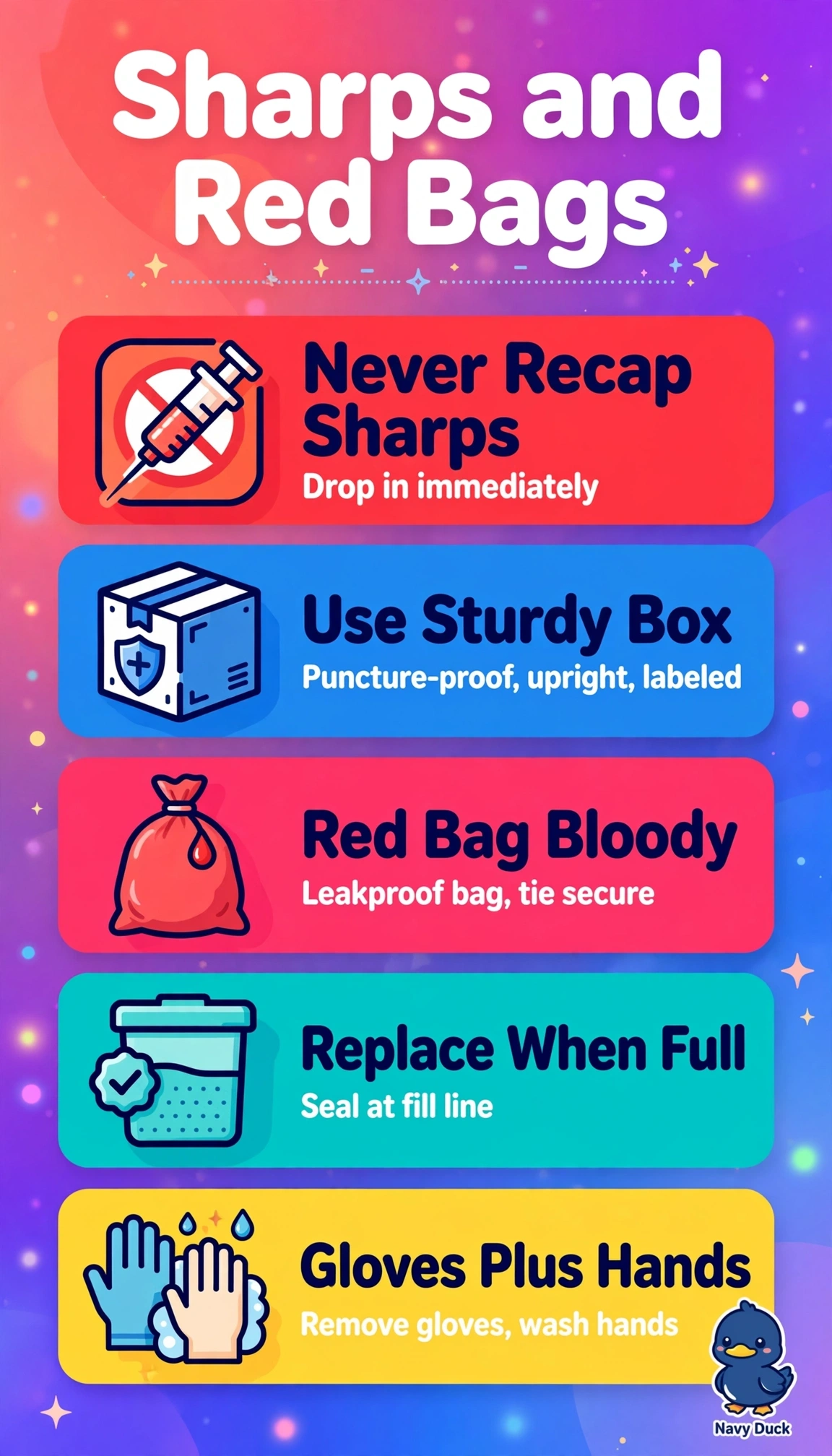
You'll keep everyone safe when you give hard, poky stuff its own hard box and bloody soft stuff its own red bag, like sorting laundry into the right hampers. That sharps safety habit keeps needles from poking through and protects the whole team down the line.
Full Explanation
OSHA bloodborne pathogen rules require immediate segregation at point of use with needles and lancets going directly into a puncture-resistant, leakproof, labeled sharps container that is never overfilled, and soft blood-saturated waste such as bloodied gauze going into labeled red biohazard bags, which the correct action satisfies by separating hard sharps from soft bloody waste after glucose checks and dressing changes. The approach using the full nearby box for needles and lancets while red-bagging gauze fails on container status because a full box must be closed, sealed, and replaced before adding more sharps, since forcing sharps in risks protrusion and needlestick injury. The approach placing bloodied gauze and lancets together in a new sharps container fails on segregation because only sharps belong in sharps containers while soft bloody dressings belong in red bags to preserve capacity and meet regulated waste requirements. The approach replacing the box correctly but discarding bloodied gauze in regular trash fails on biohazard containment because blood-soaked gauze capable of releasing blood is regulated medical waste requiring red-bag pickup, not general trash. Exam caveat: writers insert a nearby full box specifically to test replacement, fill-line, and no-overfill rules, so assess container condition and waste type separately. Practical check before leaving: verify a new sharps container is below the fill line with all sharps inside without recapping, bloody gauze is in tied red bags, and gloves are removed with hand hygiene performed.