
You are observing a 68-year-old rehabilitation patient who suddenly becomes unusually drowsy, speaks with new slurred words, shows one-sided facial droop, and reports shortness of breath when you help them sit up. Baseline mentation was alert and speech was clear an hour ago. Which change-in-condition recognition and reporting action best addresses LOC, breathing, and stroke signs?
Select an answer to reveal the explanation.
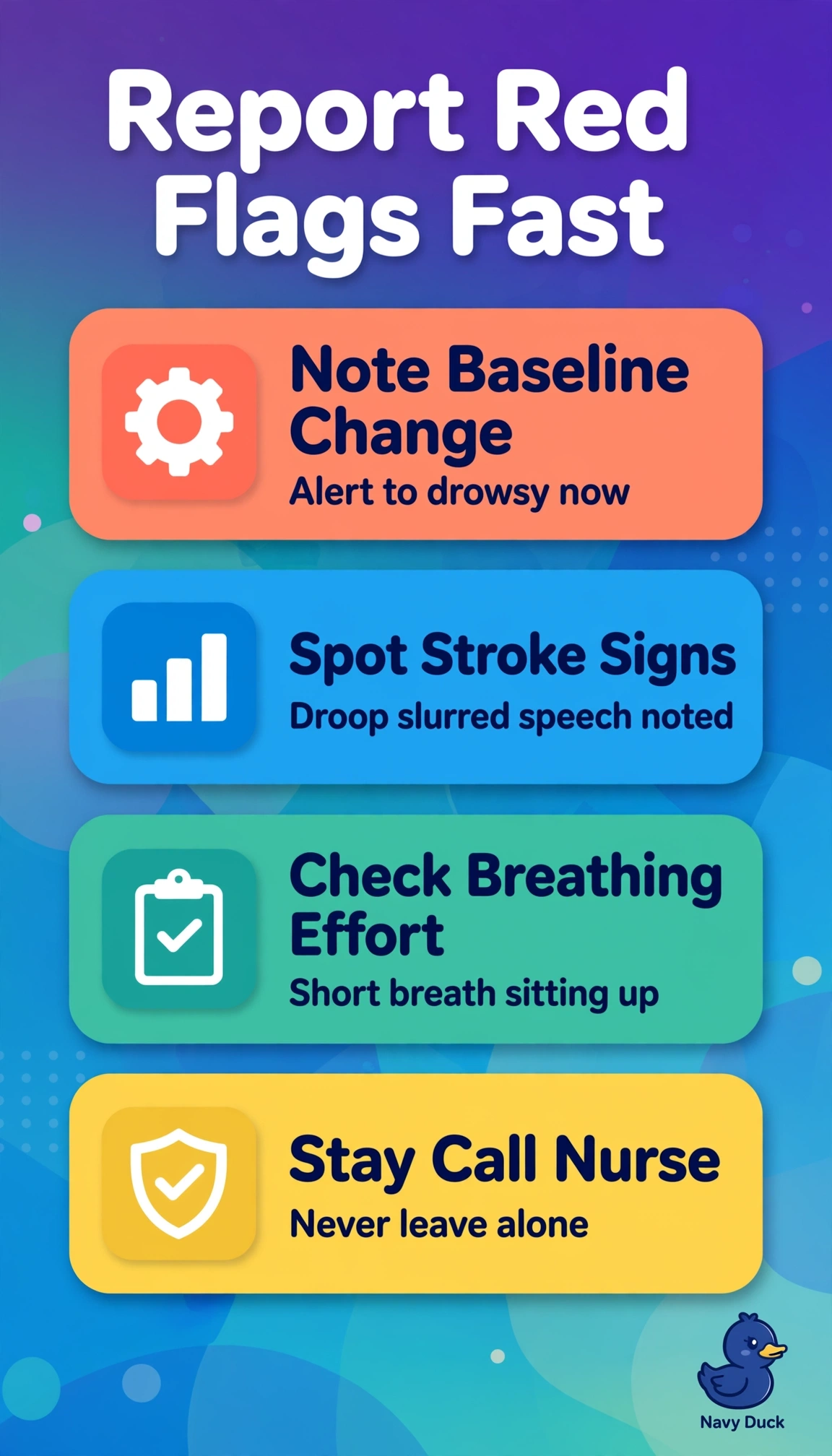
Short Explanation
You caught a red-flag cluster where minutes truly matter for the brain. Staying and escalating urgently buys treatment time, like pulling a fire alarm instead of watching smoke.
Full Explanation
The correct action is right because sudden drowsiness from an alert baseline indicates altered LOC, new facial droop with slurred speech indicates possible acute stroke, and shortness of breath when sitting up indicates respiratory compromise, so staying maintains safety and continuous observation, calling emergently activates rapid stroke and respiratory response, and reporting all four findings together prevents fragmented triage. The routine-call wording fails on acuity because stroke with LOC change and dyspnea is time-critical and cannot wait for standard reporting even though staying and content are correct. The onset-timing wording fails on completeness and ABCs priority because replacing breathing difficulty with timing detail omits hypoxia, aspiration, and deterioration risk that the nurse must know immediately alongside neuro signs. Leaving the bedside to find the nurse fails on safety and surveillance because a drowsy, dyspneic patient with focal deficits may fall, obstruct, vomit, or arrest if left alone, and protocol is to bring help to the bedside with call bell or emergency call. Exam caveat is that emergently versus promptly or routinely signals clinical urgency rather than style, so choose escalation based on new focal deficits plus breathing and LOC changes. Practical check is to remain, keep the patient sitting safely if tolerated, call emergently, state baseline one hour ago, current LOC, droop, speech, breathing, and exact time of onset until handoff.