
During morning rounds on a busy telemetry unit you change linens soiled with blood, replace a full sharps container from a bedside procedure, and notice an overfilled red bag bin with used gloves and gauze in the hallway. OSHA bloodborne pathogen rules and facility waste segregation guide your actions. Which biohazardous waste and sharps disposal sequence best meets OSHA segregation and handling requirements?
Select an answer to reveal the explanation.
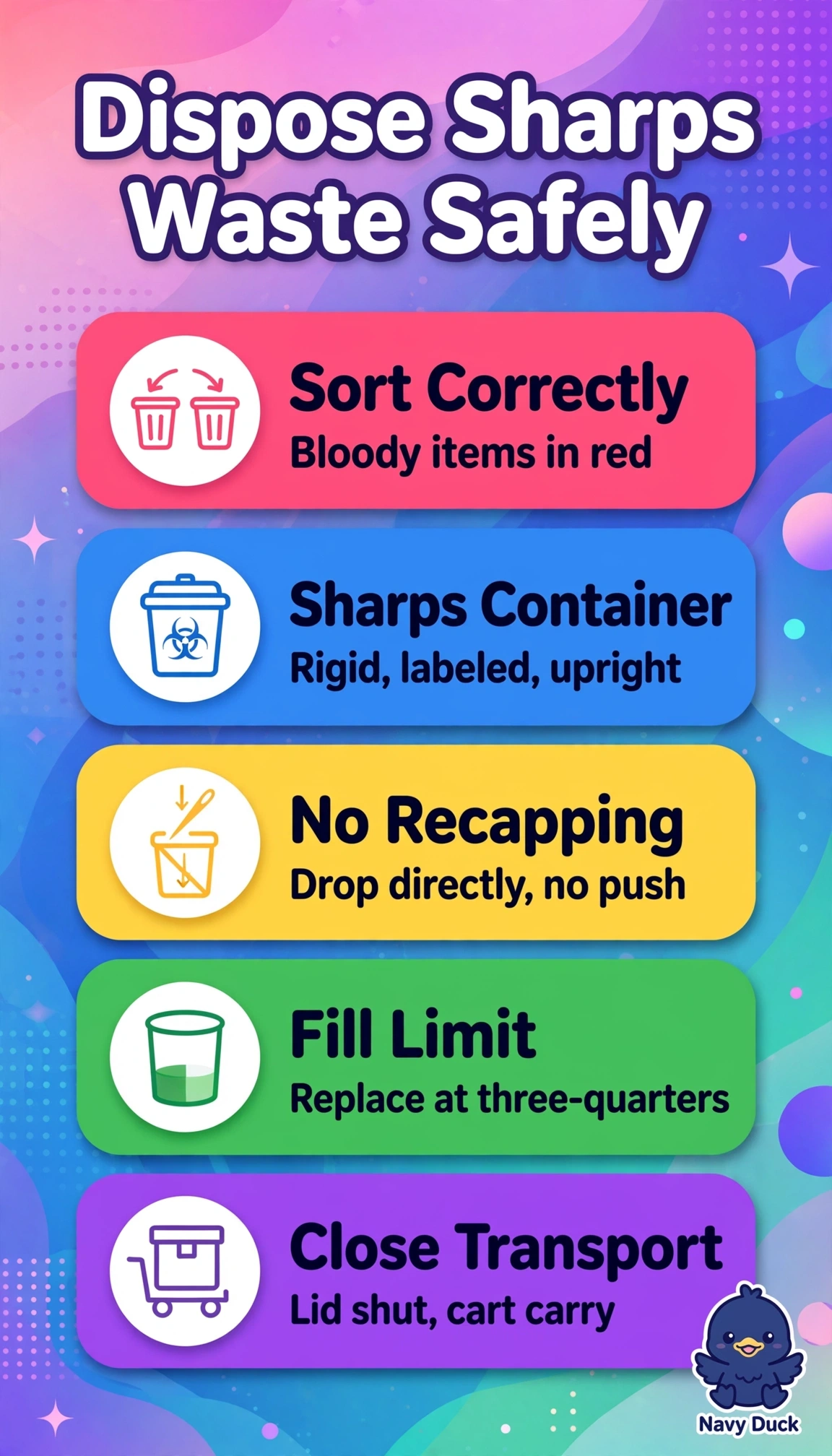
Short Explanation
Sorting at the bedside keeps everyone downstream safer than sorting later. You're nailing segregation by bagging bloody soft waste red and giving sharps their own rigid home without risky shortcuts.
Full Explanation
The correct sequence satisfies OSHA bloodborne pathogen requirements because blood-soiled linens, gloves and gauze are regulated medical waste requiring labeled red biohazard bags, while contaminated needles require immediate disposal into a puncture-resistant, leak-proof, labeled sharps container sealed and replaced when full, with no recapping, bending, overfilling or reaching inside to preserve containment and prevent needlestick exposure. The recapping with one-hand scoop approach fails on work-practice controls because OSHA prohibits routine recapping and permits it only in narrow exceptions with a mechanical device, so added handling increases risk when immediate disposal is feasible. The continuing to use the full container approach fails on containment integrity because a full container loses puncture resistance and closure function and must be sealed and replaced. The routine laundry for bloodied linens approach fails on segregation because blood-soiled textiles require red-bag containment to alert laundry, housekeeping and transport staff to infection risk. For exams, familiar shortcuts remain wrong if they violate absolute OSHA prohibitions such as no recapping or no overfilling. In practice, check fill lines before adding material, seal and replace full containers and overfilled bins immediately, and verify bag color, labeling and leak-proof integrity.