
In a long-term care room a resident with a new serious diagnosis paces, snaps at staff, insists the lab mixed up results, and then quietly asks whether anger at family and fear of dying are normal. The resident is not ready for problem-solving and responds best to unhurried presence. Which supportive response best applies grief-stage understanding and coping support for this resident?
Select an answer to reveal the explanation.
Short Explanation
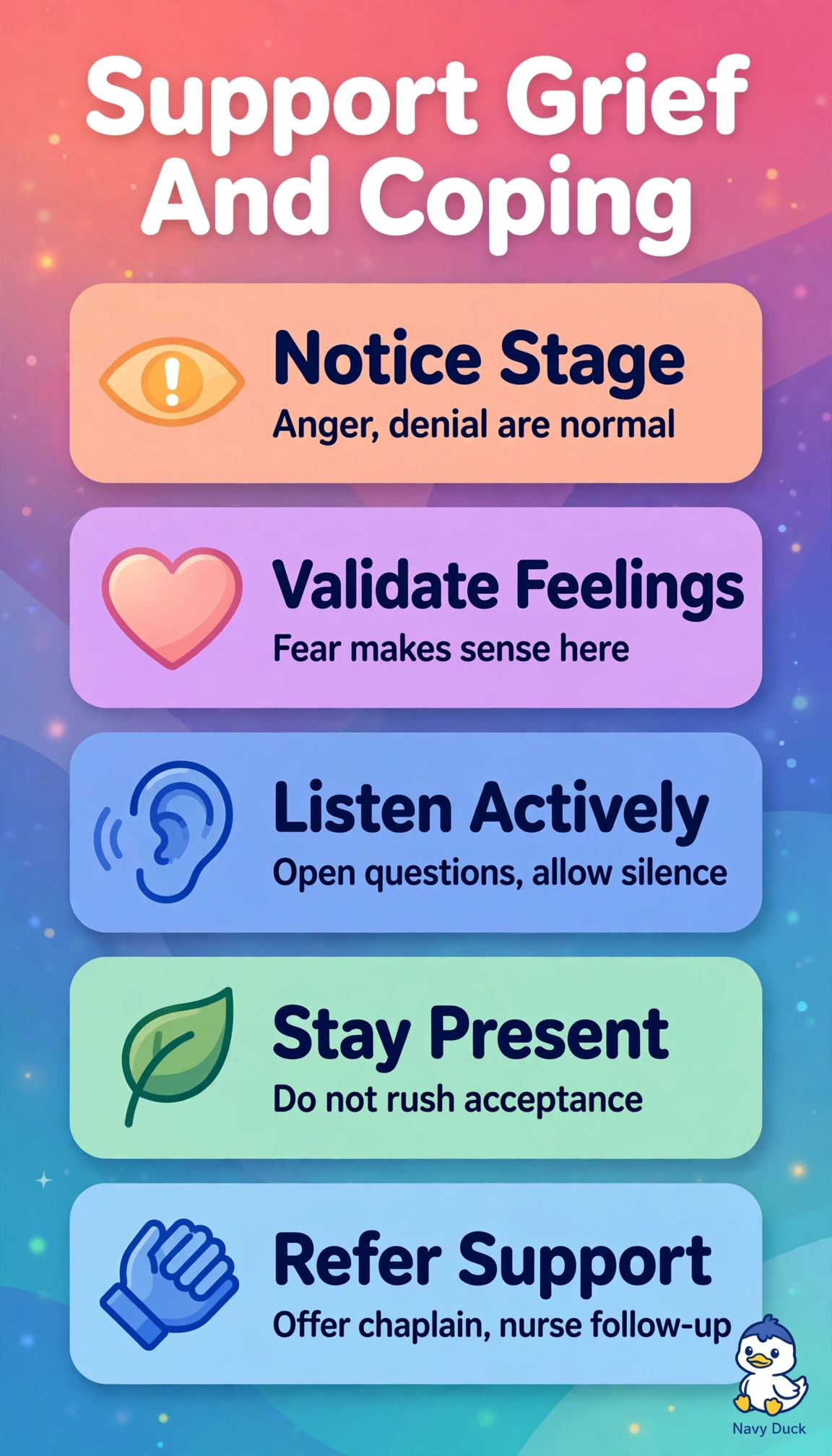
You can meet this moment with calm presence rather than trying to solve or explain it away. Validation lets the resident know anger and denial are normal while you listen without rushing acceptance.
Full Explanation
The response that acknowledges anger and denial as normal grief responses, listens actively, and offers steady presence is best because the resident’s pacing and snapping suggest anger, while insisting the lab mixed up results suggests denial. The resident also directly asks whether anger at family and fear of dying are normal; listening and unhurried presence address that need and fit the stated lack of readiness for problem-solving, without imposing a timeline for acceptance. Normalizing anger and fear and listening patiently are helpful, but guiding the resident toward practical next steps conflicts with the explicit cue that problem-solving is premature. Recognizing anger and denial and remaining present are also helpful, but saying acceptance will naturally follow soon treats grief as fixed and predictable and can pressure the resident to move on. Calm companionship is supportive, but deferring the resident’s family anger and fear of dying leaves a direct question unanswered and withholds needed acknowledgment. An exam caveat is that otherwise reasonable planning or reassurance may be inappropriate when readiness or timing is specified. As a practical check, choose a response that normalizes anger and denial, attends to fear of dying through listening and presence, and avoids premature planning, predictions, or postponement.