
A PCT in a hospital utility room splashes a concentrated floor disinfectant on forearms while refilling a mop bucket. The label says corrosive, the dispenser leaks, and coworkers suggest home remedies. Which use of Safety Data Sheets should guide the PCT response to this chemical exposure?
Select an answer to reveal the explanation.
Short Explanation
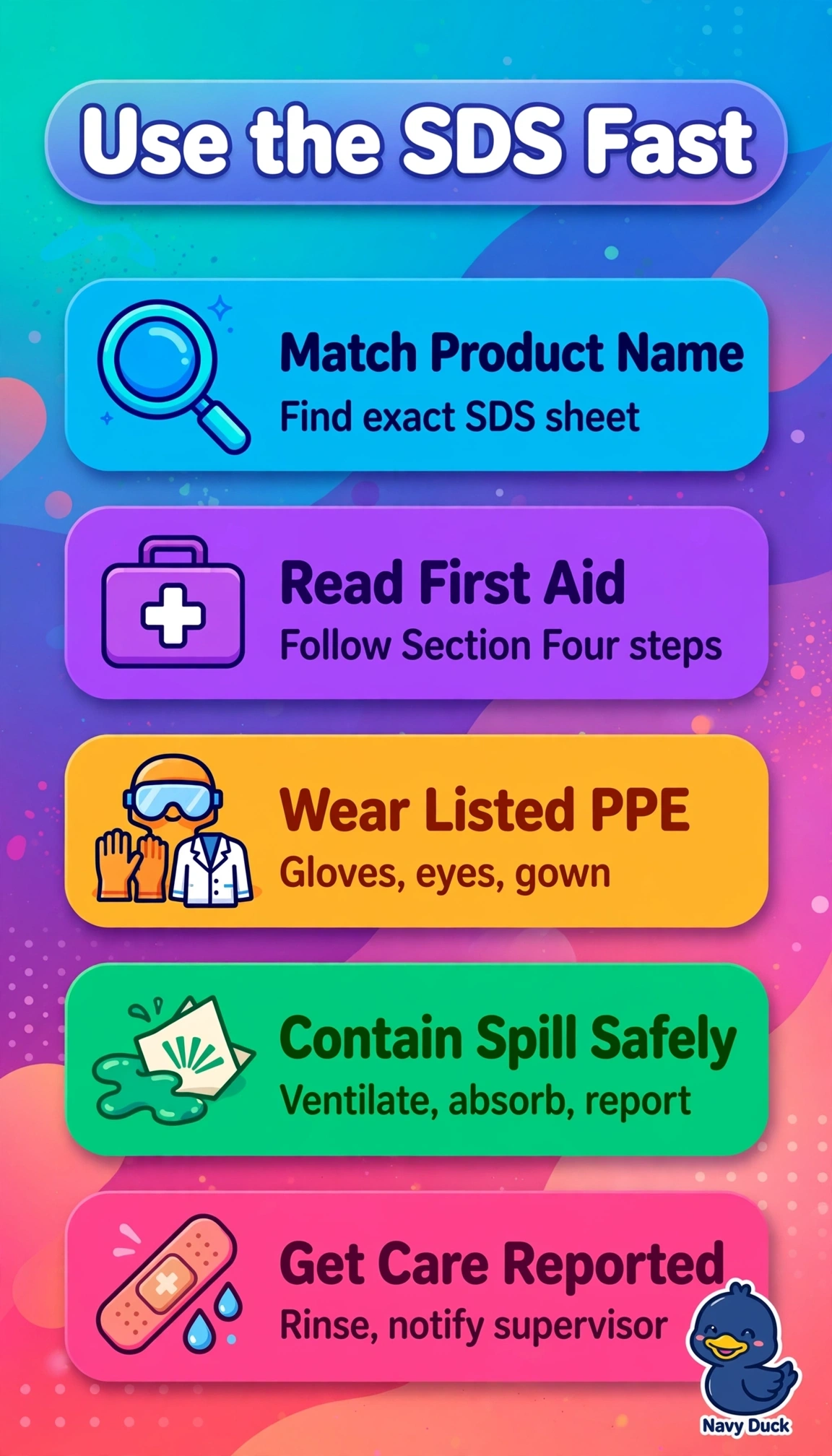
You go straight to the source with chemicals — the SDS spells out your exact play. That product-specific first-aid section beats guesswork every single time.
Full Explanation
The correct response prioritizes the product-specific SDS for the concentrated disinfectant actually splashed because corrosive exposures require immediate, chemical-specific first aid such as prolonged irrigation, appropriate PPE to prevent secondary exposure during assistance, and approved spill containment that coworker remedies and generic procedures cannot provide, while also addressing the leaking dispenser hazard. Reviewing the SDS for the diluted mopping solution fails on concentration specificity since dilution markedly changes corrosivity, first-aid duration, and PPE, so following diluted-solution guidance risks undertreatment of a concentrated burn. Locating the product SDS only to review storage requirements and report the dispenser fails on priority and section selection because maintenance documentation does not substitute for emergency health and spill sections when skin exposure has already occurred. Checking the facility chemical inventory for general disinfectant hazards fails on product specificity because inventories summarize classes of agents and do not provide the exact first-aid, incompatibility, and cleanup steps mandated for the labeled product. An exam caveat is to distinguish emergency SDS use for first aid and spill control from administrative SDS uses such as storage, training, or inventory review, especially when the stem emphasizes concentrated versus diluted and corrosive labeling. A practical check is to match the exact product name and number on the container to the SDS header, initiate recommended flushing immediately, and keep the SDS accessible at the exposure site for responders.