
During afternoon care in a skilled nursing unit you notice one resident has new 2+ pitting ankle swelling with tight shoes, another has pale cool fingers with delayed capillary refill, and urine that looks red-tinged and cloudy. Which observation and reporting action should the PCT take for edema, circulation, and specimen abnormalities?
Select an answer to reveal the explanation.
Short Explanation
You’re bringing together swollen ankles, pale cool fingers, and red, cloudy urine to help the nurse act safely. Documenting what you observe precisely and reporting it promptly gives you a clear way to support early follow-up.
Full Explanation
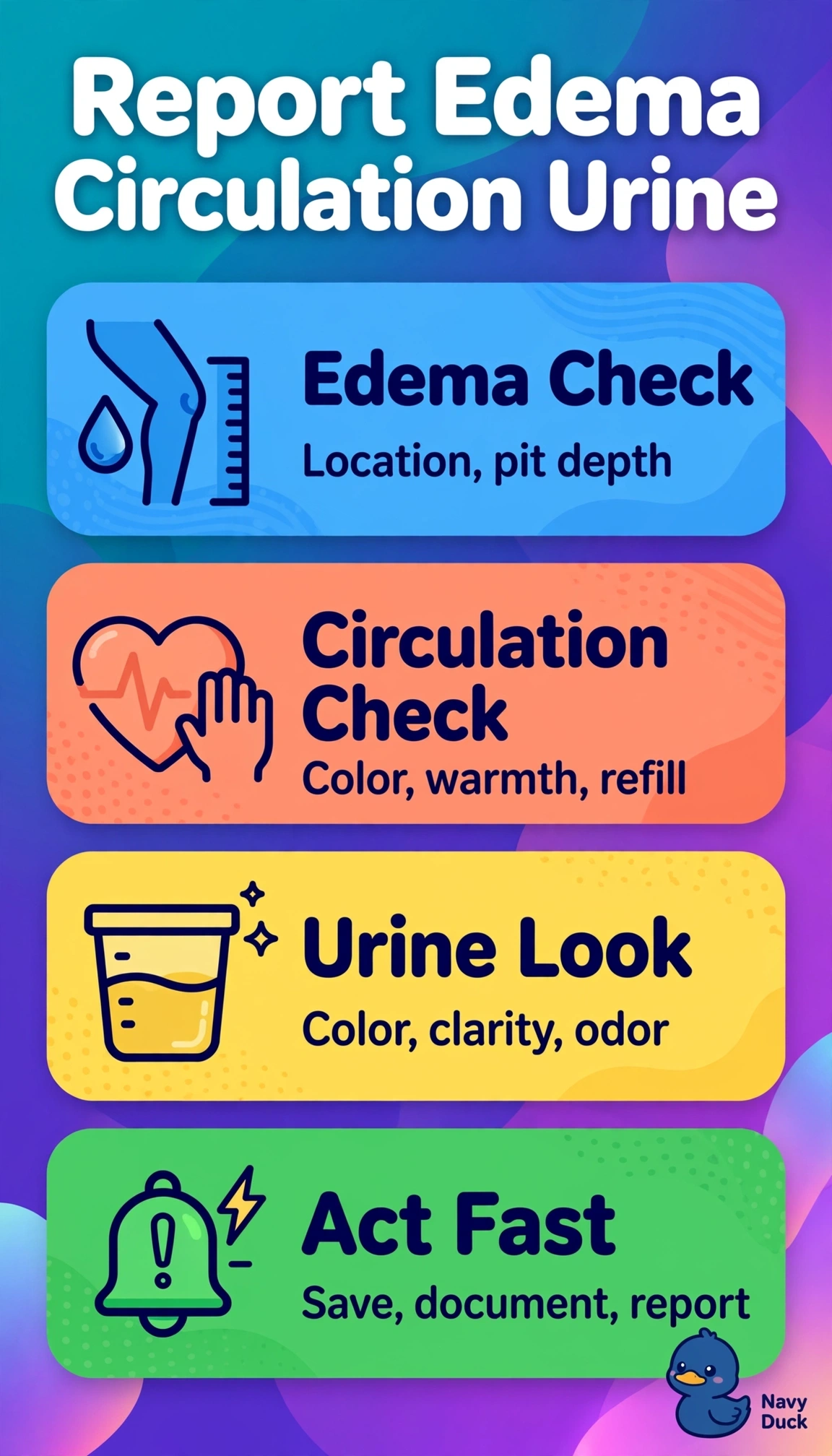
The correct action is to document the edema’s location and pit depth, check the pale, cool fingers and delayed refill, and report the circulation findings and abnormal urine promptly. This gives the nurse specific, comparable observations across all three concerns. Measuring ankle edema and pit depth and checking and reporting finger refill are appropriate, but saving red, cloudy urine for laboratory analysis without promptly reporting it fails to escalate an abnormal specimen. Describing ankle swelling as moderate because the shoes are tight, while reporting circulation and urine concerns, does not document edema location and standardized pit depth precisely enough to track change. Measuring edema and reporting red urine are appropriate, but charting pale, cool fingers and delayed refill for routine review delays communication of a possible perfusion concern. As a PCT, observe and report rather than diagnose a cause or initiate treatment; accurate description and timely nurse notification are the tested priorities. A practical check is to assess pit depth consistently, keep the affected hand visible while checking refill, leave the abnormal urine labeled and untouched, perform hand hygiene, and tell the nurse directly what you observed, where, and when.