
You are documenting morning vital signs and intake in the EHR for a medical unit where the nurse, dietitian, and therapist all rely on your entries to plan care. An abbreviation you want to use is not on the approved list, and the patient described dizziness when standing. Which EHR and medical terminology communication best meets professional and legal responsibilities?
Select an answer to reveal the explanation.
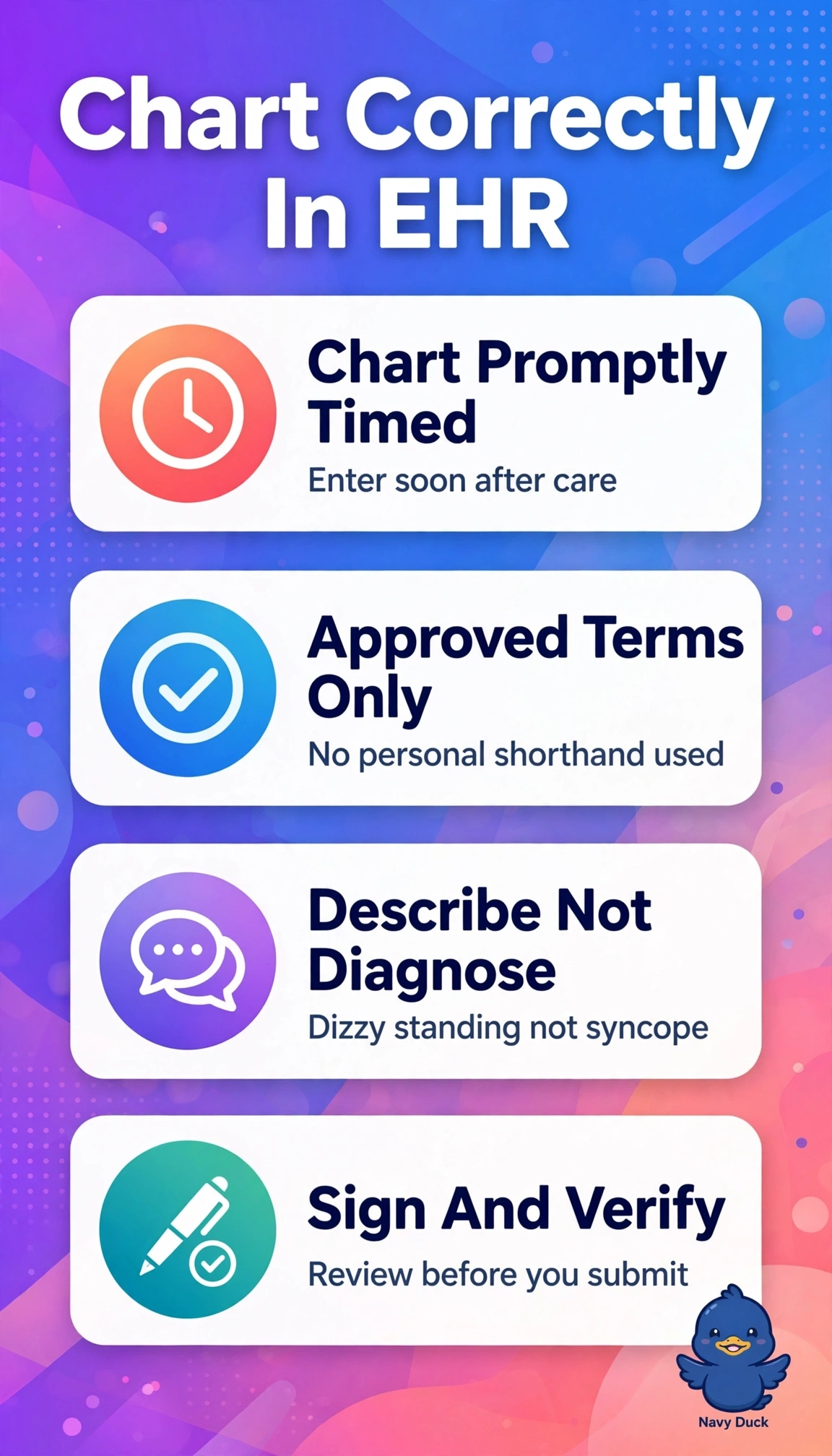
Short Explanation
You’re documenting information that other care team members will rely on, so clear, accurate wording matters. Using approved terminology helps everyone understand the record the same way, like standard road signs help all drivers navigate.
Full Explanation
Charting orthostatic symptoms with approved terms and abbreviations, then signing and time-stamping the entry, supports clear communication and accountability. The nurse, dietitian, and therapist can interpret standardized language consistently, while the signature and time establish who made the entry and when. Calling the patient's dizziness on standing “orthostatic syncope” is inaccurate: syncope means a transient loss of consciousness, not dizziness, and can misstate the patient's condition even when the entry is signed, timed, and uses approved abbreviations. Using an unapproved abbreviation fails standardization because abbreviations outside the facility's approved list can be misunderstood across disciplines or shifts; familiarity does not make an abbreviation acceptable. Signing an entry without a time stamp leaves out when the observation was recorded, weakening the sequence of care and legal accountability even if the wording is approved. An exam caveat: a common shorthand or near-synonym is not correct merely because others may recognize it; use only approved abbreviations and precise terms. In practice, check the approved list, spell out any uncertain abbreviation, describe the reported dizziness accurately, and sign and time the entry promptly so the team can rely on the record.