
During morning rounds in long-term care you notice a resident with new 2+ pitting edema at the ankles, socks leaving deep marks, and a urine specimen that looks unusually cloudy with a strong odor compared to yesterday’s clear yellow sample. The nurse needs concise objective data. Which recognition and reporting approach best addresses edema, circulation, and specimen changes?
Select an answer to reveal the explanation.
Short Explanation
You’re the nurse’s eyes and ears at the bedside today. Reporting measurable observations without diagnosing connects the dots quickly, like sending a clear photo instead of a guess.
Full Explanation
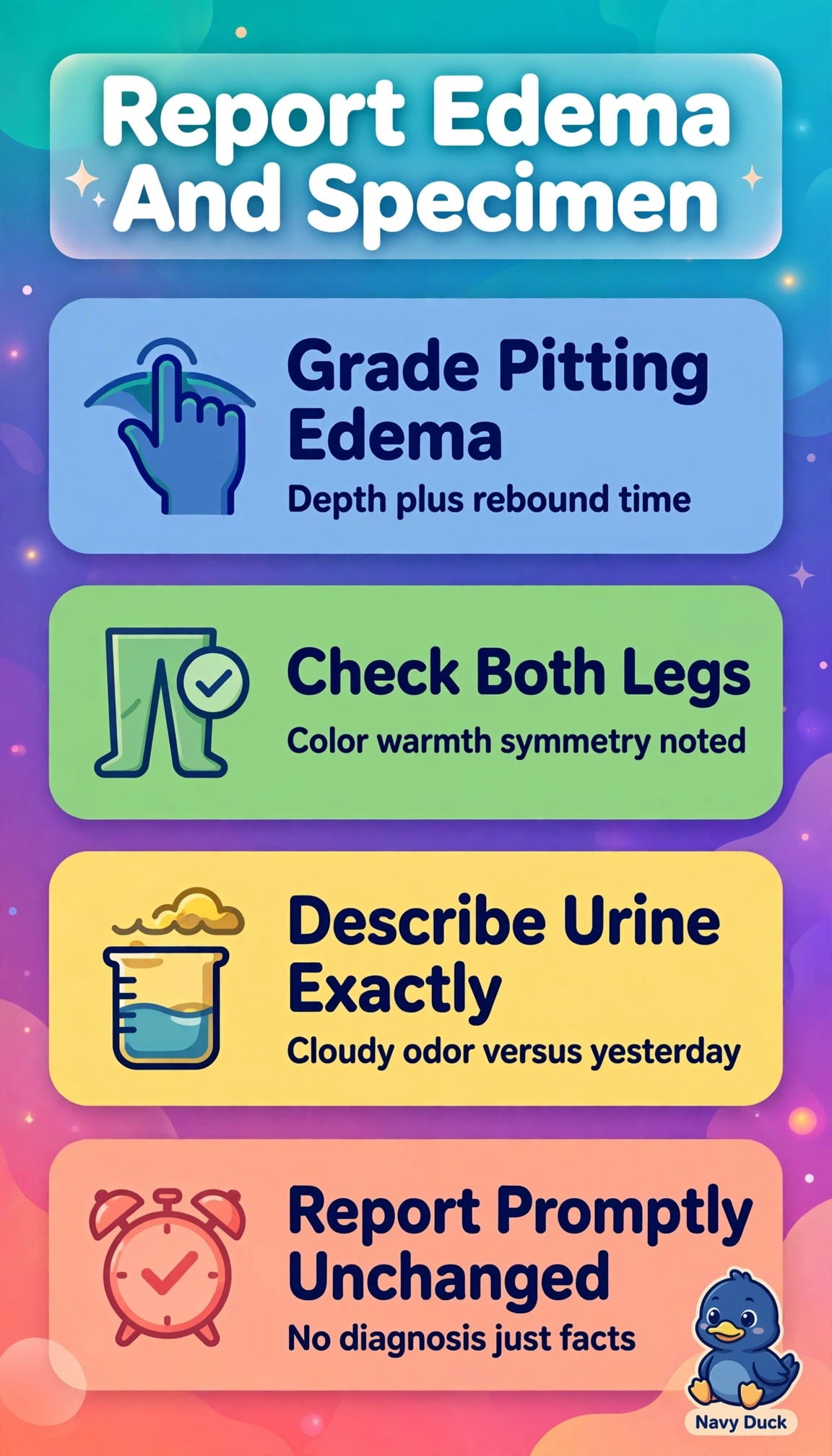
The approach that measures and reports pitting depth, skin color and temperature, and the urine appearance change provides objective data about new edema, circulation, and the specimen. Quantifying pitting helps track severity alongside the deep sock marks; skin color and temperature add circulation observations; and describing the change from yesterday’s clear yellow urine to cloudy urine with a strong odor preserves a useful comparison. Measuring pitting and monitoring intake and output while describing cloudy urine and odor captures edema and specimen changes, but omits skin color and temperature, so it does not assess circulation. Noting ankle swelling and reporting skin color, temperature, and urine changes includes circulation and specimen observations, but lacks a pitting measurement, so it cannot quantify edema or track its progression. Measuring pitting and reporting skin color and temperature while noting adequate urine volume covers edema and circulation, but adequate volume does not describe the new cloudiness and odor that need reporting. Exam caveat: report observed signs without diagnosing infection or recommending fluids, elevation, or medications. Practical check: press for five seconds and observe rebound, feel skin warmth, note pallor or redness, and compare urine color, clarity, and odor with yesterday’s sample before prompt reporting.