
In a quiet hospice room an older adult receiving comfort care has just died, family members are tearfully at the bedside, cultural observances are important to them, and the nurse asks you to assist with postmortem care per facility policy. The body needs dignified preparation before transfer to the funeral home. Which palliative and postmortem action best shows respectful care while supporting the grieving family?
Select an answer to reveal the explanation.
Short Explanation
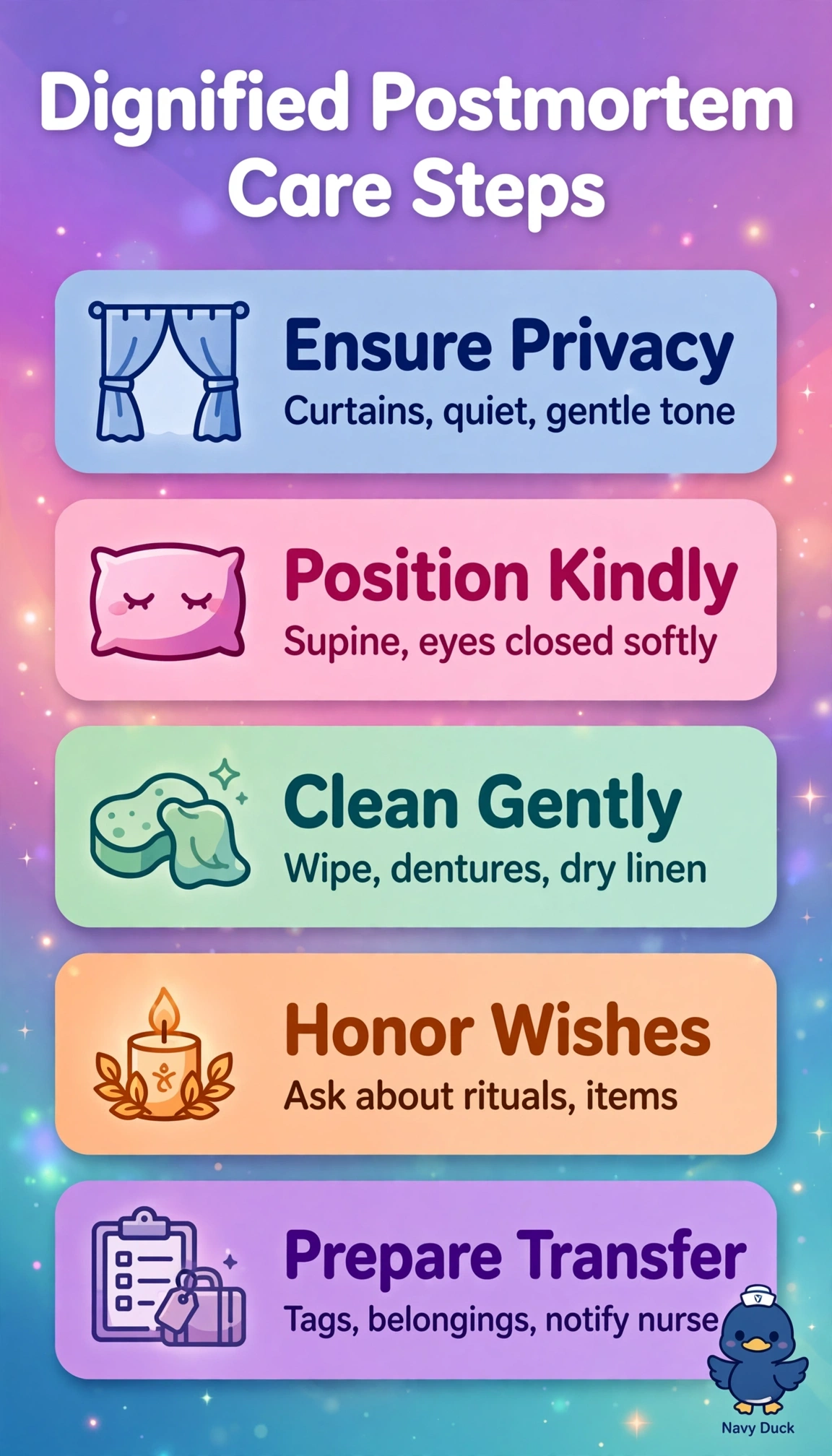
Slowing down here speaks louder than any task list. You're offering dignity through gentle positioning, privacy, and letting family guide rituals before anything is moved.
Full Explanation
The correct response integrates three inseparable postmortem priorities: privacy and dignity for the deceased, cleanliness and respectful positioning per facility policy in preparation for funeral home transfer, and explicit inclusion of family cultural observances and wishes at the bedside, which is essential in hospice comfort care where family-centered support continues after death. One plausible but incorrect approach emphasizes thorough cleaning, positioning, and prompt documentation per policy while maintaining privacy, which reflects sound standard practice yet fails because it proceeds without inviting family input and therefore overlooks the stated importance of cultural observances. Another supportive approach focuses on remaining present to provide emotional comfort and grief resources while postponing physical care, which honors the grieving family but fails because the body still requires timely dignified preparation before transfer and delay can compromise respect and policy compliance. A third familiar palliative approach continues comfort-focused assessment and repositioning for symptom relief as if for a living patient, which is appropriate during active dying but fails because death has already occurred and further comfort measures are no longer indicated. An exam caveat is to read the stem for postmortem cues such as has just died and before transfer, which shift priority from assessment and symptom management to dignified preparation and family support rather than routine monitoring. A practical check is to pause upon entering the room, offer condolences, ensure privacy with curtain or door, ask the family about wishes, cultural or spiritual practices, and desire to participate or step out, then proceed gently with hygiene, positioning, and covering per policy while allowing time for goodbyes.