
A rehabilitation patient with a new colostomy has a one-piece pouch that is one-third full, reports burning under the wafer, and is anxious about odor and leaks. The nurse has verified the care plan and asked the technician to assist with a routine pouch change and document output. Which ostomy pouch change technique should the technician use to protect peristomal skin and ensure a secure seal?
Select an answer to reveal the explanation.
Short Explanation
You protect skin by starting clean and ending dry, just like a good paint job needs prep. Measuring output before sealing a properly fitted wafer helps prevent leaks and burning.
Full Explanation
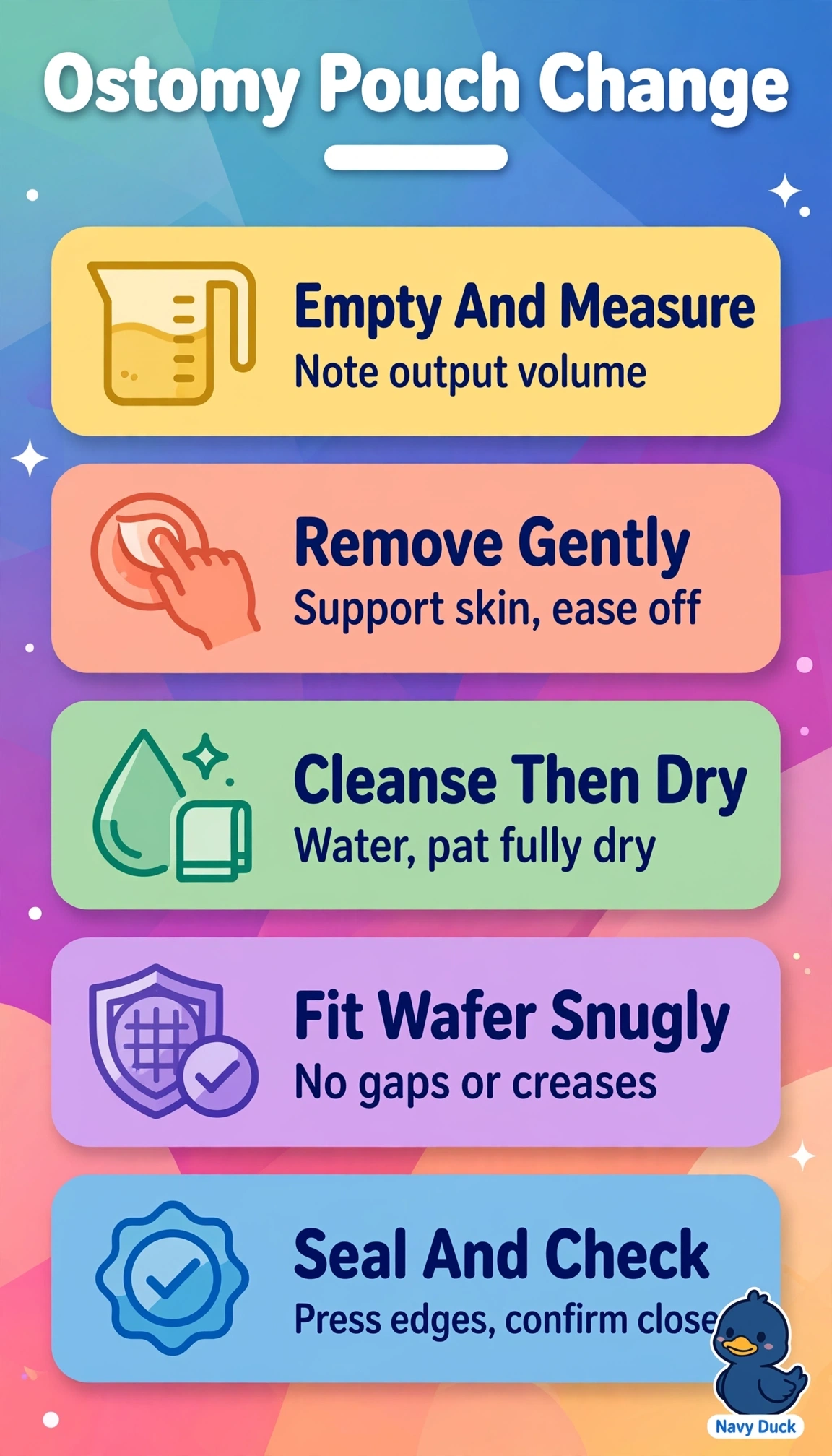
The correct technique begins by emptying and measuring the one-third-full pouch into a graduate, which controls odor and spills while providing the required output amount. Gentle removal minimizes traction injury; cleansing removes fecal enzymes that can cause burning; thorough pat-drying creates the dry surface needed for hydrocolloid adhesion; and a wafer fitted closely around the stoma helps block effluent and maintain a secure seal. Discarding output without measuring leaves delegated documentation incomplete and hides changes in colostomy function that may inform fluid and care decisions. Sealing a fitted wafer while skin is damp undermines adhesion because moisture can prevent bonding, causing edges to lift and leak and allowing continued irritation. Sealing a standard, unfitted wafer can leave gaps that expose peristomal skin to effluent, so burning and recurring leaks remain concerns despite emptying and drying. An exam caveat is to report burning and redness during a routine delegated change, not to independently add powders, pastes, or other interventions beyond the care plan. A practical check is to size the opening with a guide, pat the skin fully dry, press from the center outward, confirm there are no gaps or creases, and document volume, consistency, skin status, and tolerance.