
A PCT helps a 55-year-old new below-knee amputee in rehab practice morning prosthesis application. The residual limb is clean and dry, a shrinker sock is available, the liner has no cracks, and the patient can stand by. Which assistance should the PCT provide for the prosthetic and adaptive devices?
Select an answer to reveal the explanation.
Short Explanation
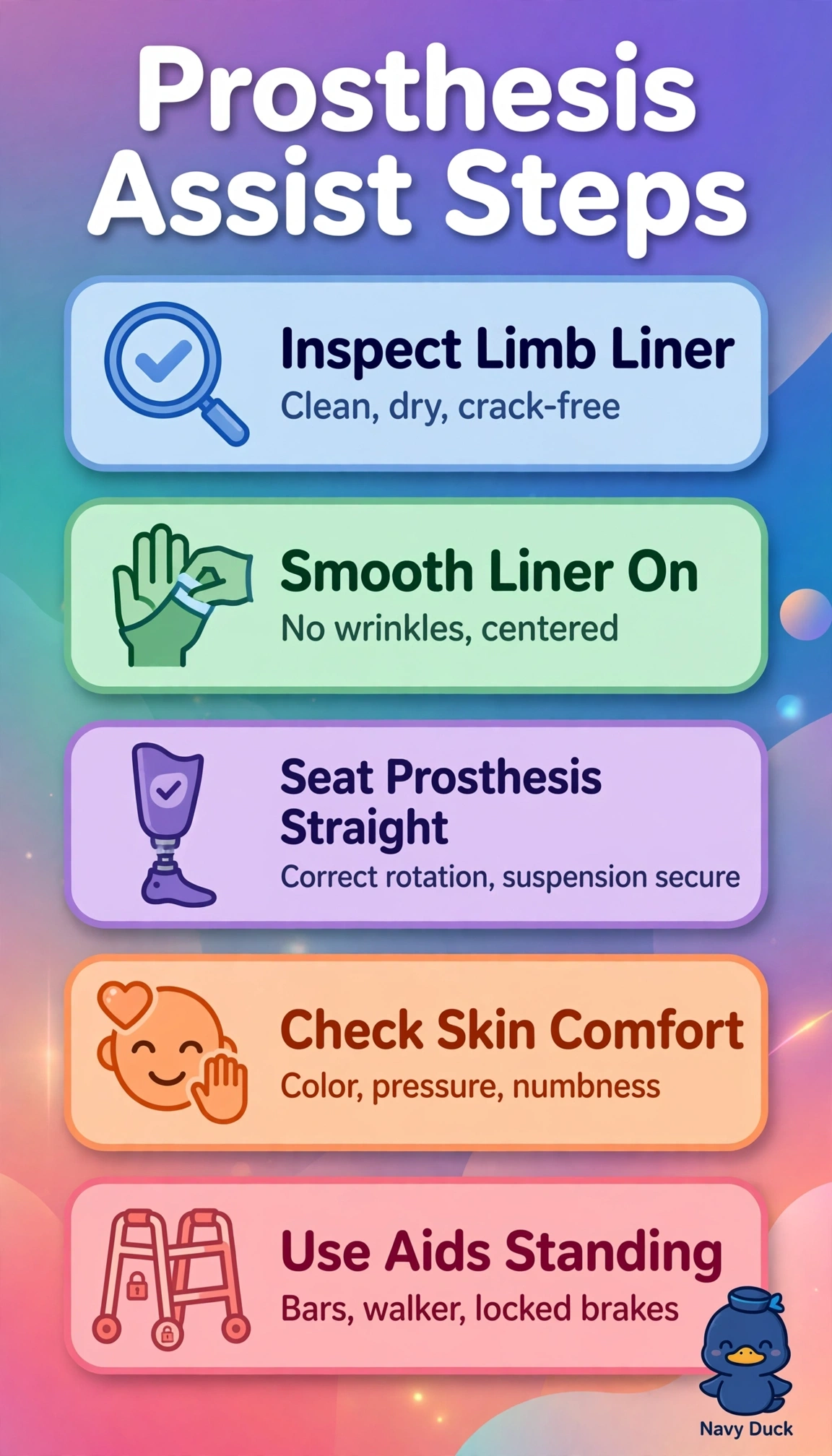
You've got the right idea when you're keeping everything smooth and dry for suction and comfort. Roll the liner on without wrinkles — like a snug sock with no bunch — then don the prosthesis and check your skin alignment before standing.
Full Explanation
The correct assistance reflects standard below-knee prosthetic donning where a clean dry residual limb is covered with a smooth intact liner to ensure total contact and suction suspension without pressure points from wrinkles, followed by donning the prosthesis and verifying skin integrity and component alignment before load bearing to prevent shear injury and falls. Donning the prosthesis over the shrinker sock fails by device-purpose concept because the shrinker is a compression garment worn when the prosthesis is off to control edema and shape the limb, not an interface worn under the prosthesis during ambulation, so it cannot substitute for the liner. Standing immediately without skin inspection fails by safety-sequence concept because erythema, blanching, breakdown, pain, and malalignment must be assessed before weight bearing, especially in a new amputee in rehab, and deferring checks until after walking allows injury. Applying lotion to ease liner application fails by skin-preparation and suspension concept because the limb must remain clean and dry for liner adhesion and hygiene, as moisture and emollients cause slippage, loss of suction, maceration, and folliculitis. An exam caveat is to distinguish routine amputee skin moisturizing performed at night after prosthesis removal from pre-donning preparation, which requires clean dry skin, and to distinguish shrinker use from liner use even when both are available. A practical check is to run a hand over the rolled-on liner to confirm no wrinkles or air pockets, confirm the limb is fully seated in the socket, inspect the limb after doffing trials for persistent redness, and confirm the patient stands by with locked components and assistive devices before stepping.