
A PCT cares for a 62-year-old post-abdominal surgery patient ordered to wear sequential compression devices while in bed, remove them for walking, and receive skin checks each shift. The calves show intact skin, equal warmth, and no reported pain. Which SCD care should the PCT provide to support circulation safely?
Select an answer to reveal the explanation.
Short Explanation
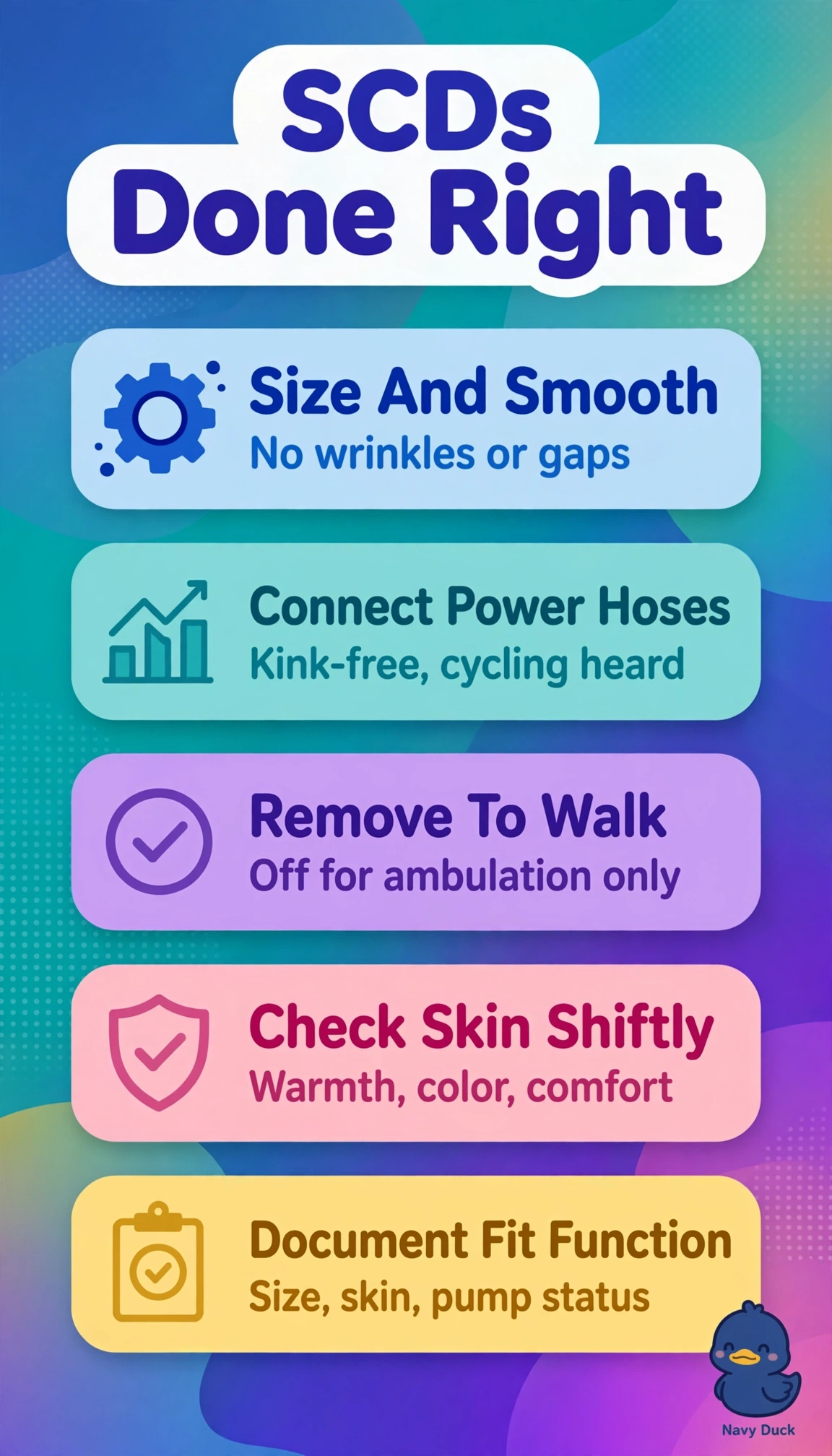
You've got this — you'll keep those sleeves smooth and snug with hoses hooked up, so blood keeps moving like traffic on an open highway. Your quick skin and fit check each shift keeps that circulation safe and comfy.
Full Explanation
The correct care follows the orders to support venous return while protecting skin: smooth wrinkle-free sleeves prevent pressure injury and uneven compression, secure hose connections to a functioning pump deliver intended intermittent compression while in bed, and scheduled skin and fit checks each shift detect early redness, swelling, or migration even when calves currently show intact skin, equal warmth, and no pain. Continuing compression during walking fails on mobility safety because sequential devices are bed-only therapy that must be removed for ambulation to prevent tripping, tubing entanglement, pump damage, and gait restriction, while walking itself promotes venous return. Checking skin only when pain occurs fails on surveillance because ordered shift checks are proactive and postoperative analgesia or altered sensation can mask early ischemia, so waiting for symptoms misses preventable breakdown. Tolerating minor wrinkles fails on skin integrity because folds concentrate pressure and friction under cyclical inflation, raising blister and ulcer risk during immobility and edema. An exam caveat is that a currently normal assessment is a baseline for comparison, not a reason to omit ordered removal for walking or shift reassessment, and devices should not be confused with stockings that may stay on. A practical check is to confirm two-finger fit, flat sleeves, unkinked hoses, active pump cycling, and document skin, fit, tolerance, and education to call for help before walking.