
On a night shift in a rehab wing you assist a weak older adult who is restless, tries to climb over bed rails, and needs frequent toileting. The bed is high, wheels are unlocked, and a wheelchair with footrests up is nearby. Which fall-prevention and equipment-safety action should the PCT take to prevent injuries?
Select an answer to reveal the explanation.
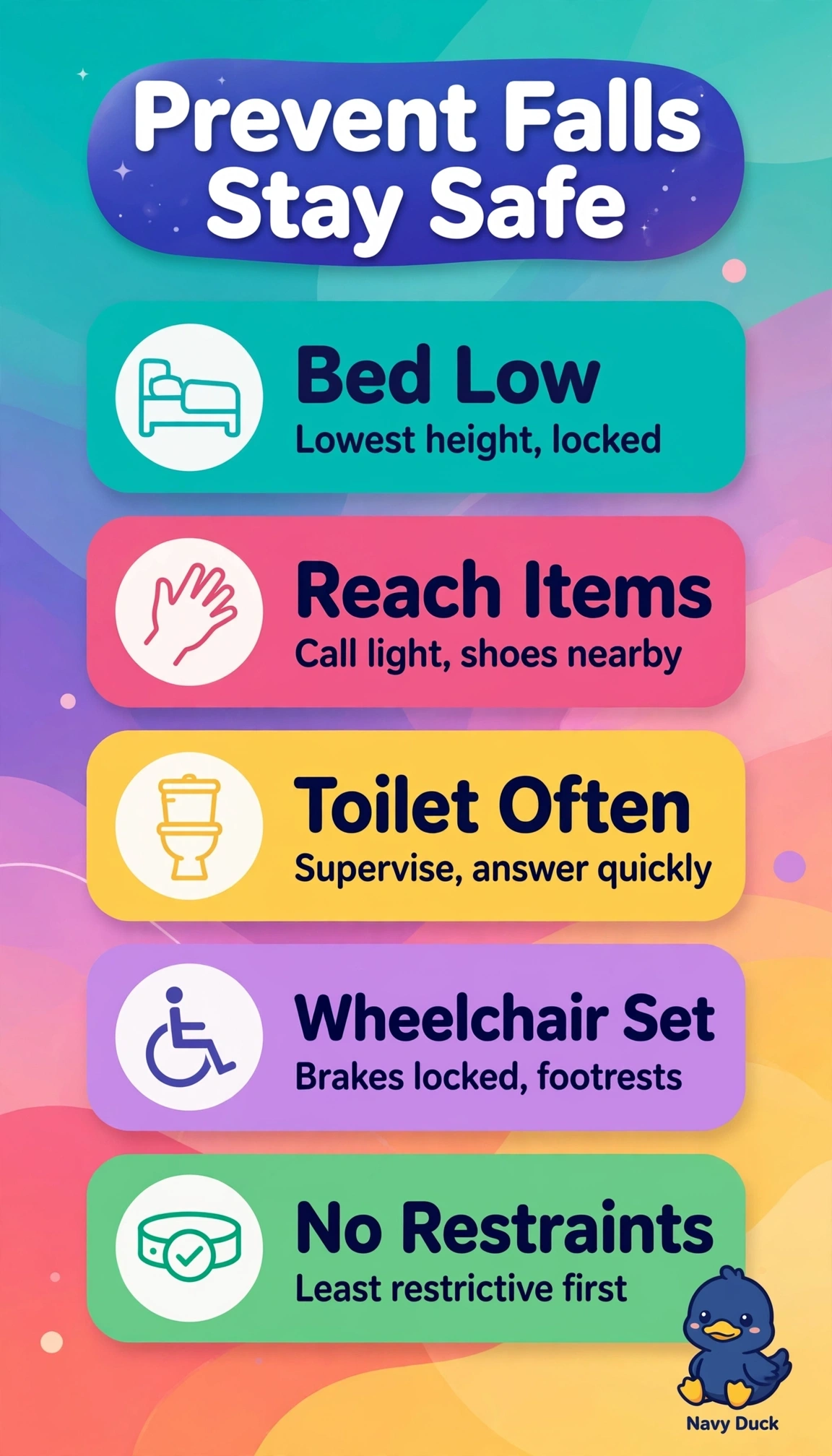
Short Explanation
You're setting the room up so getting help is easier than getting hurt. Low bed, locked wheels, and close call light create safe-access that prevents midnight falls. Small setup steps stop big injuries.
Full Explanation
The correct action is right because it addresses every stated hazard: a low bed reduces fall height for a weak restless adult, locked wheels prevent bed movement, a call light in reach enables prompt help at night, and supervised toileting with wheelchair brakes set supports frequent needs while preventing roll. One distractor fails by restraint-height concept because raising two upper rails as reminders creates a higher climbing barrier for a patient who climbs, increasing fall severity and acting as restraint without addressing restlessness. Another distractor fails by transfer mechanics because leaving footrests raised interferes with foot placement and stand-pivot clearance, risking foot catch, loss of balance, or skin injury despite correct bed, light, and supervision. The remaining distractor fails by stability concept because leaving bed wheels unlocked allows the bed to shift during transfers or toileting attempts, negating a low bed and locked wheelchair brakes. An exam caveat is that familiar bundles become wrong when one element is omitted or when rails are added for a climber, so verify restlessness, climbing, toileting frequency, bed height, wheel locks, brakes, footrests, and light reach. A practical check is to lower the bed fully, push-pull to confirm all wheels and brakes hold, hand the patient the light and confirm use, position footrests correctly, and stay with the patient when toileting.