
A bed-bound older adult with an indwelling Foley catheter is incontinent of stool, has fragile perineal skin, and needs routine morning care including dentures, oral hygiene, and catheter care. Supplies include warm water, mild soap, washcloths, and a securement device. Which combined oral, perineal, and catheter care routine should the technician perform to prevent infection and injury?
Select an answer to reveal the explanation.
Short Explanation
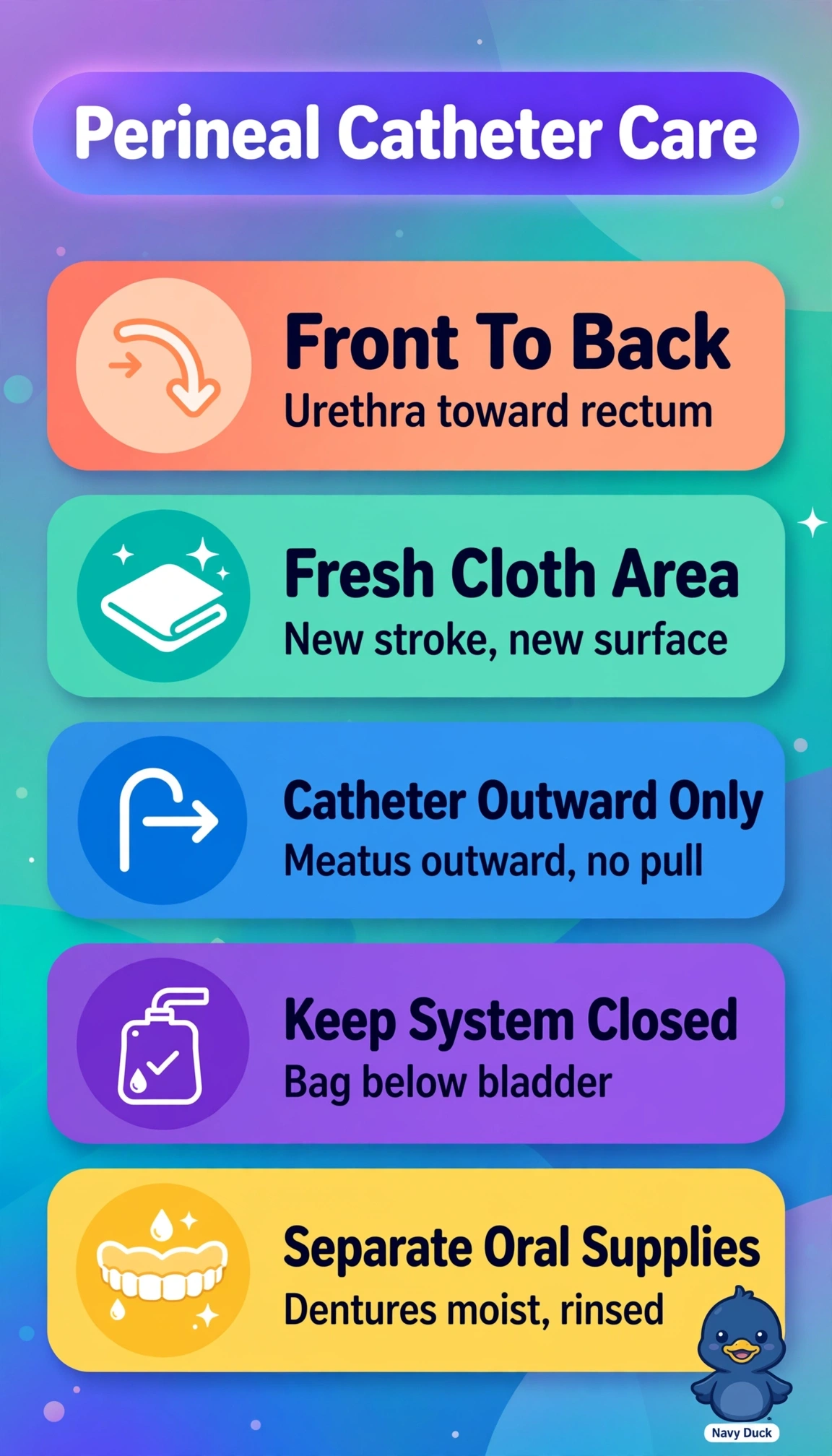
You are guarding the doorway to the bladder, so direction matters most. Cleaning front-to-back with fresh cloth surfaces keeps stool away using gentle asepsis.
Full Explanation
The correct routine is right because front-to-back cleansing with separate cloth areas keeps stool from this incontinent patient away from the urethra and prevents cross-contamination, while cleansing outward from the meatus down the catheter moves secretions and bacteria away from the urinary tract opening to reduce catheter-associated urinary infection, using warm water, mild soap and gentle patting that suits fragile perineal skin in a bed-bound older adult. Cleansing toward the meatus fails by direction concept because even with correct perineal technique it drags tubing colonization and perineal flora up into the urethral opening, directly increasing infection risk rather than reducing it. Reusing the same washcloth area fails by cross-contamination concept because correct direction alone cannot compensate when stool from incontinence is spread across the perineum and then to the catheter on the same cloth surface. Leaving the catheter unsecured fails by traction-injury concept because good cleansing without anchoring with the securement device still allows pulling, urethral irritation, accidental dislodgement and skin shear during movement or bag tension. An exam caveat is to keep the closed drainage system closed and the bag below bladder level without kinking, pulling taut or placing on the bed, and to integrate denture removal, cleaning, oral mucosal care and reinsertion rather than omitting oral care. A practical check is to verify gentle patting dry, intact fragile skin without redness, a secured catheter with slack, free urine flow, and clean dentures and moist oral mucosa during morning care.