
In an outpatient lab a middle-aged adult needs a routine venipuncture, the right arm has an active IV infusion, the left antecubital area shows a well-defined median cubital vein, and the patient reports prior difficult draws when dehydrated. You have warm packs, a blood pressure cuff approach, and anchored palpation available. Which venipuncture site selection best demonstrates assessment of venous accessibility while avoiding contraindicated areas?
Select an answer to reveal the explanation.
Short Explanation
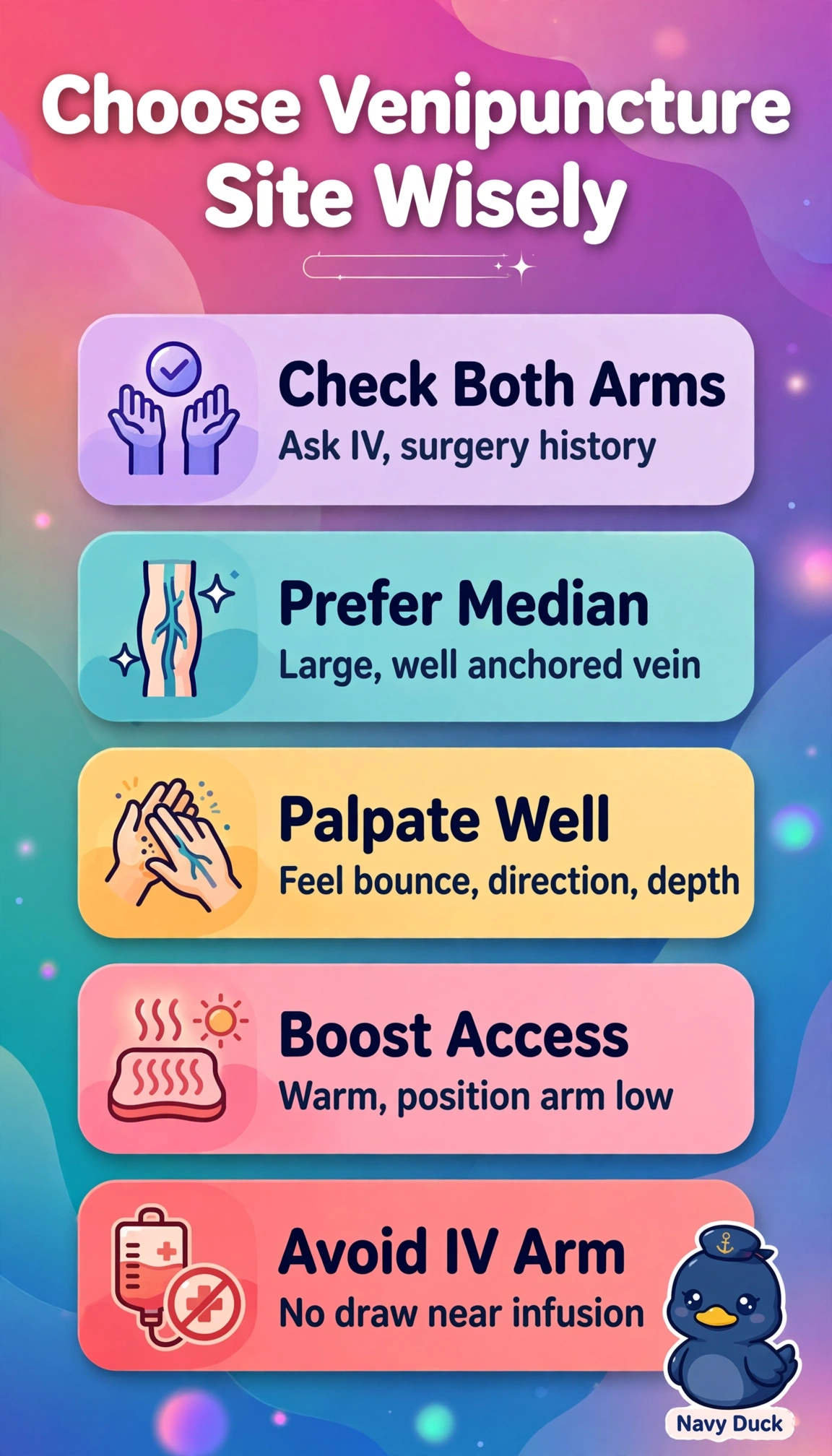
Good sticks start with your fingertips more than your eyes. You’re using palpation and the patient’s history to find a resilient median cubital vein while avoiding the arm with the active IV.
Full Explanation
Choosing the left median cubital vein after palpation and warming demonstrates accessibility: this well-defined vein is a first-choice site for routine venipuncture because of its size, fixation and lower complication risk. Anchored palpation assesses depth, direction, resilience and patency beyond what you can see, while warming promotes vasodilation and can help with dehydration-related difficult draws. Avoiding the right arm with an active infusion prevents sample dilution, flow disturbance, infection, phlebitis and infiltration. Selecting the left cephalic vein to save the median cubital for later therapy misapplies vein-priority planning: preserving a prime vein may suit chronic therapy planning, but routine testing should use the accessible median cubital rather than a smaller, more mobile and potentially more painful cephalic vein that may increase attempts and hematoma risk. Inflating a cuff above systolic pressure is incorrect because venous engorgement requires pressure below diastolic, typically 40–60 mmHg, to impede venous return while preserving arterial inflow; above-systolic pressure blocks arterial inflow, prevents distension and causes ischemic discomfort. Choosing left dorsal hand veins to spare antecubital veins also misapplies site hierarchy: hand veins are a backup when antecubital veins are inaccessible, scarred or fragile, and are smaller, mobile and more innervated, with greater risk of rolling, collapse and hematoma. Exam caveat: dehydration and a contraindicated arm make warming and palpation useful supplements, not substitutes for the best accessible antecubital site; avoid drawing from the arm with an active infusion, even distal to the infusion. Practical check: warm for 3–5 minutes, palpate for a soft, resilient vein that refills without edema or hardware, confirm free movement of the left arm, and reassess engorgement before anchoring.