
A PCT watches central telemetry on a night shift when a bed alarm sounds for suspected ventricular tachycardia in a patient who was resting comfortably. The unit requires immediate bedside check, keeping the patient on the monitor, and prompt nurse notification. Which response should the PCT initiate for this telemetry alert?
Select an answer to reveal the explanation.
Short Explanation
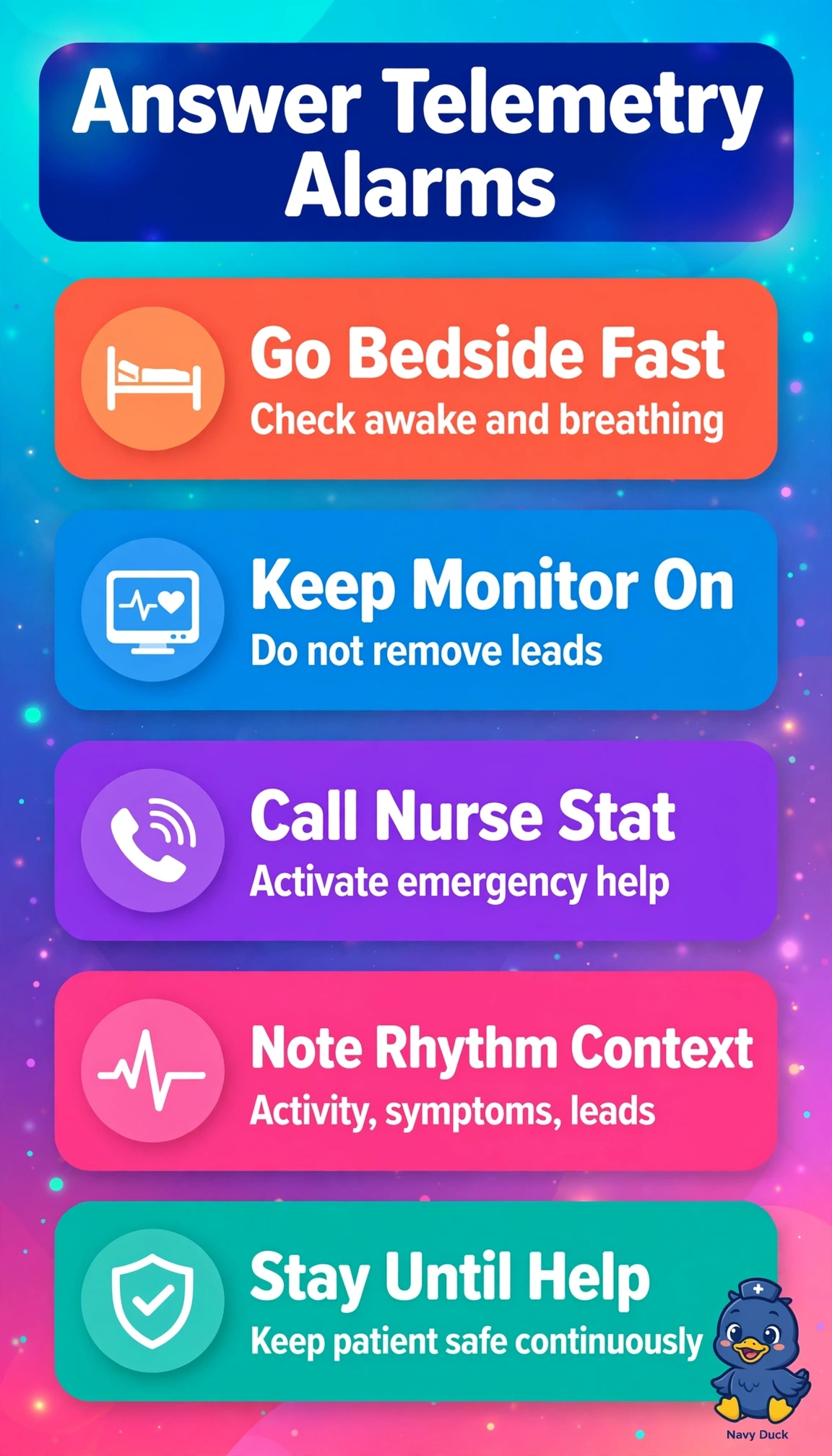
Go to the bedside promptly and check whether your patient is responsive; the alarm alone cannot tell you how they are doing. Keep the leads on and get the nurse there stat with that bedside-first response.
Full Explanation
The correct response meets the unit’s requirements for a potentially lethal alarm in a patient who was resting: check the patient at the bedside immediately, keep monitoring uninterrupted, and summon the nurse stat. Suspected ventricular tachycardia cannot be cleared from the central station; assess responsiveness, pulse, and symptoms while preserving rhythm data for the nurse and rapid response team. A bedside check helps distinguish pulselessness, hypotension, chest pain, or arrest from loose electrodes or motion artifact. Keeping the leads on maintains surveillance during a period when the rhythm could deteriorate, and prompt notification supports timely rhythm interpretation, vital signs, a 12-lead ECG, and code readiness within PCT scope. Staying at the central monitor to notify the nurse without checking the patient prioritizes screen review over the patient’s condition and can delay recognition of unresponsiveness. Removing leads briefly to check skin creates a monitoring gap and violates the requirement to keep the patient monitored, though skin preparation may be appropriate at another time. Watching trends before calling delays urgent escalation; trending may suit stable ectopy, but suspected VT requires immediate notification even if the patient looked comfortable moments earlier. Exam caveat: artifact can mimic VT, but you should not dismiss the alarm independently; the expected action is a bedside check and stat alert. Practical check: call the patient’s name, gently stimulate them, assess pulse and breathing if unresponsive, keep cables intact, activate the call light for stat help, and report the onset time and bedside findings without leaving to print strips.