
In a crowded emergency department you are asked to collect a urine specimen and apply an identification band on an older adult who is confused and shares a similar last name with another patient in the next bed. The armband, chart, and verbal response must align before any procedure. Which two-identifier practice fulfills scope, ethics, and legal responsibilities for patient identification?
Select an answer to reveal the explanation.
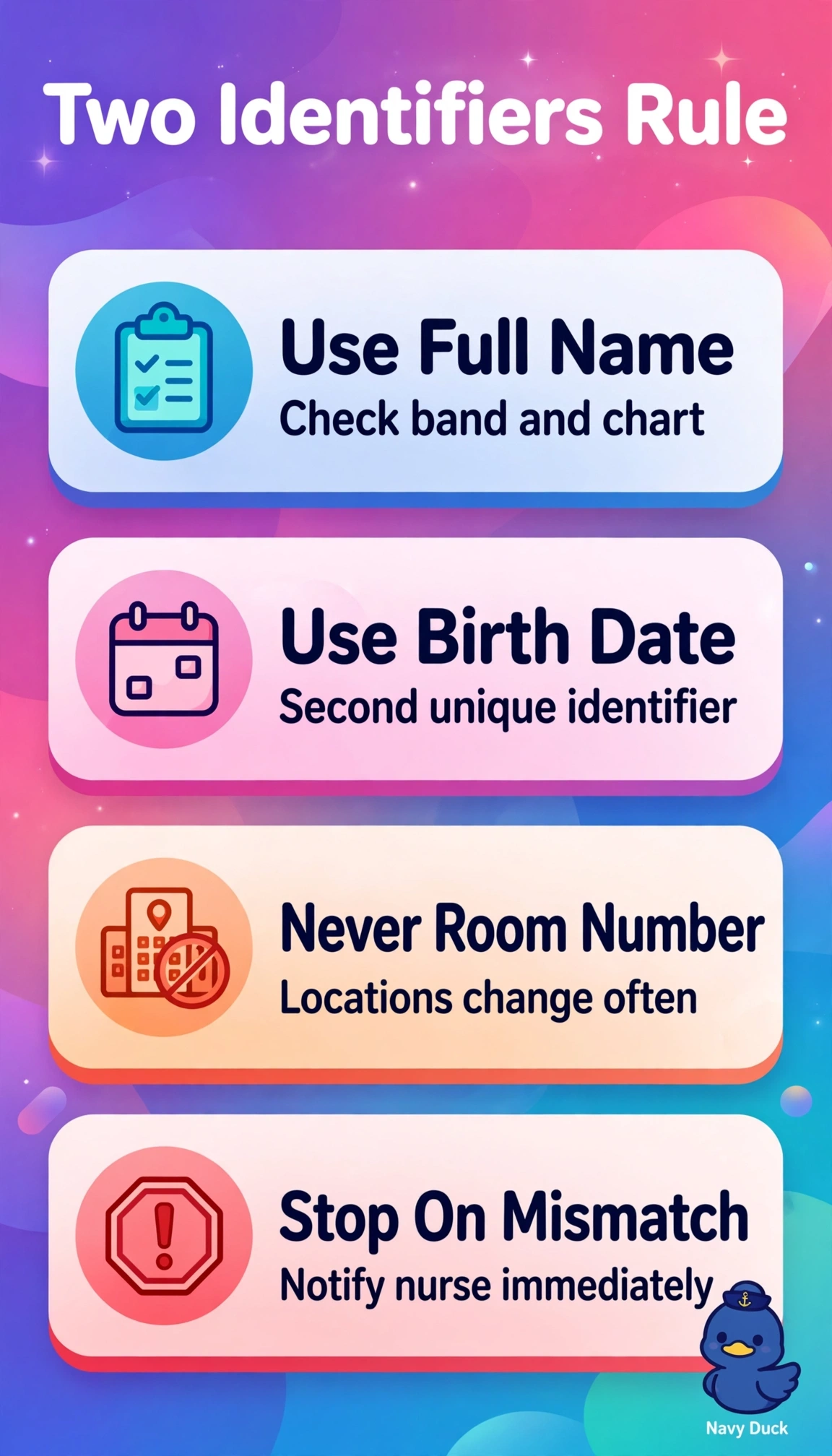
Short Explanation
You are the last safety net before a mix-up happens. Sticking to name-plus-birthdate identifiers blocks wrong-patient errors, like needing both a key and a code to unlock a door.
Full Explanation
Two-identifier safety works by using person-specific attributes such as full name and date of birth verified on the armband against the order and chart, which remain stable when location, condition, or similar names create confusion and satisfy legal identification duty within PCT scope. Using bed number and whiteboard last name fails by the location-identifier concept because rooms and boards change and are not person-specific despite team agreement. Using diagnosis and room number fails by the clinical-attribute concept because diagnoses overlap and locations shift, providing no unique linkage to the individual despite chart reference. Using last name and age with neighbor input fails by the uniqueness concept because similar names and approximate age cannot distinguish identities and proxy must be authorized, not adjacent patients, despite checking the band. Exam caveat: NHA never accepts room, bed, or diagnosis as identifiers, and you must resolve mismatch by stopping and notifying the nurse. Practical check: read back spelling, compare band to requisition aloud, and re-verify before labeling at the bedside.