
A stroke-unit patient with dysphagia receives continuous nutrition through a PEG tube, must remain with the head of bed elevated, has a nurse-managed pump and residual checks, and coughs when lying flat. The technician is asked to assist with hygiene, position checks, and reporting. Which aspiration precaution should the technician maintain while supporting the patient receiving PEG tube feeding?
Select an answer to reveal the explanation.
Short Explanation
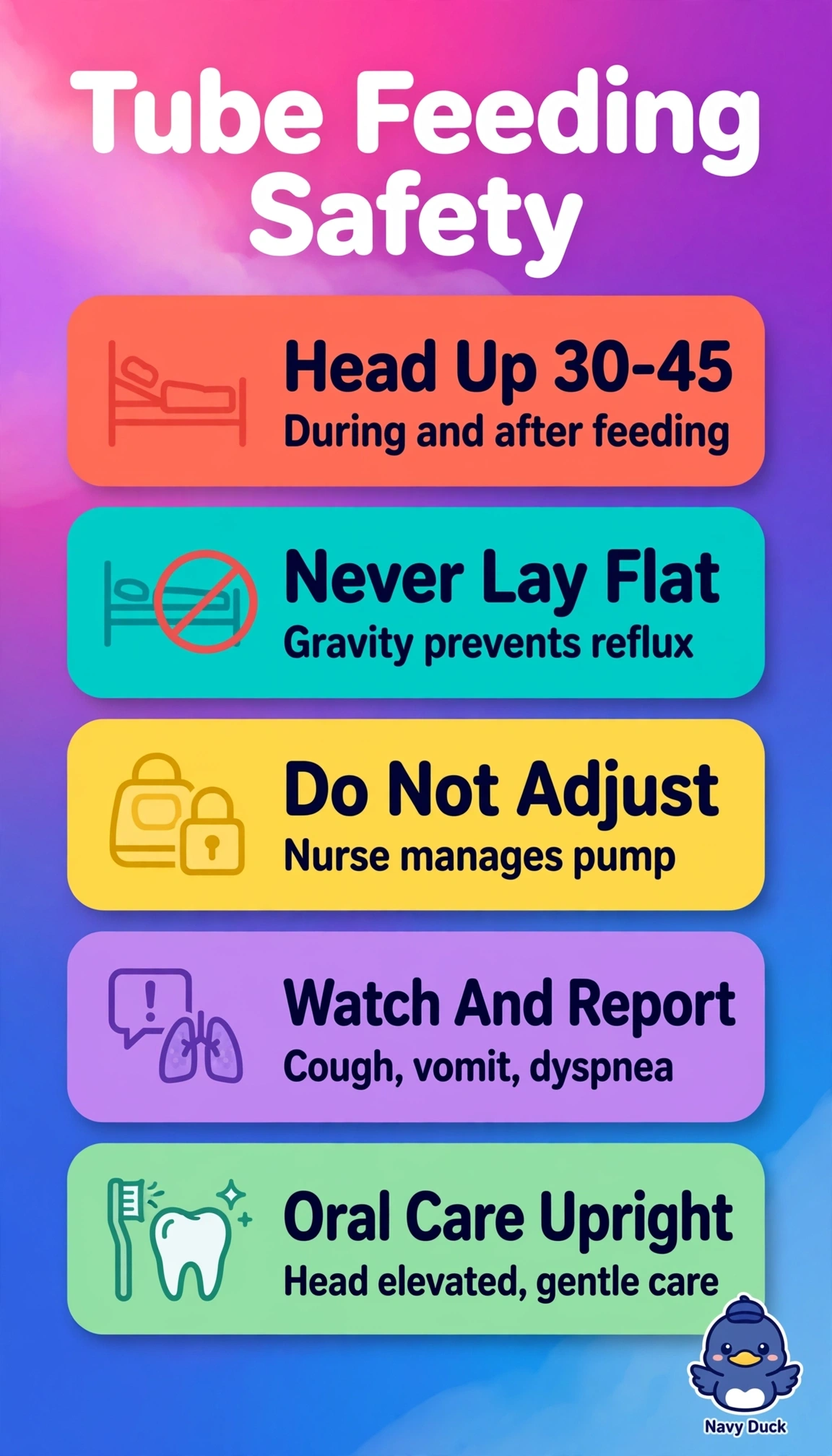
You can use gravity to help reduce reflux while tube feeding is running. Keep the head of the bed at 30 to 45 degrees during and after feeding, and promptly report coughing as a sign that needs assessment.
Full Explanation
Keeping the head of the bed elevated at 30 to 45 degrees during and after continuous PEG feeding reduces reflux and pharyngeal pooling; promptly reporting coughing helps the nurse assess possible aspiration or intolerance. This fits the technician’s role in positioning, hygiene, and observation. Maintaining elevation only during feeding and then lowering the bed flat for comfort fails because risk can persist from residual gastric contents after feeding; the patient’s cough when flat makes lowering the bed especially unsafe. Checking gastric residuals and pausing the pump for a high volume fails because the stem assigns pump management and residual checks to the nurse. Observe tolerance and report concerns rather than interpreting residuals or changing the pump. Keeping the bed elevated but offering small oral sips fails because dysphagia and coughing indicate aspiration risk; oral intake requires swallow evaluation and an order, while dryness should be managed with prescribed oral care. An exam caveat: PEG feeding does not eliminate aspiration risk, since refluxed formula can still be aspirated; do not confuse this precaution with recovery side-lying. As a practical check, verify the bed is at 30 to 45 degrees, keep it elevated after feeding, provide oral care as directed, do not adjust the pump, and promptly report coughing, wheezing, vomiting, or tube displacement.