
In a long-term care facility you must clean a shared blood pressure cuff, pulse oximeter probe, and bedside table between residents. The disinfectant wipe label requires the surface to stay visibly wet for two minutes and air-dry. Which disinfection practice should the PCT follow to meet equipment disinfection and dry-time requirements?
Select an answer to reveal the explanation.
Short Explanation
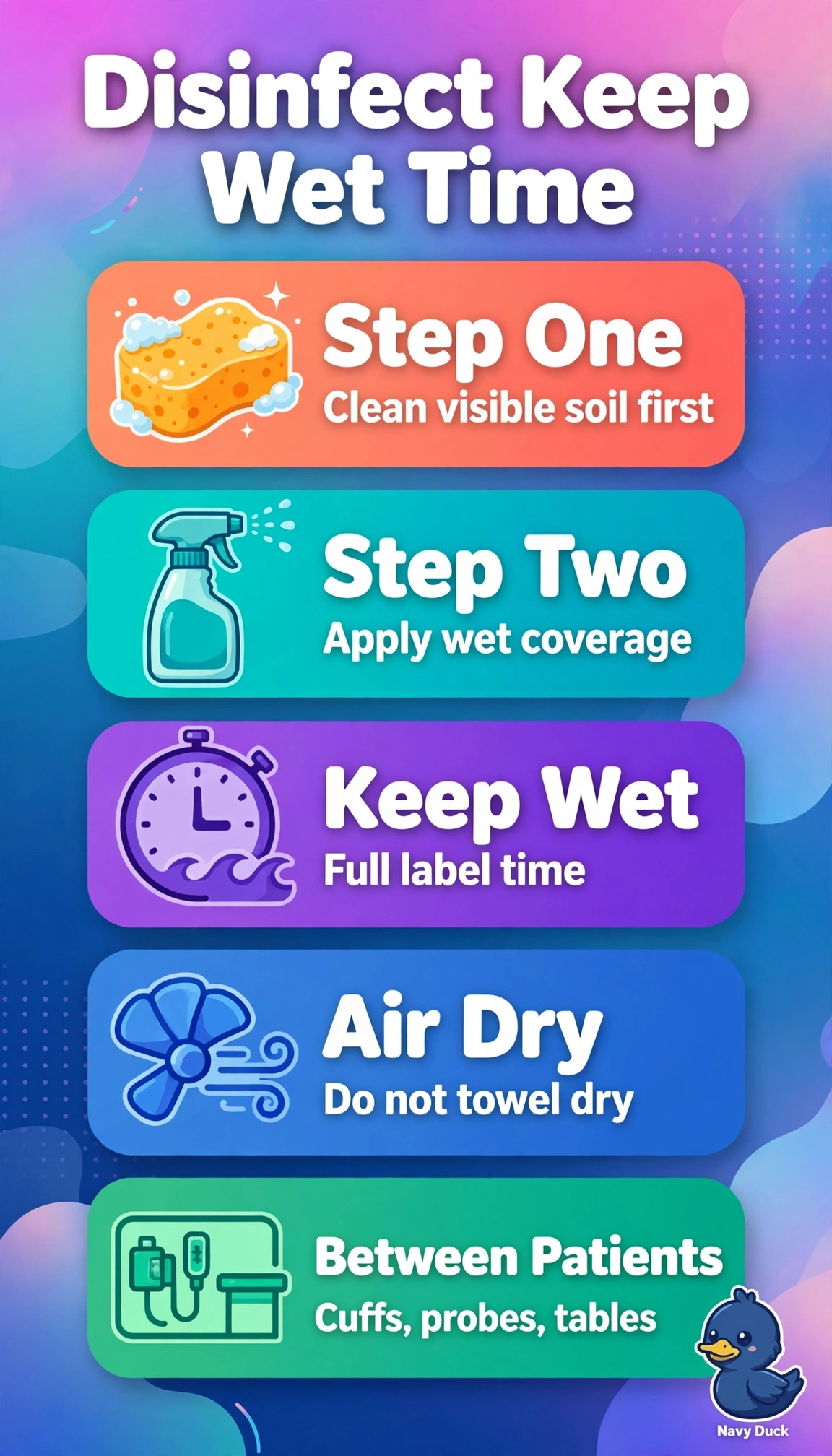
You're balancing speed with germ-killing power on shared gear. Keeping surfaces visibly wet for the full time gives the contact-time victory over hidden pathogens. Wet, wait, air-dry, then it's truly ready.
Full Explanation
Correct practice requires pre-cleaning to remove visible soil that shields pathogens and inactivates disinfectant, then re-wiping the cuff, probe exterior and table to sustain visible wetness for the full two-minute labeled contact time, allowing air-dry to complete kill and prevent recontamination. The single thorough wipe followed by air-drying is inadequate by contact-time concept because one application typically evaporates before two minutes on warm or large surfaces, so without reapplication the dwell requirement is unmet despite proper drying. The re-wetting for two minutes but towel-drying approach fails by drying-method concept because manual drying removes chemistry early and can transfer lint or hand flora, directly violating the air-dry instruction that ensures undisturbed contact and safe electronics handling. Wiping to maintain wetness and air-drying without first removing soil fails by cleaning-before-disinfection concept because organic matter blocks chemical access, leaving viable organisms under the wet film even when time and drying are correct. Exam caveat is to read the label as law and separate cleaning, wet contact time and air-dry into three testable steps rather than assuming drying equals disinfection. Practical check is to start a timer after pre-cleaning, verify continuous glistening and re-wipe dry spots during the interval, then leave items untouched until fully air-dried before use between residents.