
A PCT works with a 74-year-old stroke patient with left arm weakness in long-term care. The care plan orders assistive shoulder range of motion twice daily, support above and below the joint, and stop at pain. Which ROM technique should the PCT use for the shoulder exercises?
Select an answer to reveal the explanation.
Short Explanation
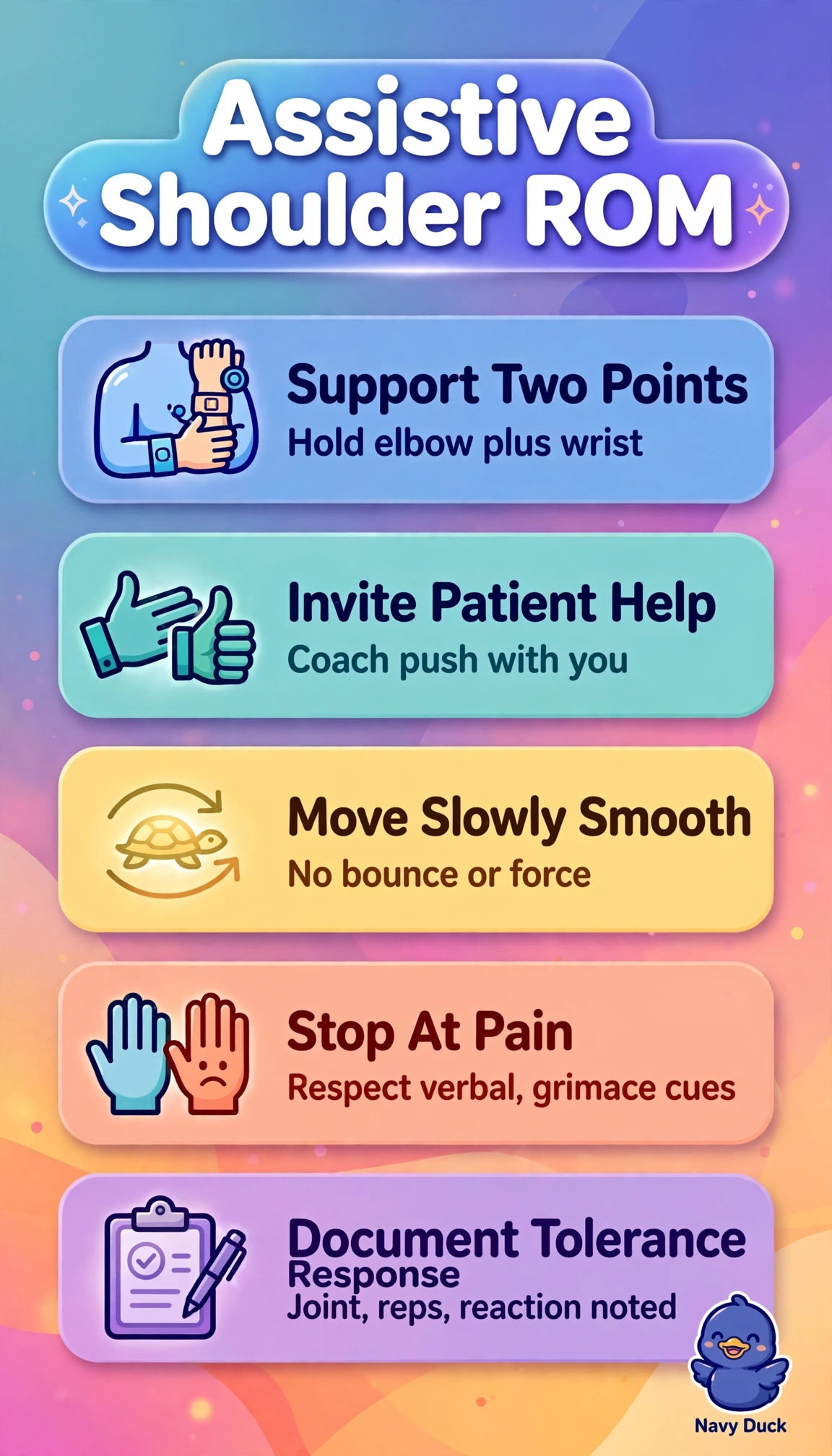
Your hands become the helper, not the hero, in assistive motion. That gentle joint support acts like training wheels while the patient pedals as able.
Full Explanation
The correct technique is right because post-stroke weakness leaves the shoulder unstable and prone to subluxation, pain, and soft-tissue injury, so assistive range of motion that supports above and below the joint with the patient actively helping preserves joint integrity while maintaining mobility and complies with the care plan to stop at pain. The passive approach that moves the relaxed arm with good support and respects pain is commonly used for flaccid or unconscious patients to prevent contracture, but it fails here by concept of participation because it omits the required active-assistive effort that maintains neuromuscular engagement and function. The single-support approach that encourages patient effort and respects pain is otherwise sound for comfort and movement, but it fails by concept of joint protection because supporting only the wrist leaves the shoulder and elbow without stabilization above and below and risks traction on the unstable joint. The full-motion approach with proper support and patient help is commonly used for maintenance flexibility, but it fails by concept of pain-guided limits because it prioritizes completing the range over stopping at the first sign of pain as ordered. An exam caveat is to distinguish assistive, active, and passive range of motion by who supplies the effort rather than by the joint moved, since the wording can look similar under time pressure. A practical check is to support the limb above and below the shoulder, ask the patient to help with the movement, watch the face for wincing or guarding, and stop immediately and report if pain or unusual resistance occurs.