
On a night shift you are monitoring a 78-year-old patient after hip surgery who is alert but hard of hearing, plus a 5-year-old child with a forearm injury who cannot reliably use numbers to describe pain. Both need pain reassessment before you report to the nurse. Which pain-scale selection correctly applies FACES and numeric tools for vital-signs monitoring?
Select an answer to reveal the explanation.
Short Explanation
You are matching the tool to the mind, not just the body. Choosing developmentally fitting scales gets truer pain reports, like using picture menus for kids and numbered menus for adults.
Full Explanation
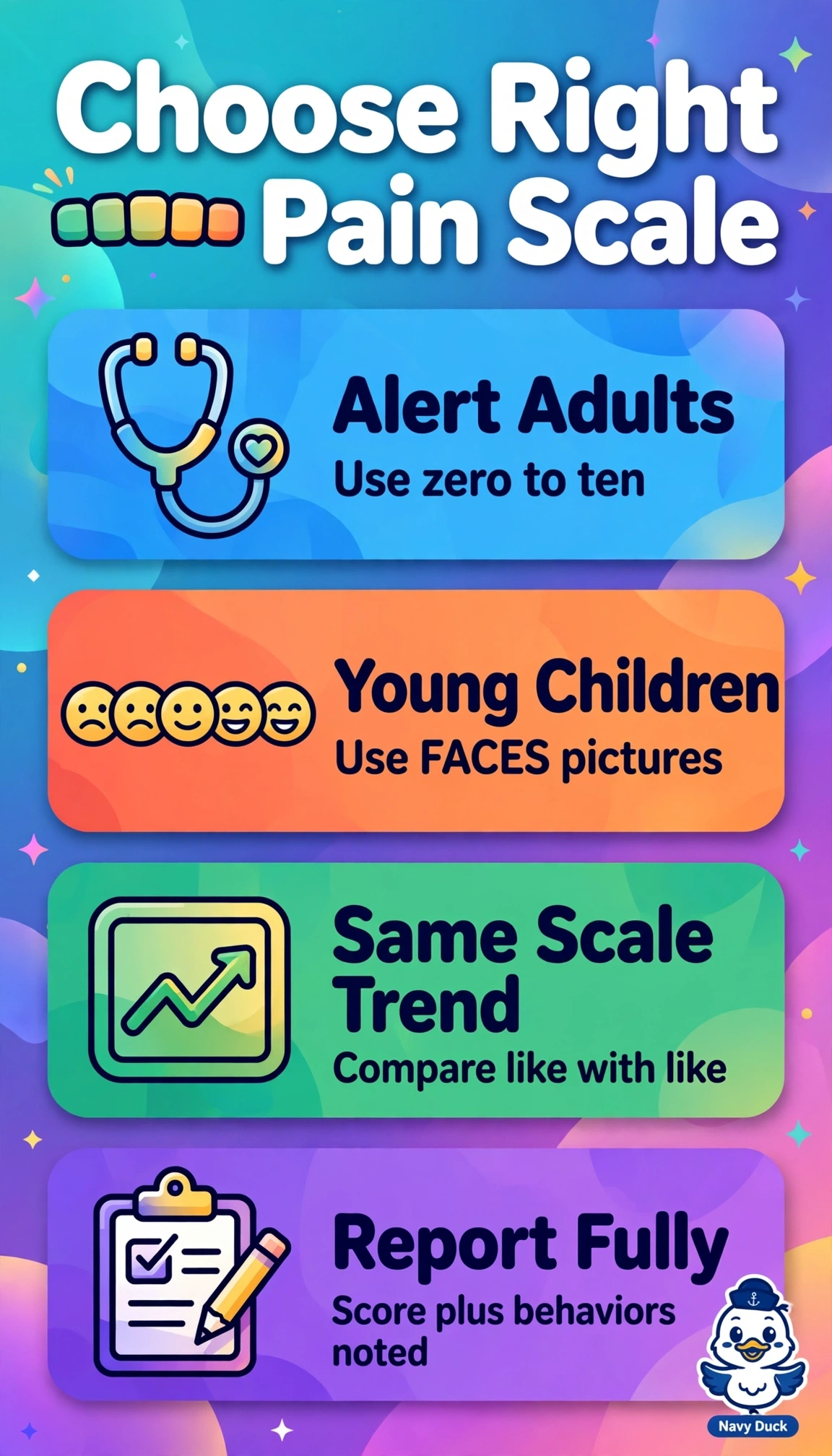
Effective pain reassessment during vital-signs monitoring requires matching the validated tool to each patient’s developmental stage, cognition, and sensory status while still completing the task before handoff to the nurse. The correct selection uses the 0-10 numeric scale for the alert 78-year-old because alert older adults can reliably self-report with numbers when hearing is accommodated, and uses FACES for the 5-year-old who cannot reliably use numbers because FACES anchors intensity to expressions without requiring numeric abstraction. One sound but incorrect approach substitutes FLACC behavioral scoring for FACES in the verbal young child, which fails by concept because FLACC is designed for preverbal, sedated, or nonverbal patients and would underutilize the child’s ability to self-report with pictures. Another plausible but incorrect approach retains the right tools but yells the numeric scale loudly for the hard-of-hearing adult, which fails by communication concept because shouting distorts clarity and dignity while appropriate amplification, facing the patient, reducing noise, and confirming understanding preserves validity. A third responsible-sounding approach defers reassessment until morning report for a fuller check, which fails by timeliness concept because post-surgical and post-injury pain must be reassessed promptly before reporting to guide analgesia and detect deterioration. An exam caveat is to read for qualifiers like alert, hard of hearing, and cannot reliably use numbers, since they dictate tool choice and technique rather than age alone. A practical check is to document both scores with time, intervention context, and recheck plan, and to verify the adult repeated the instructions correctly and the child pointed to the face matching current pain.