
In a busy primary care office you must prepare a shared glucometer and a reusable blood pressure cuff between patients, and the disinfectant wipe label states a two-minute wet contact time followed by air drying. The schedule is behind and the next patient is already roomed. Which equipment disinfection technique correctly applies disinfectant contact and dry time for shared devices?
Select an answer to reveal the explanation.
Short Explanation
That waiting feels endless when rooms are backed up, but wet time does the killing. You're respecting contact-time by letting the chemistry stay wet and then air dry untouched.
Full Explanation
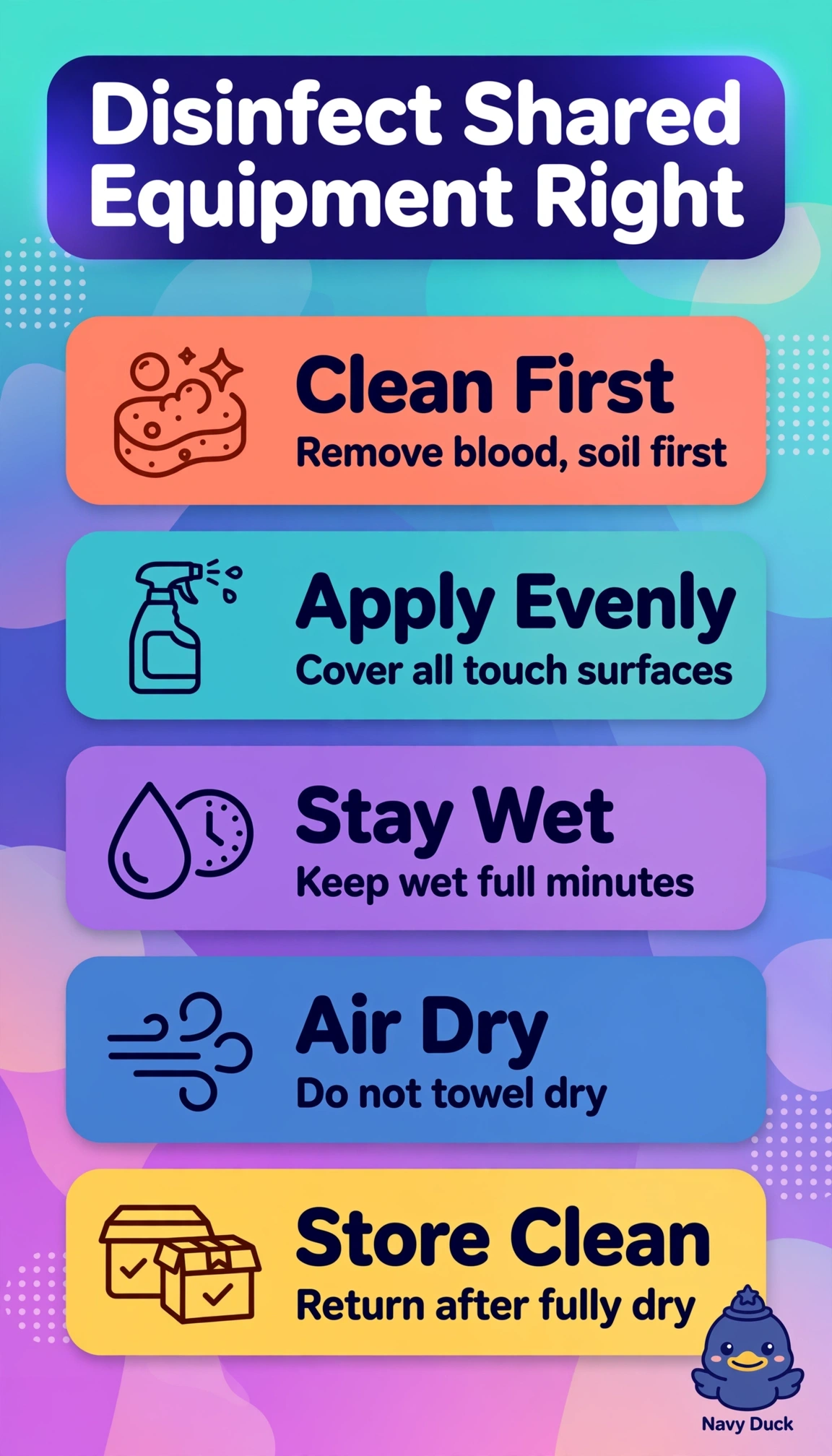
The correct technique succeeds because it follows the label in sequence: precleaning removes blood and soil that block or inactivate disinfectants, maintaining visibly wet contact for the full two minutes delivers the tested kill time for shared devices such as glucometers and cuffs, and complete air drying lets the chemistry finish without dilution or recontamination. The alternative that keeps the two-minute wet time and air drying but omits soil removal fails on cleaning before disinfection, since disinfectant applied over organic matter loses efficacy even when dwell time looks correct. The alternative that includes precleaning and air drying but allows only thirty seconds of wetness fails on contact time, because the registered efficacy requires the full labeled dwell and shorter times from other products cannot be borrowed. The alternative that includes precleaning and the two-minute wet time but ends with towel drying fails on drying method, because wiping removes active chemical early and can reintroduce lint or microbes. An exam caveat is that being behind schedule with the next patient roomed never overrides label directions, so any time-saving shortcut remains wrong. As a practical check, rewet if the liquid film breaks before two minutes, hold devices out of service during dwell, and confirm no soil remains with surfaces fully air-dried before use.