
A busy hospital technician must reuse a glucometer, stethoscope, and blood pressure cuff between patients, has facility-approved disinfectant wipes, gloves, and a wall clock, and notices visible soil on the cuff. The manufacturer label requires surfaces to remain visibly wet for the stated contact time. Which equipment disinfection sequence should the technician follow to satisfy cleaning and disinfectant dry times?
Select an answer to reveal the explanation.
Short Explanation
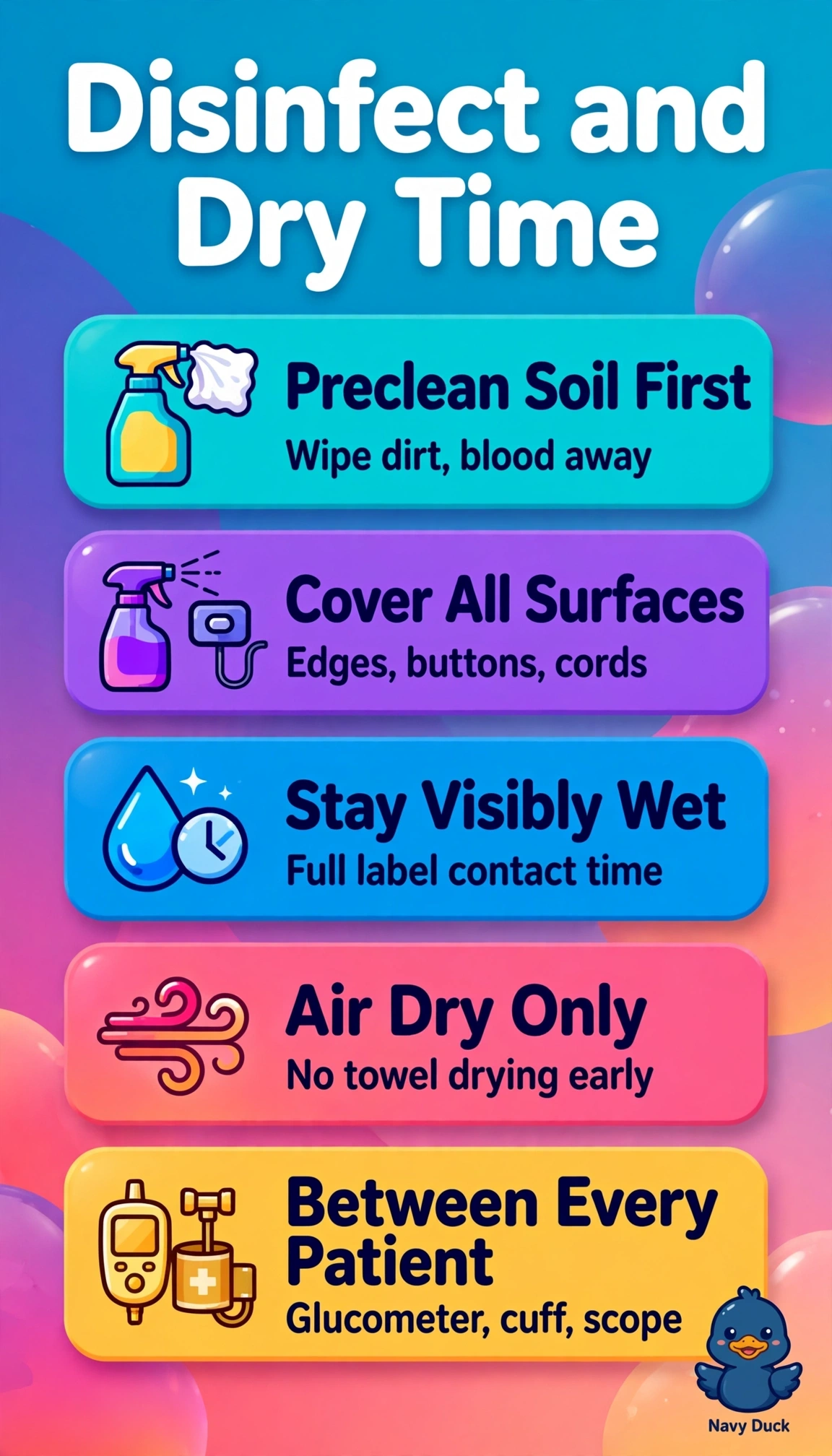
You cannot disinfect dirt, so cleaning comes first every time. Keeping surfaces visibly wet for the full contact time is what actually kills germs, like letting soap sit.
Full Explanation
Low-level disinfection of noncritical shared equipment requires precleaning to remove blood, dust, and organic soil that shield microbes, followed by application per manufacturer instructions with enough solution to keep the entire surface visibly wet for the full contact or dry time and then air drying, because evaporation before the labeled time leaves disinfection incomplete. Removing soil first and maintaining wetness satisfies both cleaning and contact requirements and prevents cross-transmission between patients. A single quick wipe used until dry fails contact time because thin application that evaporates early does not sustain the chemical action needed despite covering the surface. Spraying until dripping then toweling immediately fails both technique and equipment care because excess liquid can damage electronics and immediate drying aborts contact time. Waiting until end of shift to batch clean fails between-patient disinfection because contaminated devices would be used on multiple patients without reprocessing. Exam caveat is that visibly wet for label time is the most tested phrase, and practical check is to start timing only after full coverage, reapply if drying early, and allow air dry before storage or use.