
In a busy medical-surgical unit, you are assisting the nurse with a middle-aged adult who has an NG tube and just finished a 30-minute bolus feeding. The patient reports back discomfort and asks to lie flat, and the nurse asks you to stay with the patient for the post-feeding period. Which aspiration precaution for tube feeding should the PCT maintain after the bolus?
Select an answer to reveal the explanation.
Short Explanation
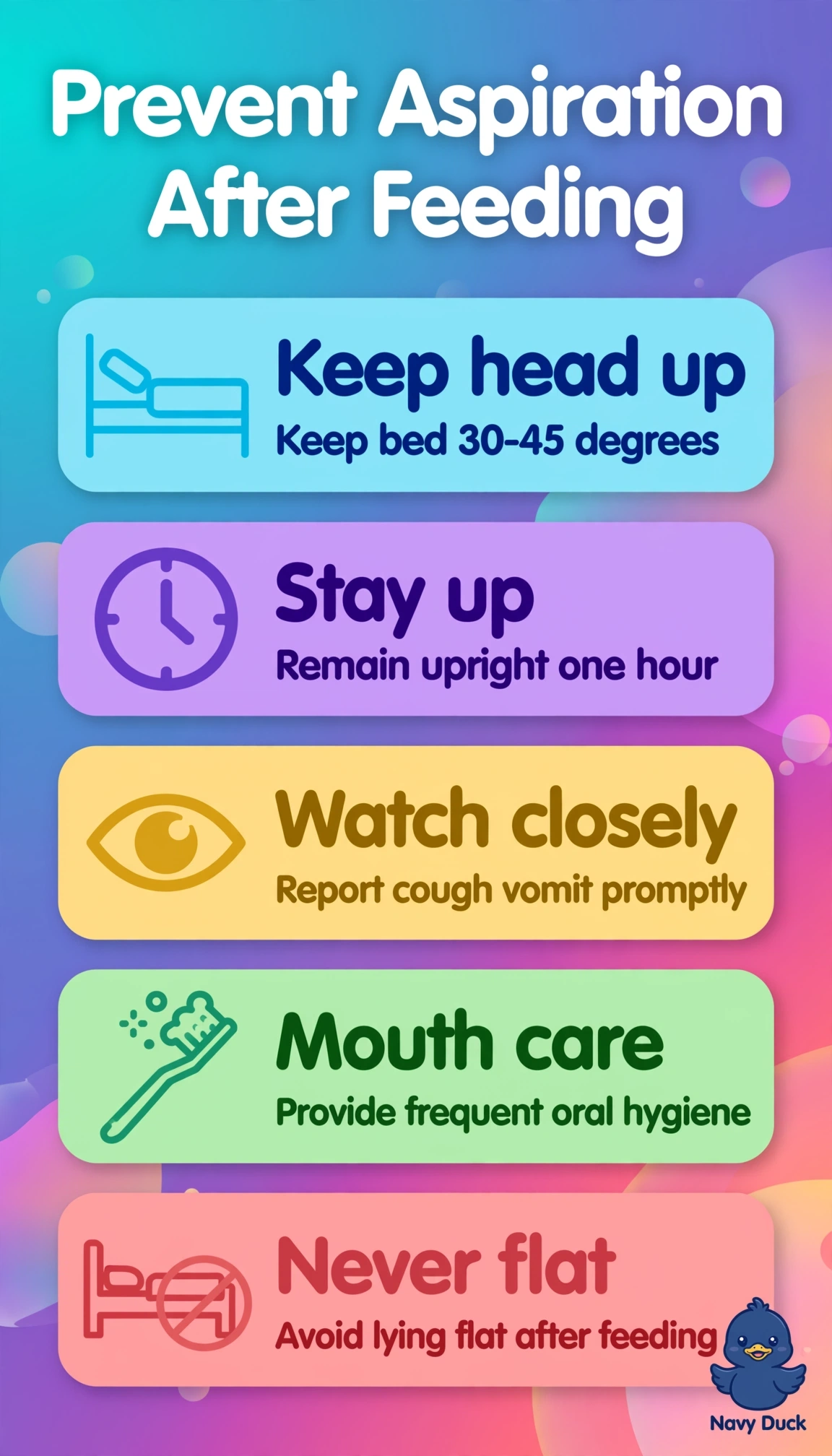
You’re the guardrail keeping formula out of the lungs, so gravity is your helper. You’ll keep the head-elevated position for a full hour after the bolus even when lying flat sounds kinder.
Full Explanation
After a bolus tube feeding, keeping the head of the bed elevated at 30 to 45 degrees for at least one hour uses gravity to retain formula in the stomach, reduce gastroesophageal reflux, and lower aspiration pneumonia risk while allowing time for early gastric emptying, with prompt reporting of coughing, vomiting, or breathing changes enabling rapid nurse intervention. The approach of lowering after only 30 minutes fails by duration because it confuses the 30-minute delivery time with the longer postprandial positioning precaution, leaving the patient flat when residual volume and reflux risk remain highest. The approach of adding small sips of water for dryness fails by aspiration safety because NG-fed patients are typically restricted from unprescribed oral intake, and added fluid can pool in the oropharynx, provoke cough or emesis, and defeat the benefit of elevation, with thirst addressed only by ordered mouth swabs or ice chips. The approach of charting tolerance without staying to observe fails by surveillance because delegation to remain with the patient requires continuous monitoring and timely escalation rather than retrospective documentation, and silent regurgitation can progress quickly. An exam caveat is to never let comfort requests override aspiration precautions and to remember the PCT role is to maintain position and report, not to independently assess placement or tolerance. A practical bedside check is to verify the bed-angle indicator, use pillows behind the back and under knees for comfort without lowering, keep emesis supplies nearby, and notify the nurse immediately for nausea, cough, vomiting, or dyspnea.