
In outpatient lab you receive orders for blood cultures, a light-blue coagulation tube, a serum chemistry tube, and a lavender hematology tube from a single venipuncture on an adult with accessible antecubital veins. The tubes must be filled in an order that prevents additive carryover between tubes. Which order-of-draw sequence with correct tube additives prevents cross-contamination for blood collection?
Select an answer to reveal the explanation.
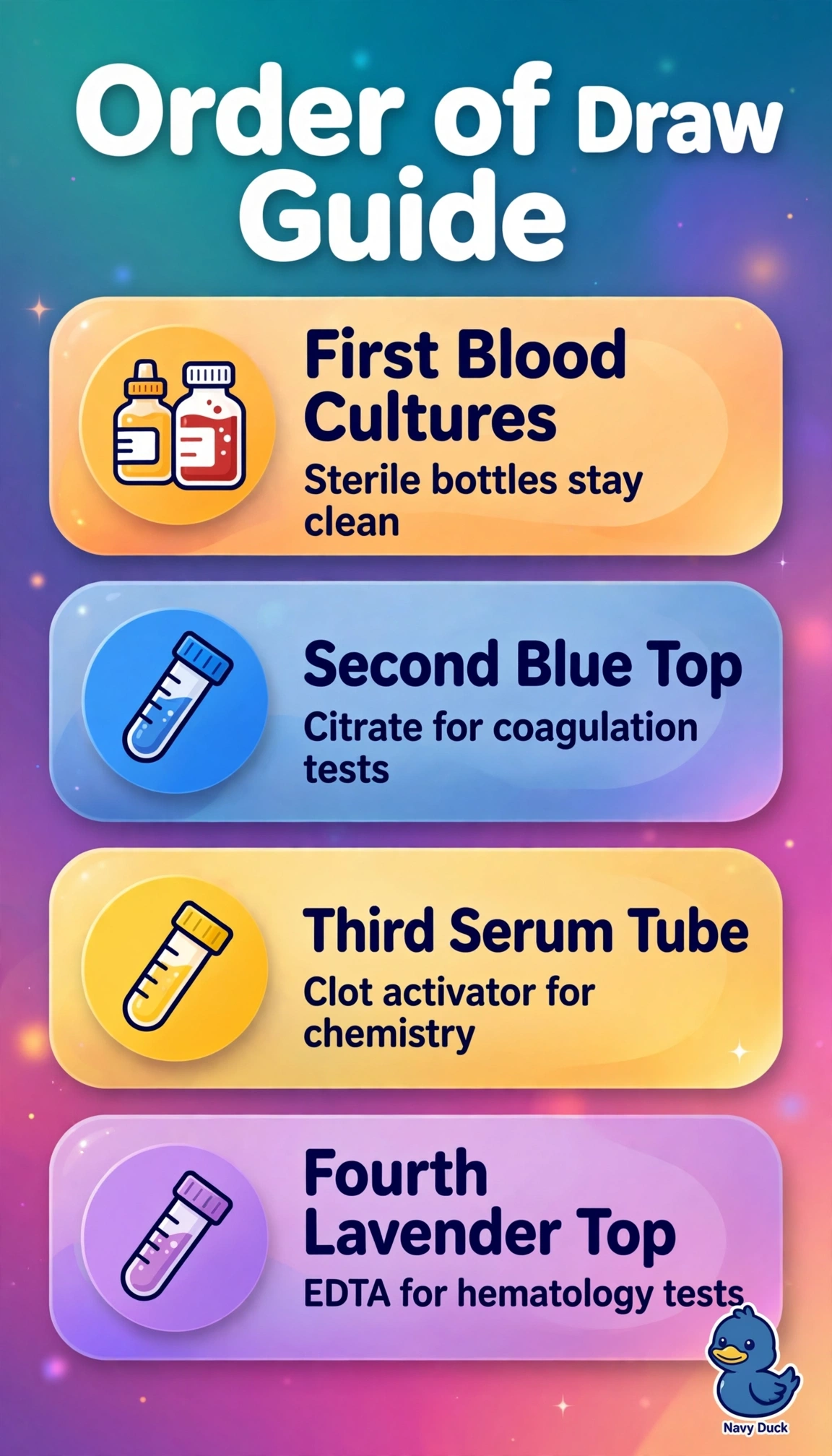
Short Explanation
You are protecting every result from sneaky additive carryover here. Remembering sterile-to-sensitive sequence keeps cultures clean and coag tests accurate, just like pouring clean water before soapy water.
Full Explanation
Order of draw works by sequencing tubes from most contamination-sensitive to least so that needle-borne additive carryover does not falsely alter coagulation, culture, or chemistry results, with sterile cultures first, then sodium citrate for clotting assays, then serum tubes, followed by heparin and EDTA, then glycolytic inhibitors. Starting with EDTA lavender fails by the chelation-carryover concept because EDTA binds calcium and will falsely prolong blue-top clotting times and alter potassium despite correct venipuncture technique. Starting with serum then EDTA then blue then cultures fails by the sterility-priority concept because skin flora and additives introduced before cultures compromise sterility even though all requested tubes are eventually collected. Starting with blue then cultures then EDTA then serum fails by the same sterility-priority concept because citrate tubes are not sterile and should never precede blood cultures despite correct additive identification. Exam caveat: NHA tests cultures first and light blue before serum and EDTA, so memorize function groups rather than cap colors alone. Practical check: line tubes left-to-right in draw order and invert gently per additive immediately after each fill.