
On an overnight medical-surgical unit you are assigned continuous one-to-one observation for an adult on suicide precautions who is also tremulous and irritable from alcohol withdrawal and keeps asking to use the bathroom alone and to be left to sleep. The nurse instructs constant line of sight with removal of sharp and ligature risks. Which one-to-one monitoring action best maintains safety for suicide risk with withdrawal agitation?
Select an answer to reveal the explanation.
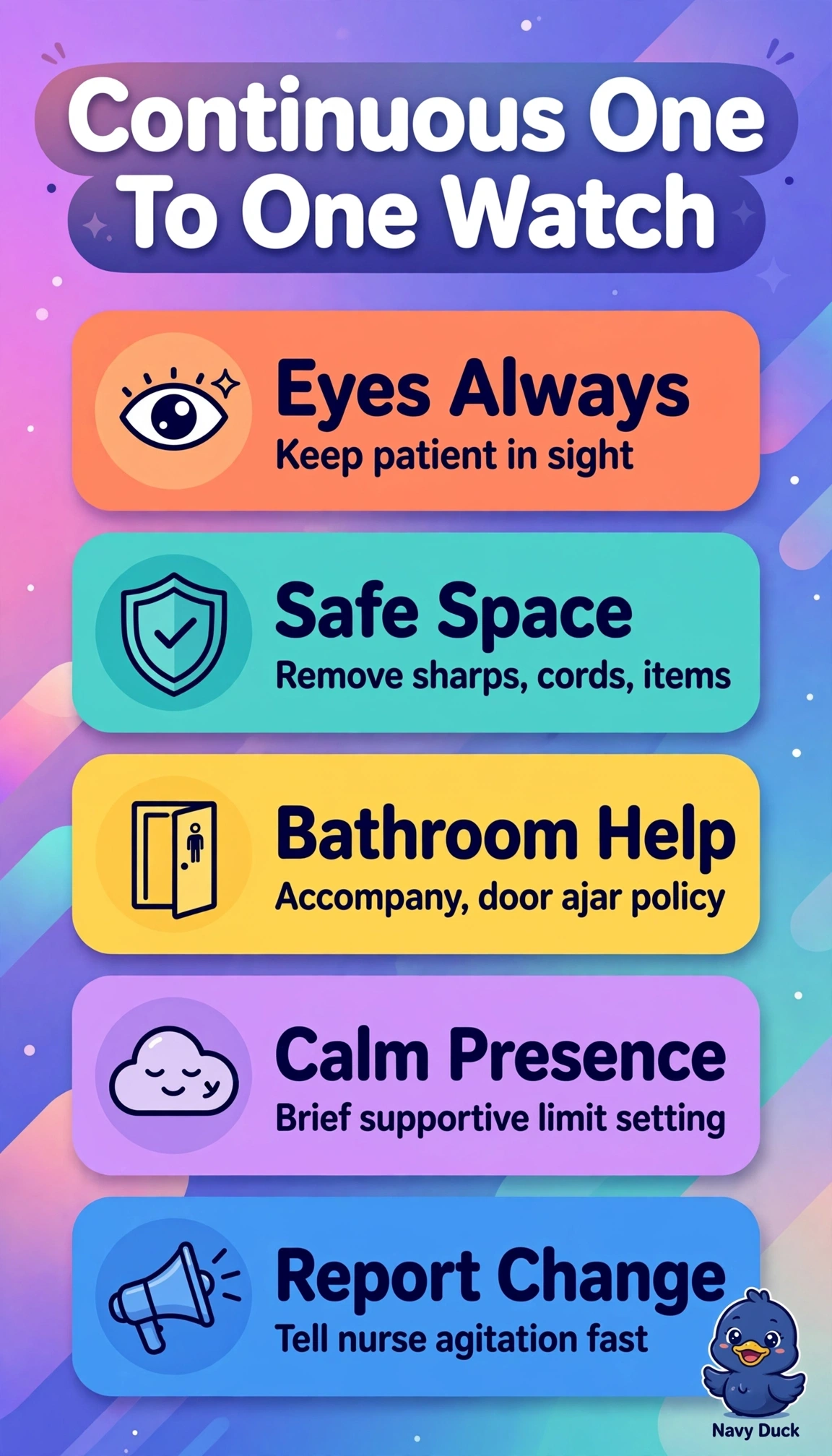
Short Explanation
Staying glued in this assignment is the whole job, even when it feels awkward. You're practicing vigilance that keeps sightlines unbroken while still protecting dignity and looping in the nurse.
Full Explanation
The correct action integrates the three linked safety demands of this scenario: uninterrupted line of sight for suicide precautions, supervised bathroom use that preserves dignity without surrendering observation, and prompt escalation of tremulousness and irritability that may signal worsening alcohol withdrawal and heightened impulsivity. Continuous observation means eyes and proximity are maintained even during toileting and sleep, the environment is kept free of sharps and ligature points per nursing direction, and changing agitation is communicated immediately so medications, restraints, or medical evaluation can be ordered. Logging agitation trends for handoff without nurse escalation fails the concept of timely clinical communication because withdrawal can progress rapidly and documentation does not replace direct notification. Leaving belongings nearby for comfort fails the concept of environmental safety because trust-building cannot justify retaining potential ligature or sharp hazards when suicide risk and confusion coexist. Observing intermittently during sleep to aid rest fails the concept of constant observation because suicide precautions require continuous sight even when the patient appears asleep, and intermittent checks are inadequate for impulsive acts. An exam caveat is that privacy, therapeutic rapport, and sleep promotion are important but never override a constant-observation order, and reassurance alone never substitutes for reporting withdrawal signs. A practical check is to maintain an unobstructed view, keep the bathroom door ajar with same-gender escort per policy, scan for cords, belts, razors, and glass, and verbally update the nurse about any increase in tremor, sweating, agitation, or requests to be alone.