
A PCT cleans a shared glucometer and blood pressure cuffs in a busy med-surg room after use. The facility policy requires EPA-registered wipes, visible wet contact, and air drying on a clean surface. Which disinfection technique should the PCT use to meet required disinfectant dry times?
Select an answer to reveal the explanation.
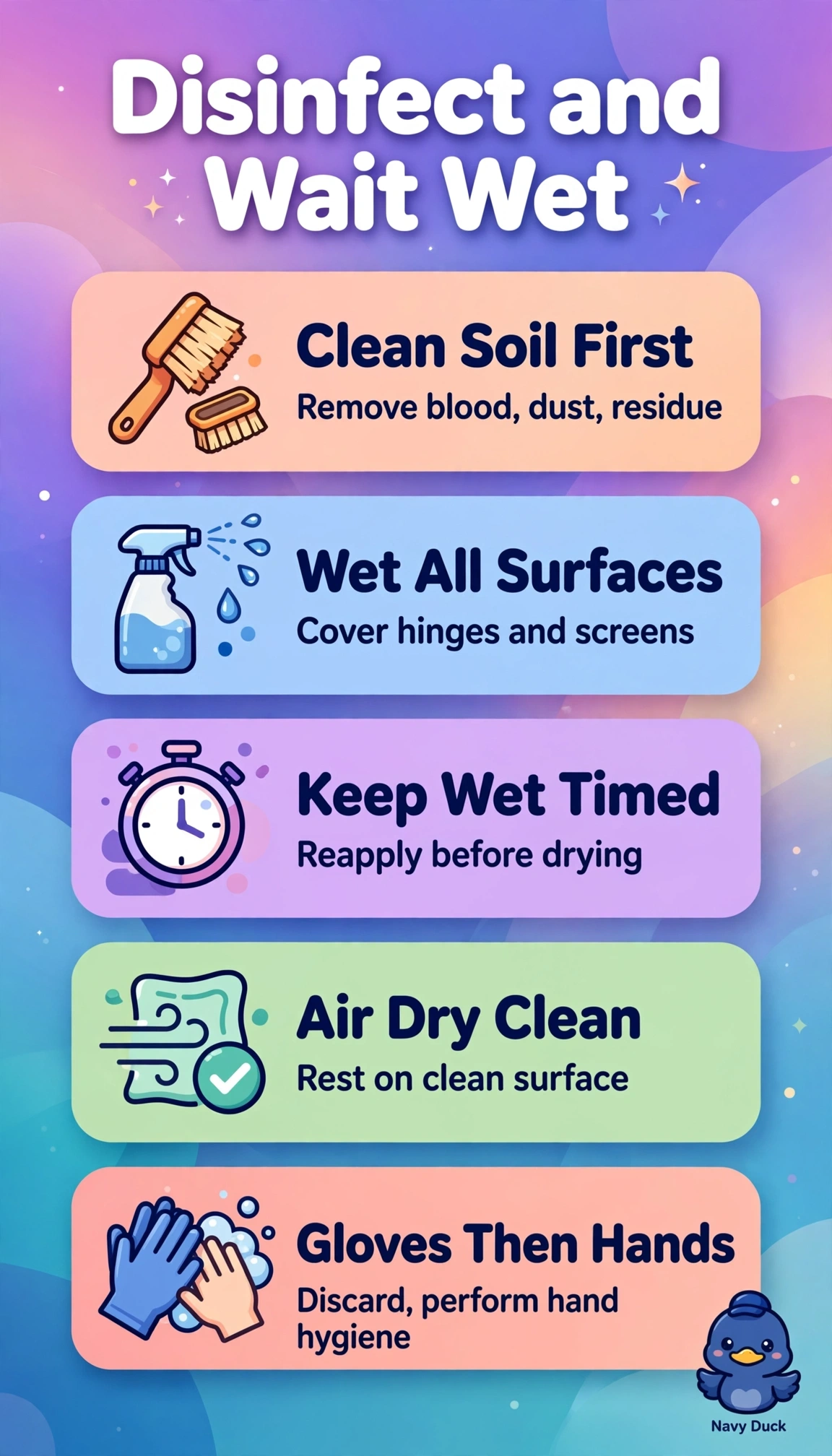
Short Explanation
Wet time does the killing, so you keep germs soaked for the full label time. That contact time is like marinating — flavor only works if you wait.
Full Explanation
The correct technique works because shared glucometers and cuffs need EPA-registered disinfection, uniform visible wetness, continuous wetness for the full label time, and undisturbed air drying on a clean surface to achieve the claimed kill without recontamination. Using correct EPA-registered wipes with clean-surface air drying but only brief wetness without timing full dwell fails on contact-time concept, because a single pass that dries in seconds cleans without providing the minutes of sustained exposure required for disinfection and needs reapplication if early drying occurs. Achieving visible wetness for label time with full air drying on a clean surface but using general detergent wipes fails on product-claim concept, because detergents remove soil but lack EPA-registered disinfectant efficacy for blood-contaminated shared devices despite correct timing and drying. Achieving visible wetness for label time with EPA-registered wipes but towel drying for immediate reuse fails on uninterrupted-dwell concept, because toweling removes active chemistry and can deposit lint and flora while returning the device before processing finishes. An exam caveat is that workload or visually clean appearance never shortens label time, so distinguish cleaning from disinfection and favor sustained wetness over speed. As a practical check read label minutes, keep surfaces uniformly glossy with extra wipes as needed, and rest items on a fresh barrier until fully air dry.