
You are assigned to clean shared glucometers and a blood pressure cuff between patients on a busy clinic afternoon, with manufacturer wipes available and the label stating a two-minute wet contact time. Turnover pressure is high and the next patient is waiting. Which disinfectant dry time practice should you follow to complete disinfection of this shared equipment?
Select an answer to reveal the explanation.
Short Explanation
You're giving germs a timed soak, not just a splash. Keeping the surface visibly wet works like leaving dishes soaking to loosen grime fully. That contact-time is what turns wiping into true disinfection.
Full Explanation
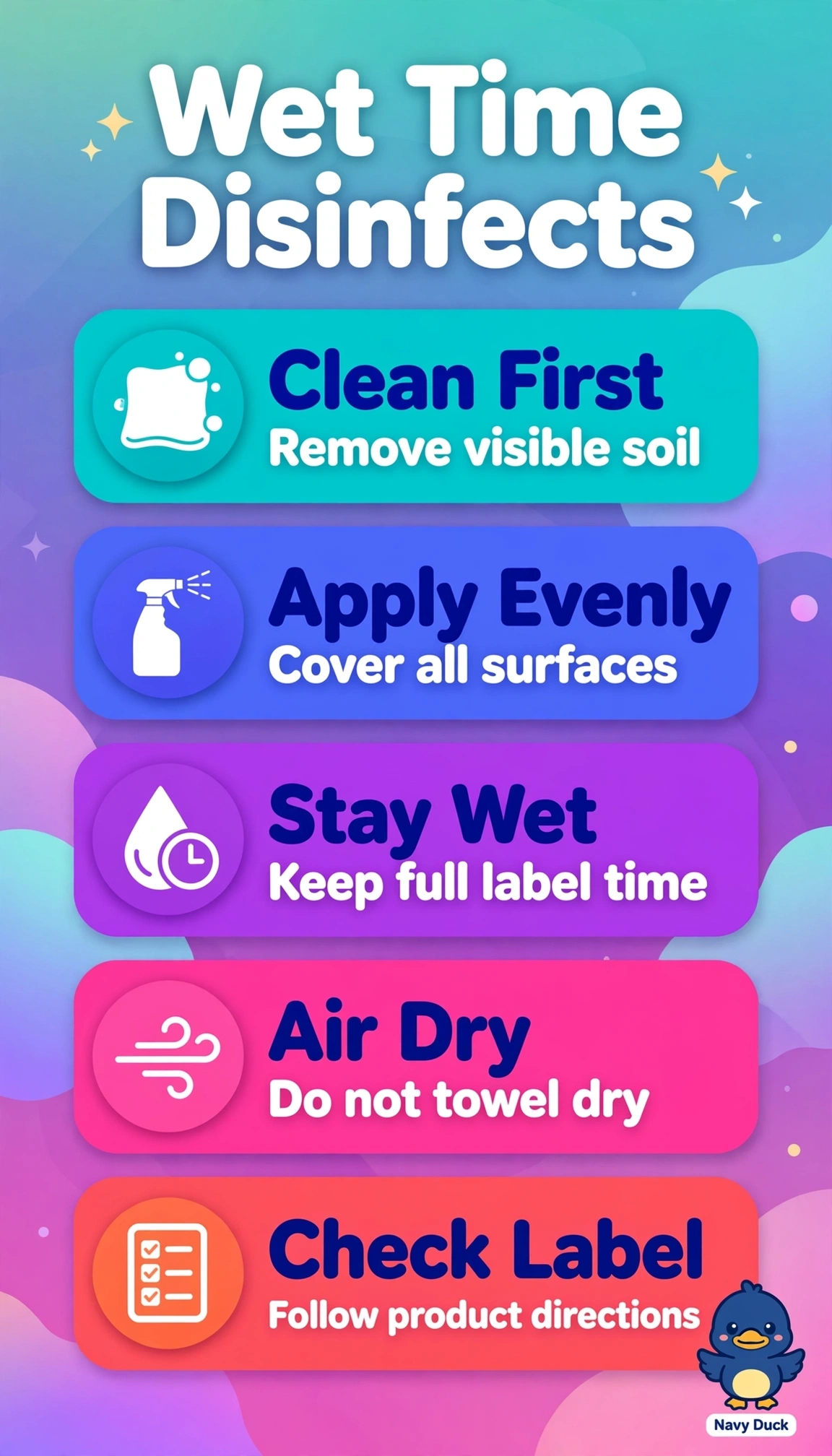
The correct practice follows label-based disinfection for shared noncritical equipment: remove visible soil so organic matter does not block chemical action, keep surfaces visibly wet for the full labeled two minutes with reapplication as needed, then allow undisturbed air drying so exposure is not diluted or interrupted. The one-minute air-dry variation fails on contact time because efficacy is validated only for the stated wet duration, so a shorter interval borrowed from another product cannot be substituted even with correct cleaning and drying. The no-separate-cleaning variation fails on cleaning before disinfection because blood and soil shield organisms and can inactivate the agent, so the correct wet time applied over debris does not achieve disinfection. The towel-dry variation fails on exposure preservation because wiping removes liquid and can recontaminate the surface, while air drying maintains continuous contact. Exam caveat: when the stem states an exact label time, select that time rather than generic memory or turnover pressure about waiting patients. Practical check: start the timer only after full wet coverage is achieved, reapply if drying or beading occurs, and withhold the glucometer and cuff from use until wet time plus drying is complete.