
A long-term care resident with decision-making capacity refuses morning care and states no one explained the right to refuse treatment, then asks the assistant to change the care plan immediately. The assistant has listened, offered information about daily choices, and documented the preference. Which chain-of-command action should the technician take next to uphold the Patients' Bill of Rights?
Select an answer to reveal the explanation.
Short Explanation
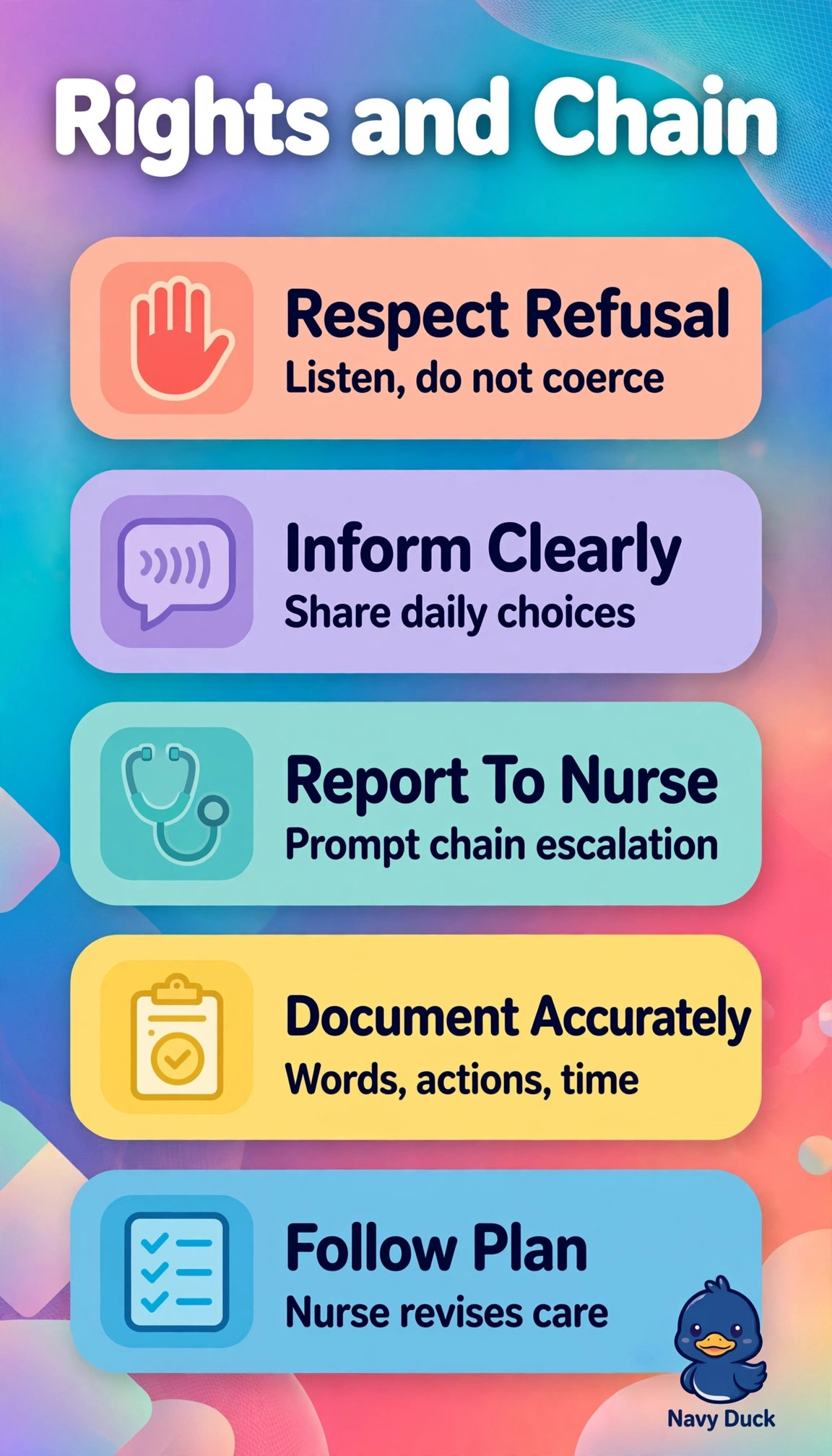
You are the resident's voice, not the final decision-maker here. Prompt reporting to the nurse respects refusal rights while routing plan changes through the proper chain.
Full Explanation
The correct action upholds the Patients' Bill of Rights because a resident with capacity may refuse care after informed discussion, and technicians support autonomy by listening, sharing general daily-choice information, documenting, then escalating promptly so the licensed nurse can provide formal rights education, verify understanding, address risks, and authorize any care-plan change within scope and chain of command. Providing thorough rights education independently and then resuming duties feels helpful and uses proper teaching and documentation, but it fails on scope because formal interpretation of rights belongs to the licensed nurse rather than the technician. Forwarding the revision request to the planning team for later review respects autonomy and process, yet it fails on timeliness and completeness because it defers the immediate need for nurse follow-up and omits the unresolved request for information. Respectfully pausing care and reoffering later is compassionate and often appropriate for temporary refusal, but it fails on communication because it manages the episode alone without reporting the refusal and education need. Exam caveat is to separate general daily-choice support, which technicians may provide, from formal rights teaching and independent plan revision, which they may not. Practical check is to use SBAR promptly: state what was refused, the exact rights question, what was already shared, and what the resident requested next.