
In an outpatient clinic you are recording a STAT 12-lead EKG on a middle-age adult who is cold, tense, and talking during the tracing. The tracing shows slow rolling baseline drift, fuzzy jagged muscle spikes, and regular sharp 60-cycle spikes. Which artifact-correction action should the PCT take first to obtain a clean EKG tracing?
Select an answer to reveal the explanation.
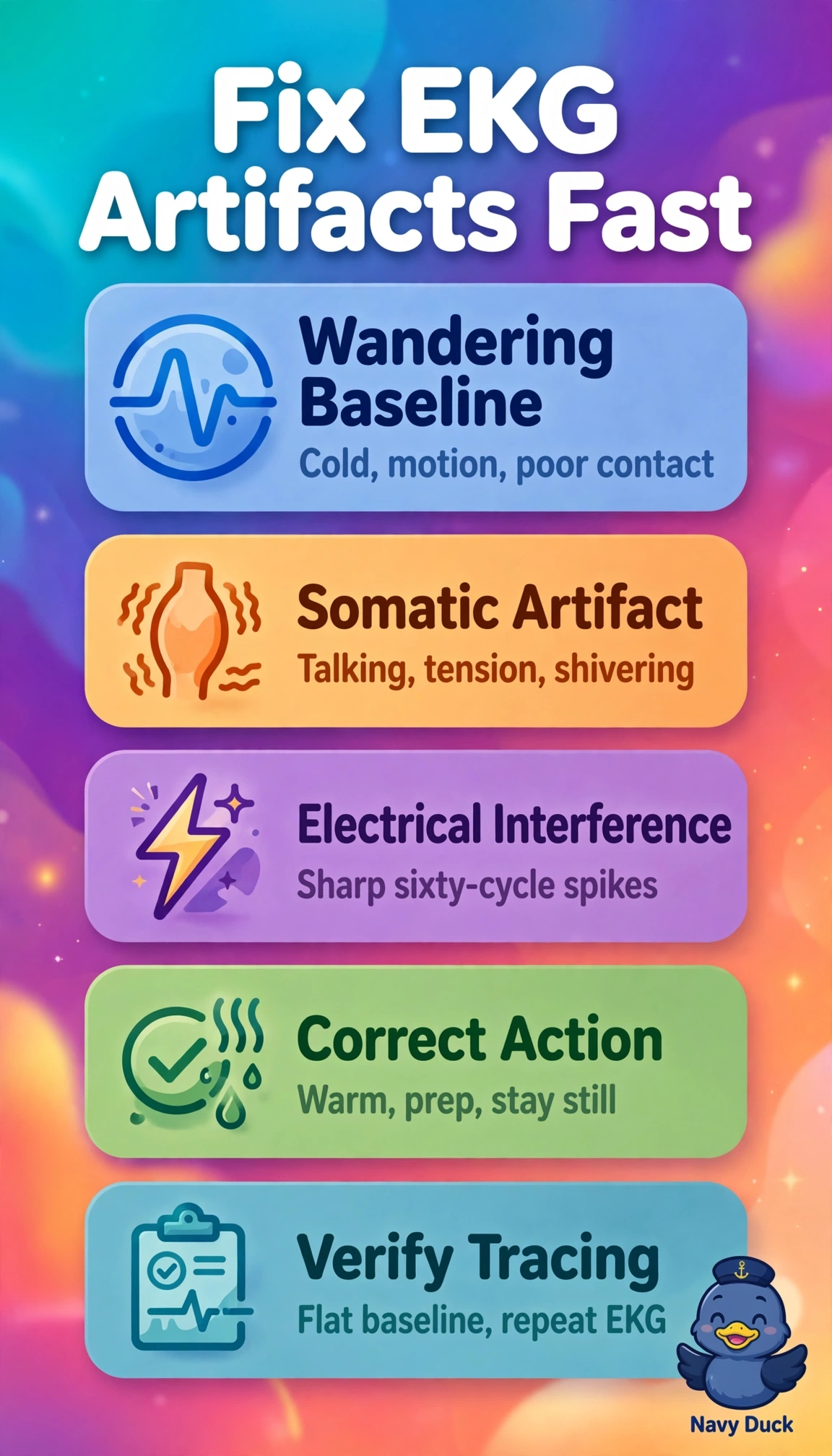
Short Explanation
You're untangling three different squiggles at once, and that's pure detective work. Patient warmth, skin prep, and stillness fix your foundation before you chase electrical causes. Calm patient, calm baseline, clean tracing.
Full Explanation
The correct action directly targets the dominant physiologic sources described in the stem: cold induces shivering and tense skeletal muscle produces fuzzy somatic tremor while talking and movement shift electrodes to create slow rolling baseline wander, so warming with a blanket, coaching to relax, breathe normally and remain still, combined with re-prepping oily or dry skin, restores stable electrode contact and eliminates two of three artifacts at their origin. Inspecting power cords, grounding, lead wires and moving away from outlets is a sound electrical safety practice that would reduce true 60-cycle alternating-current interference with its regular sharp spikes, but it leaves shivering, tension and talking untouched and therefore cannot resolve the combined drift and muscle artifact that dominates this tracing. Enabling muscle-tremor and baseline-wander filters then repeating the tracing is commonly used for monitoring and can cosmetically smooth the display, yet diagnostic 12-lead standards require artifact removal at the source first because aggressive filtering can distort ST segments and mask ischemia, especially when a STAT interpretation is needed. Thoroughly cleansing with alcohol, replacing loose electrodes and verifying placement improves impedance and reduces drift from poor contact, but without warming, relaxing and enforcing stillness the patient will continue to generate somatic and motion artifact despite perfect skin prep. For exams, remember filters and electrical checks are never the first step when cold, tense and talking clearly point to patient-related artifact, and a practical check is to pause, rewarm, re-prep, confirm the patient is silent and motionless with arms at sides, then observe the baseline flatten in lead II before recording the full STAT 12-lead.