
On a busy medical-surgical unit you take routine morning vitals on four adult patients who are resting in bed. One has temperature 99.1F, pulse 88, respirations 18, BP 118/76. Another has pulse 112, respirations 22, BP 142/92, SpO2 94%. A third has pulse 58, respirations 12, BP 88/54, SpO2 97%. Which vital-sign pattern should the PCT report first as outside reference ranges?
Select an answer to reveal the explanation.
Short Explanation
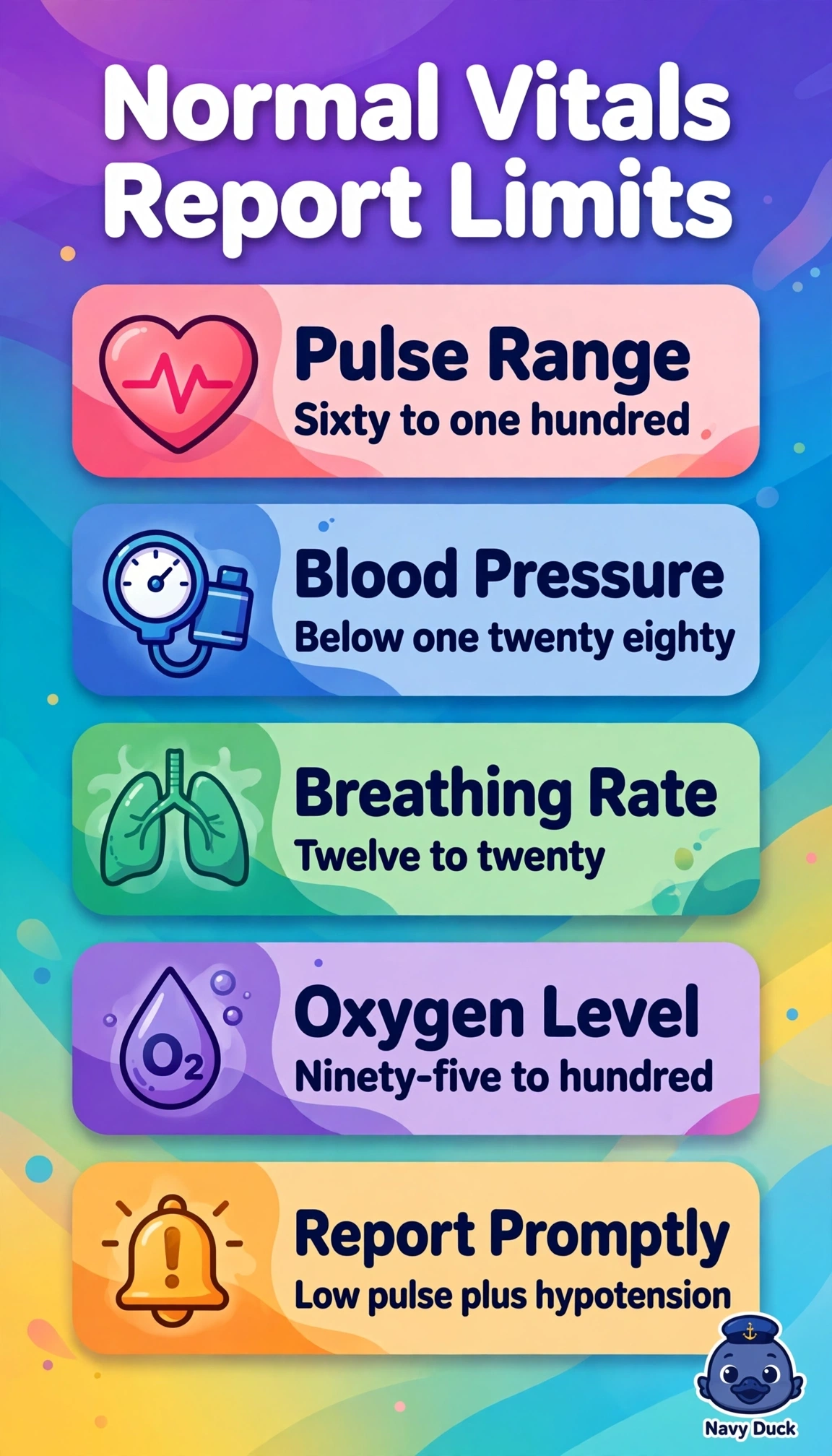
You've got a sharp eye for numbers that don't fit the pattern. A resting pulse near 60 with low blood pressure is your red-flag combo that needs prompt nurse notification. Normal ranges keep patients safe, so trust them and speak up fast.
Full Explanation
Adult resting reference ranges are generally temperature about 97.8-99.1F, pulse 60-100, respirations 12-20, blood pressure below 120/80 with hypotension often defined below 90/60, and SpO2 95-100%, so a pulse of 58 with 88/54 falls below both cardiac and perfusion thresholds and suggests impaired output that requires prompt reporting and continued monitoring. Reporting 88 with 118/76 as abnormal mislabels clearly normal values because both fall squarely inside expected ranges and would create false alarms. Reporting 112 with 142/92 as normal ignores tachycardia, mild tachypnea, pre-hypertension to stage hypertension, and low-normal oxygenation that all warrant reporting but are less immediately concerning for perfusion than symptomatic-range bradycardia with hypotension. Reporting 99.1F with 18 as fever with tachypnea misclassifies borderline normal temperature and normal respirations as pathologic, showing failure to apply reference limits. Exam caveat is to judge vitals as a pattern plus patient condition rather than one number alone, and practical check is to recheck with correct cuff size and technique, confirm symptoms like dizziness, and report promptly to the nurse with trends.