
An alert adult on a medical-surgical unit agreed to a dressing change with the nurse, then asks you what will happen and if it can be declined while you set up supplies at the bedside. The consent form is signed and the nurse is available. Which application of informed and implied consent should guide your assistance with this consented procedure?
Select an answer to reveal the explanation.
Short Explanation
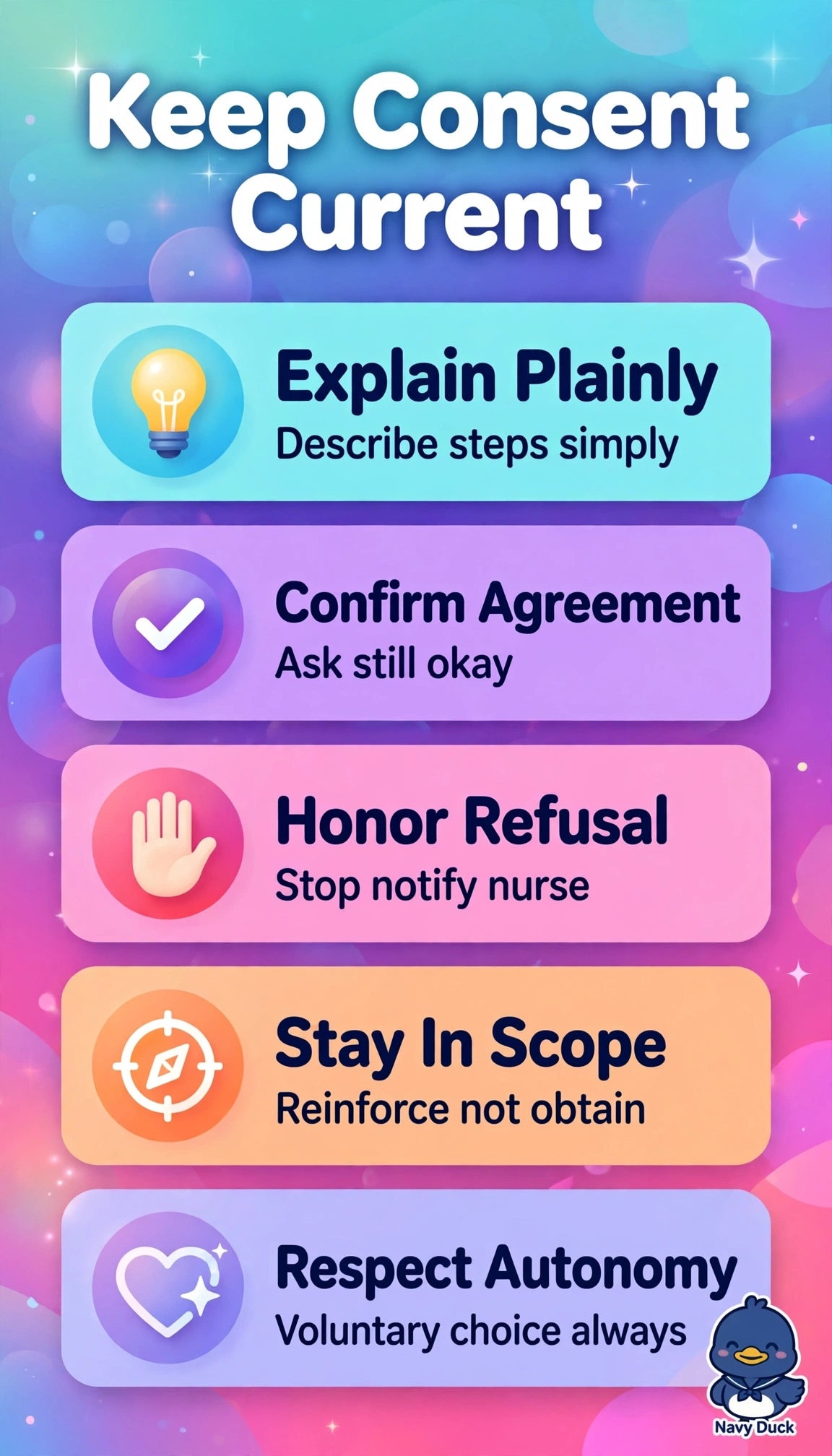
You've got to keep permission live, not filed away. Your pause to re-confirm honors autonomy like checking the door's still open before you walk through. That re-confirmation protects trust and keeps care truly voluntary.
Full Explanation
The correct response reflects that informed consent is an ongoing process rather than a single signature, so for an alert adult who previously agreed, the assistant reinforces prior consent by describing steps in plain language, explicitly reconfirming continued agreement after questions about what will happen and declinability, and respecting autonomy by stopping and promptly notifying the responsible nurse if refusal occurs. One distractor correctly offers clear explanation but treats the signed form as irrevocable ongoing permission without rechecking, which fails voluntariness and the right to withdraw that the question directly raises. Another distractor correctly explains and checks agreement yet proceeds independently while deferring nurse notification until afterward, which violates delegation and supervision principles because assistance with a consented procedure requires timely communication and honoring refusal before acting when the nurse is available. The remaining distractor appropriately pauses and involves the nurse but withholds any answer to avoid misinforming, which omits the support role to reinforce already-provided information within scope and leaves the immediate need unmet. Exam caveat: distinguish reinforcing information and witnessing ongoing agreement, which is within supportive duties, from obtaining original informed consent, which remains with the licensed provider, especially when capacity, new concerns, or refusal emerge. Practical check: use plain language plus teach-back, ask explicitly whether to continue or stop, document discussion and response, and escalate promptly for renewed decision-making.