
You are cleaning a shared blood pressure cuff between patients on a busy medical-surgical unit. The disinfectant wipe label requires the surface to stay visibly wet for the full contact time and then air-dry, and the next patient is already waiting. Which disinfectant dry-time practice maintains effective infection prevention on shared equipment?
Select an answer to reveal the explanation.
Short Explanation
You have got this — germs need soaking time, not just a quick swipe. Keeping the surface wet for the full contact time lets the chemistry finish the job, much like letting soap sit on a greasy pan.
Full Explanation
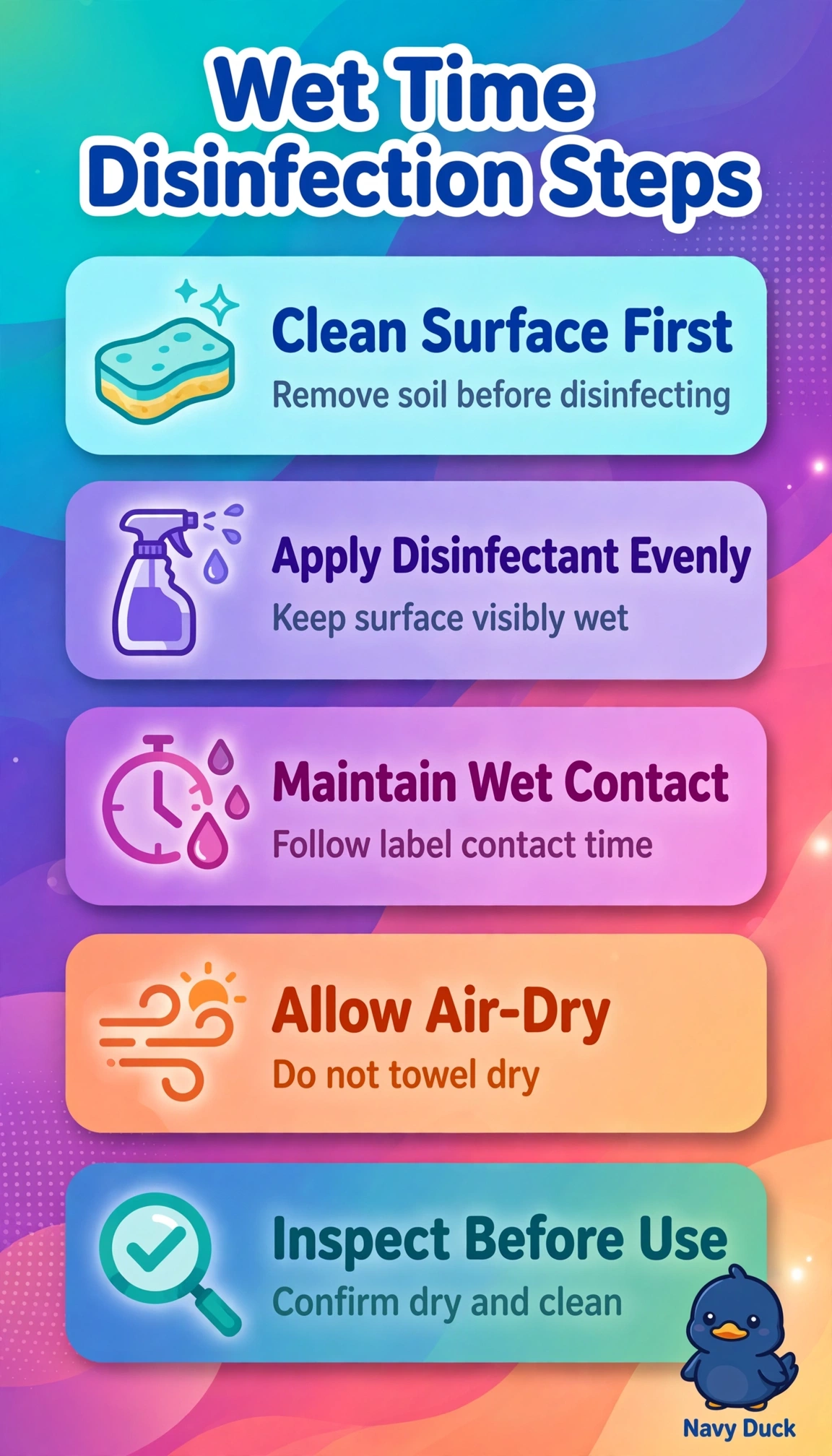
The correct practice succeeds because disinfectant efficacy depends on both chemical concentration and sustained wet contact for the EPA-registered label time followed by undisturbed air-drying, which allows the active ingredient to achieve the claimed pathogen kill on a porous, high-touch item like a blood pressure cuff. One incorrect approach involving a single thorough wipe left to air-dry without monitoring fails by evaporation concept, since in warm clinical environments the liquid film often dries before the required minutes elapse and reapplication is needed to maintain microbicidal activity. Another incorrect approach that maintains wetness correctly but then pats the surface dry for patient comfort fails by residue-removal concept, because wiping or blotting removes active chemical before drying is complete and can reintroduce fibers or skin flora. A third incorrect approach that maintains wet appearance and allows air-drying but substitutes a faster unit routine for the label time fails by contact-time specificity concept, since different formulations require different durations and only the product label validates effectiveness. For exams, remember that patient-waiting pressure never overrides label instructions and hurried turnover is a classic distractor cue. In practice, start a timer, reapply if edges dry early without scrubbing off residue, and store the cuff untouched until no moisture remains before applying to the next patient.