
A PCT assists a 68-year-old post-knee surgery patient learning a standard walker in a rehab hallway. The therapist ordered touch-down weight on the surgical leg, a gait belt in place, and the walker height at the wrist crease. Which ambulation sequence should the PCT reinforce for safe walker use?
Select an answer to reveal the explanation.
Short Explanation
You nailed the stable triangle idea here — walker, then weak leg, then strong leg keeps support under you. That step-to pattern works like a three-legged stool that never tips.
Full Explanation
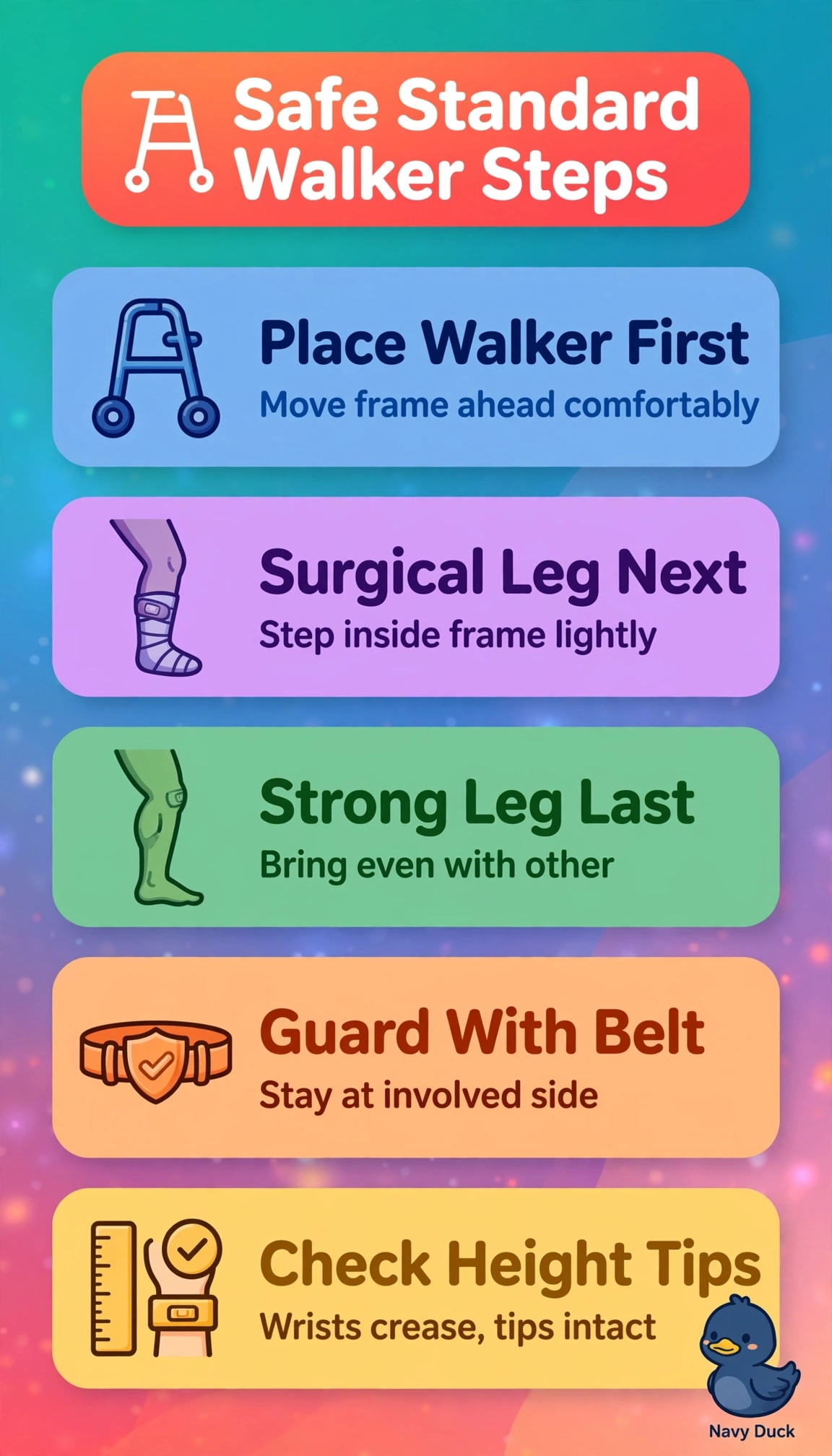
A standard walker must provide a stable base before weight shifts, so the correct sequence advances the frame first within arm reach, then the involved leg into the center of the frame with ordered weight bearing, then the uninvolved leg up to or just past it, while the PCT stays to the involved side with a gait belt. Advancing the stronger leg first fails by concept because it loads weight without forward support and encourages leaning beyond the base. Moving walker and feet together in a glide describes a rolling walker or two-wheeled pattern but defeats the lift-and-place stability required for a standard frame with touch-down precautions. Stepping with the surgical leg before moving the walker fails by concept because the patient reaches outside the base of support and risks forward loss of balance. An exam caveat is that cane and crutch sequences differ, with a cane used on the strong side and crutches requiring specific gait patterns, so do not transfer walker logic to them. A practical check is to confirm walker height at the wrist crease with elbows slightly bent and rubber tips intact before any steps.