
A frightened 5-year-old in urgent care needs temperature, pulse, respirations, blood pressure, and pulse oximetry before immunizations, is clinging to a parent, crying loudly, and has very small arms that swim in the adult cuff at the bedside. Which vital-sign adaptation should the PCT use for accurate pediatric measurement?
Select an answer to reveal the explanation.
Short Explanation
You'll get the truest readings when you keep your little patient tucked with a parent and save the fussiest steps for last. Grab a child-size cuff and go gentle, like wearing the right shoe size so the run doesn't hurt.
Full Explanation
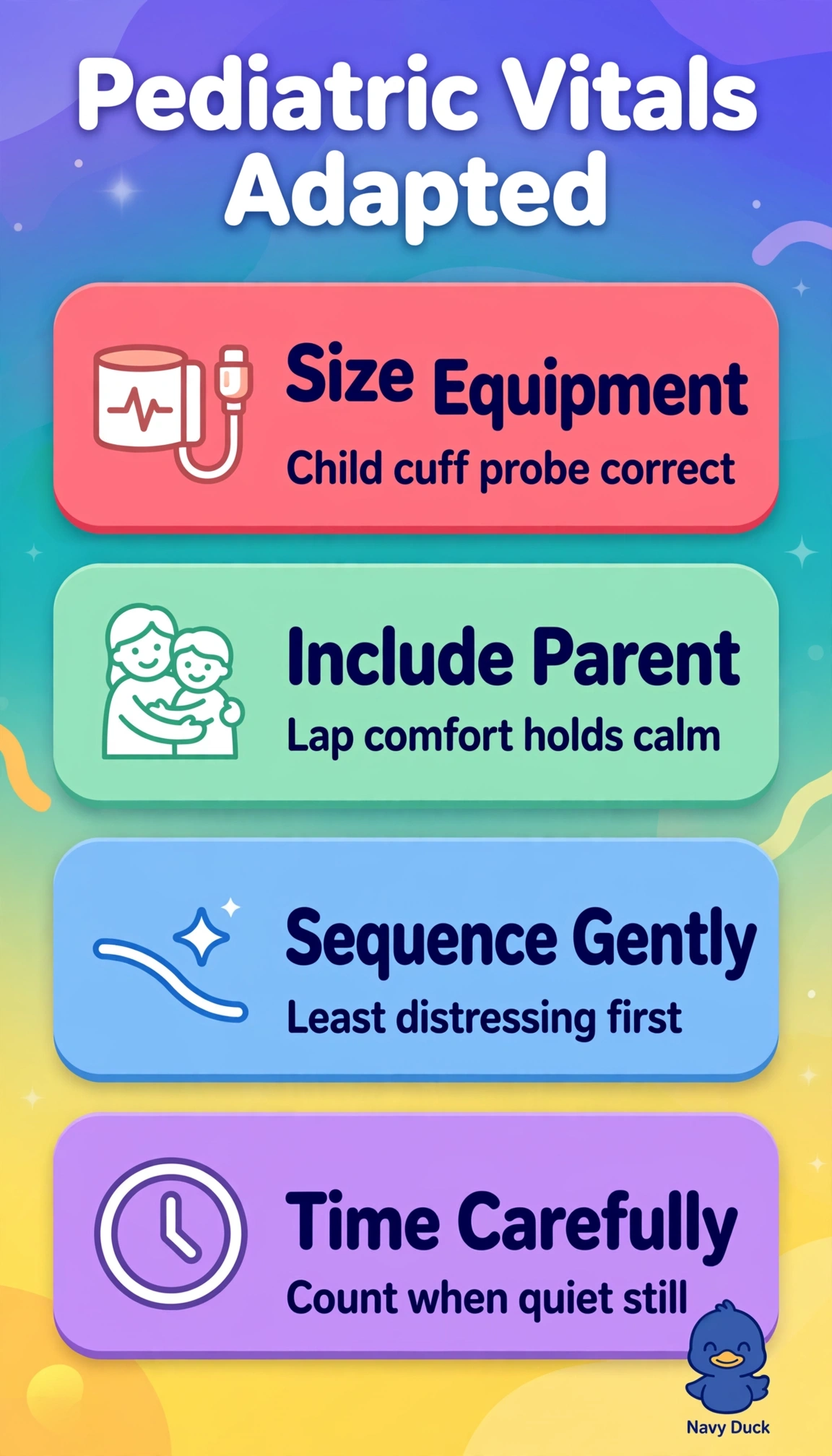
The correct adaptation reflects pediatric standards for accuracy and cooperation, requiring appropriately sized equipment, family-centered comfort, least-to-most distress sequencing, and baseline timing before a painful stimulus. A frightened clinging 5-year-old needs the parent as secure base, so measuring on the lap with calm explanation lowers sympathetic arousal that otherwise raises pulse, respirations, blood pressure and temperature, while counting respirations discreetly first, then pulse, pulse oximetry, temperature, and blood pressure last preserves validity. Child cuffs and sensors are essential because proper bladder width and probe fit prevent systematic error. The approach using the adult cuff at the bedside fails by equipment concept because an oversized cuff underestimates pressure and cannot be corrected by wrapping tighter, so small arms require pediatric sizes. The approach postponing measurement until after immunizations fails by timing concept because vital signs were ordered as pre-procedure baselines and pain, crying and anxiety distort values. The approach starting with blood pressure first fails by sequencing concept because the most intrusive cuff provokes struggling that contaminates later values. For exams, watch decisive qualifiers like before, child-size, with parent and least distress, since one altered qualifier makes a sound routine incorrect. In practice, verify cuff coverage, support the arm at heart level on the parent lap, observe respirations before touching, and document distress with numbers.