
In a busy emergency department a provider orders a forensic urine drug collection for a suspected assault case with police waiting, the bathroom is shared, and the patient needs clear instructions while maintaining legal admissibility. Which chain-of-custody practice best preserves the forensic specimen?
Select an answer to reveal the explanation.
Short Explanation
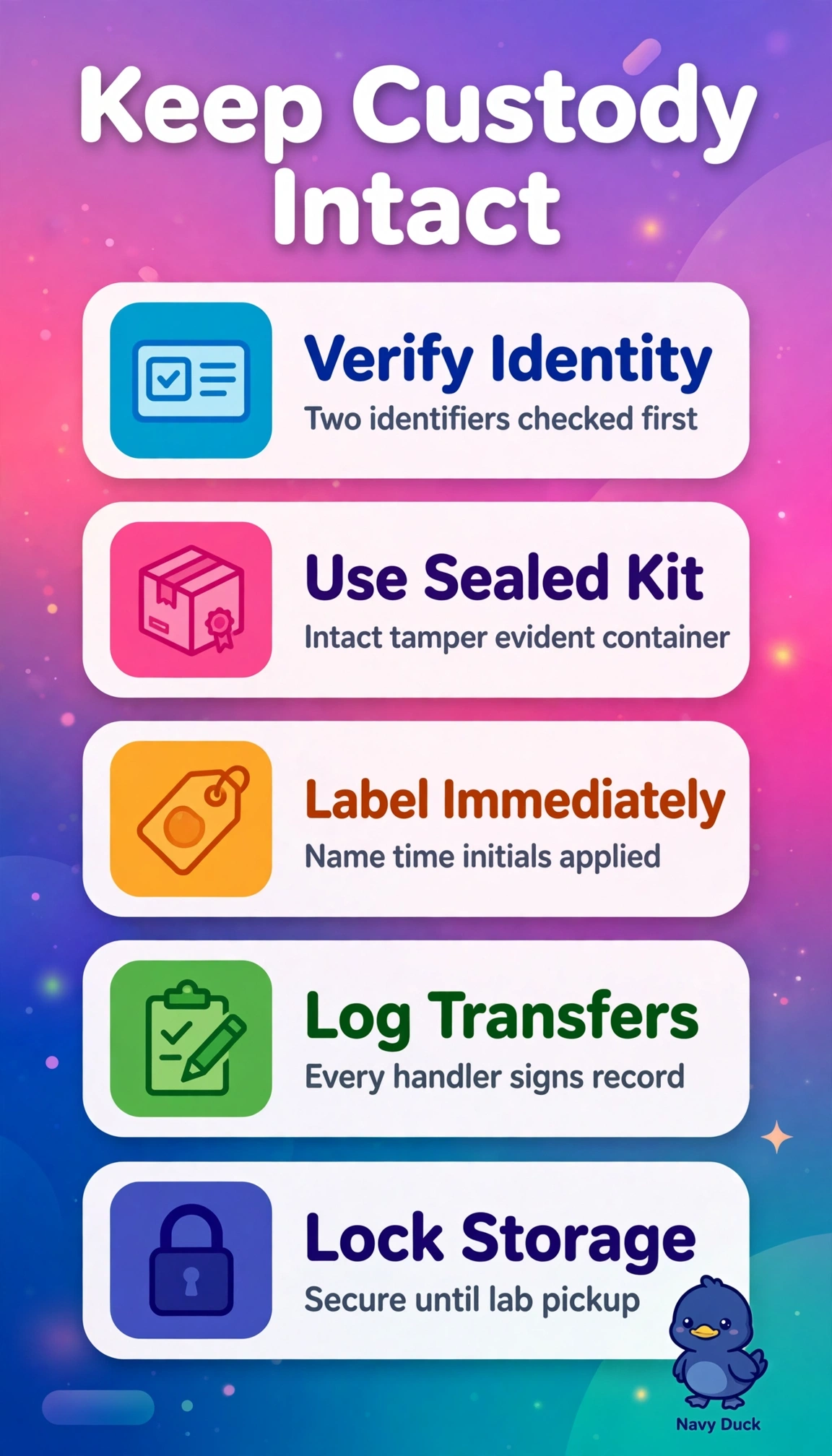
You’re keeping the patient’s identity and the specimen’s history connected from collection through handoff. A sealed kit, observed policy steps, labeling, and a secure log protect the chain of custody courts rely on.
Full Explanation
The practice that best preserves admissibility links the verified patient to a tamper-evident specimen through policy-based observed collection and continuous documentation. In a busy department with a shared bathroom and police waiting, clear instructions, a sealed kit, immediate labeling, and a secure log of every transfer help prevent substitution, misidentification, and custody gaps. A private routine void with instructions may suit ordinary clinical testing, but it does not meet forensic collection requirements for observed policy steps. Sending a specimen collected with observed steps through the routine lab process without a forensic log breaks traceability: the collection alone cannot document each handoff, its time, or who received it. Relying on police identification instead of verifying identity through staff procedures weakens the link between the patient and specimen, even if every transfer is logged. An exam caveat is that urgency or an officer’s presence does not replace staff observation and documentation. As a practical check, confirm the patient identity matches the specimen label, the seal is intact, and the next custodian signs for receipt before you leave the bedside.