
A technician must move a 180-pound adult patient with a left-leg non-weight-bearing order from bed to chair using a full-sling mechanical lift with a nurse and a gait belt available. The patient can sit at the edge but cannot stand on the left leg. Which transfer method should the technician use for safe non-weight-bearing movement?
Select an answer to reveal the explanation.
Short Explanation
You match the tool to the weight-bearing order, not to strength or speed. The lift protects the limb, skin, and both backs.
Full Explanation
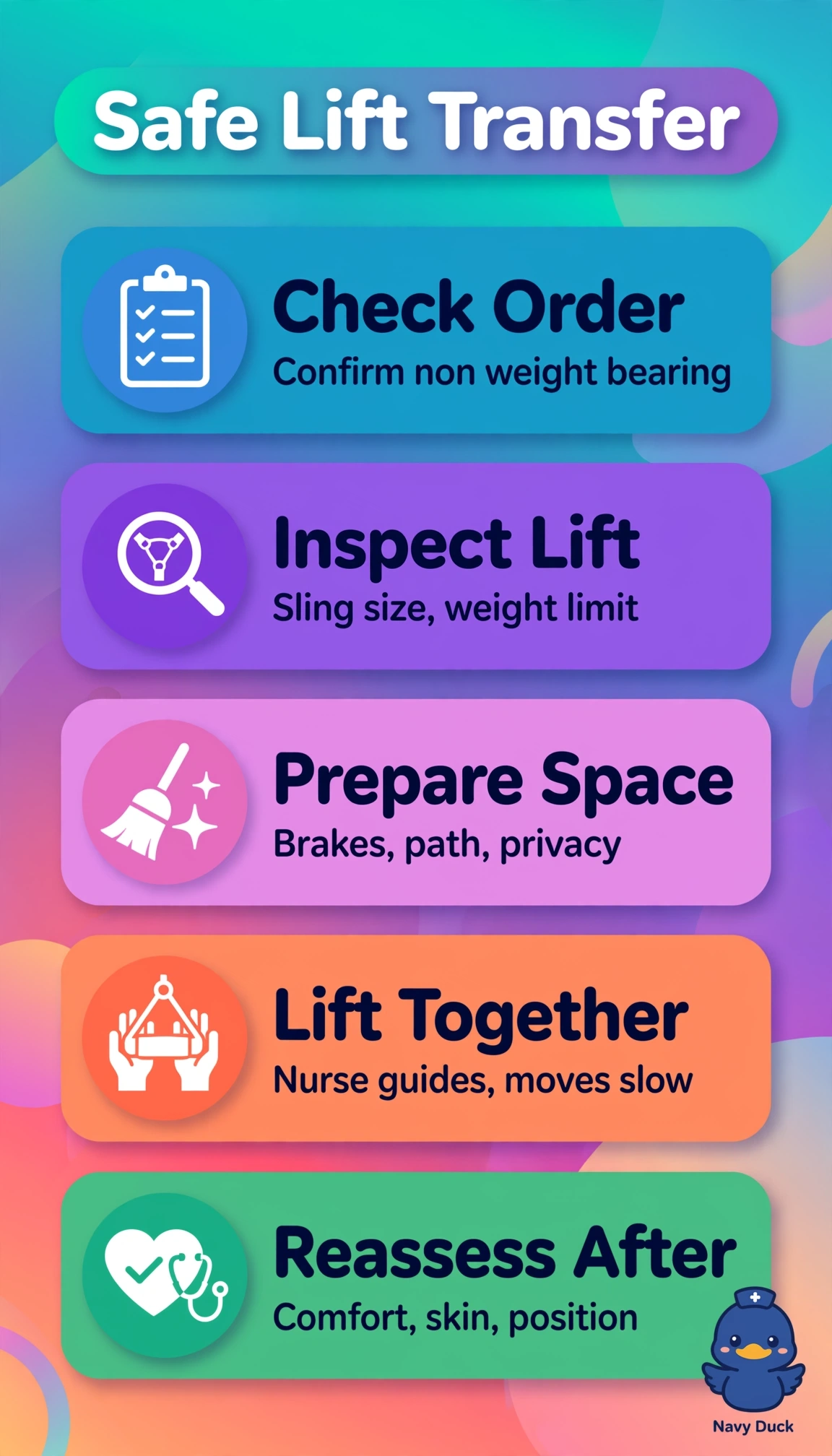
The correct approach reflects safe handling for a 180-pound adult with strict left-leg non-weight-bearing moving bed to chair because full-sling support eliminates leg loading, nurse guidance provides clinical oversight, and sling checks verify size, symmetrical connections, weight capacity, and limb clearance to prevent falls and shear. A nurse-supervised stand-pivot bearing weight on the right leg is common for patients with one reliable leg, but it fails on weight-bearing logic because stand-pivot requires dependable standing balance and controlled loading, which is unsafe when the patient cannot stand and must keep the left leg completely unloaded, risking buckling and falls under heavy load. A careful two-person manual lift with gait belt support is routine for light cooperative patients, but it fails on load safety and equipment selection because 180 pounds exceeds safe manual limits and manual handling cannot guarantee zero force through the affected leg while endangering staff. A stand-assist lift with guidance and checks appears compliant, but it fails on device matching because stand-assist equipment demands active weight bearing and participation, opposite to the total dependence provided by a full sling for non-weight-bearing status. An exam caveat is that sitting at the edge does not equal standing ability and does not override an explicit full-sling order. A practical check is to lock wheels, confirm sling rating and even loop seating, lift just clear to recheck comfort and left-leg clearance with the nurse before completing movement.