
A PCT admits an adult with a similar name to another patient on a busy unit, with wristband, chart labels, and hourly rounding needed, and the patient worries about call-light response and feeling heard. Which action best reflects Joint Commission safety goals with CLSI and HCAHPS expectations?
Select an answer to reveal the explanation.
Short Explanation
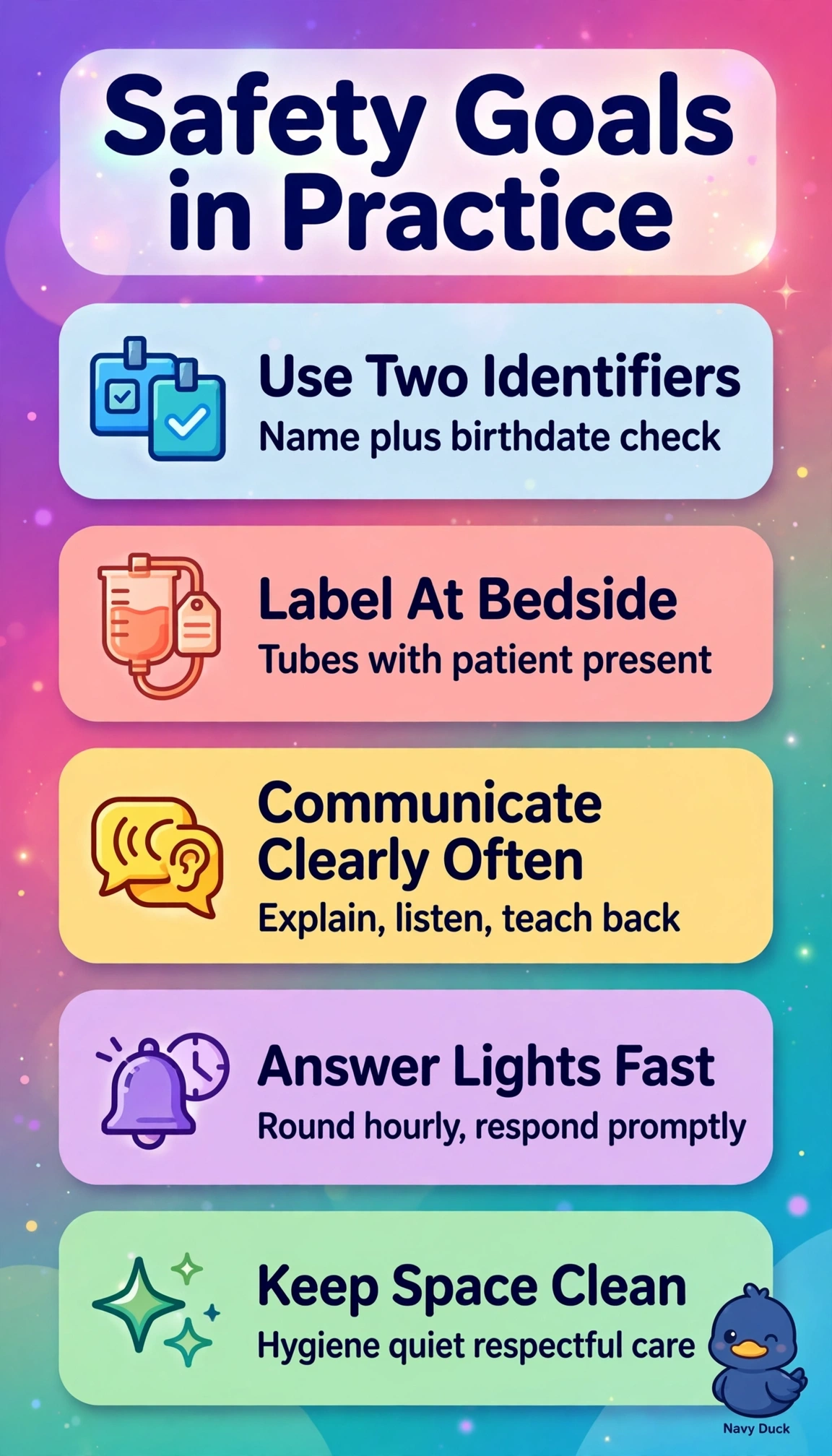
You build safety and trust with double-checks and quick kindness. Safe care pairs accuracy with courtesy — identifiers plus bedside labeling and responsive talk lift outcomes.
Full Explanation
The correct response integrates three complementary standards required for a similar-name admission on a busy unit: Joint Commission safety goals require at least two person-specific identifiers such as full name and birth date, never room or bed number, with matching wristband and chart labels, CLSI standards require labeling specimens in the presence of the patient at the bedside after positive identification to prevent mix-ups, and HCAHPS expectations require clear communication, listening, and prompt call-light response so the patient feels heard. The choice using room number as the second identifier fails on identification because room number is transient and unsafe, especially with similar names, even though bedside labeling and responsiveness are preserved. The choice labeling specimens at the nurses station fails on collection safety because away-from-bedside labeling violates CLSI presence requirements and creates swap risk when similar names coexist, even though two identifiers and communication are preserved. The choice saving detailed updates until shift change fails on patient-centered responsiveness because deferring explanations does not meet listening and promptness domains, even though identification and bedside labeling are preserved. Exam caveat: when a stem combines similar names, bedside labeling, and worry about being heard, select the response satisfying all safety and experience domains rather than one strong in only one domain. Practical check: have the patient state name and birth date, match to wristband and requisition, label immediately at bedside, explain each step, and confirm how to get prompt help.