
An older adult with limited mobility has been in bed for several hours in long-term care, reports tailbone soreness, has intact skin with a warm reddened sacral area, and is incontinent of urine. The technician performs skin care and reports findings. Which skin assessment description correctly identifies early pressure injury staging?
Select an answer to reveal the explanation.
Short Explanation
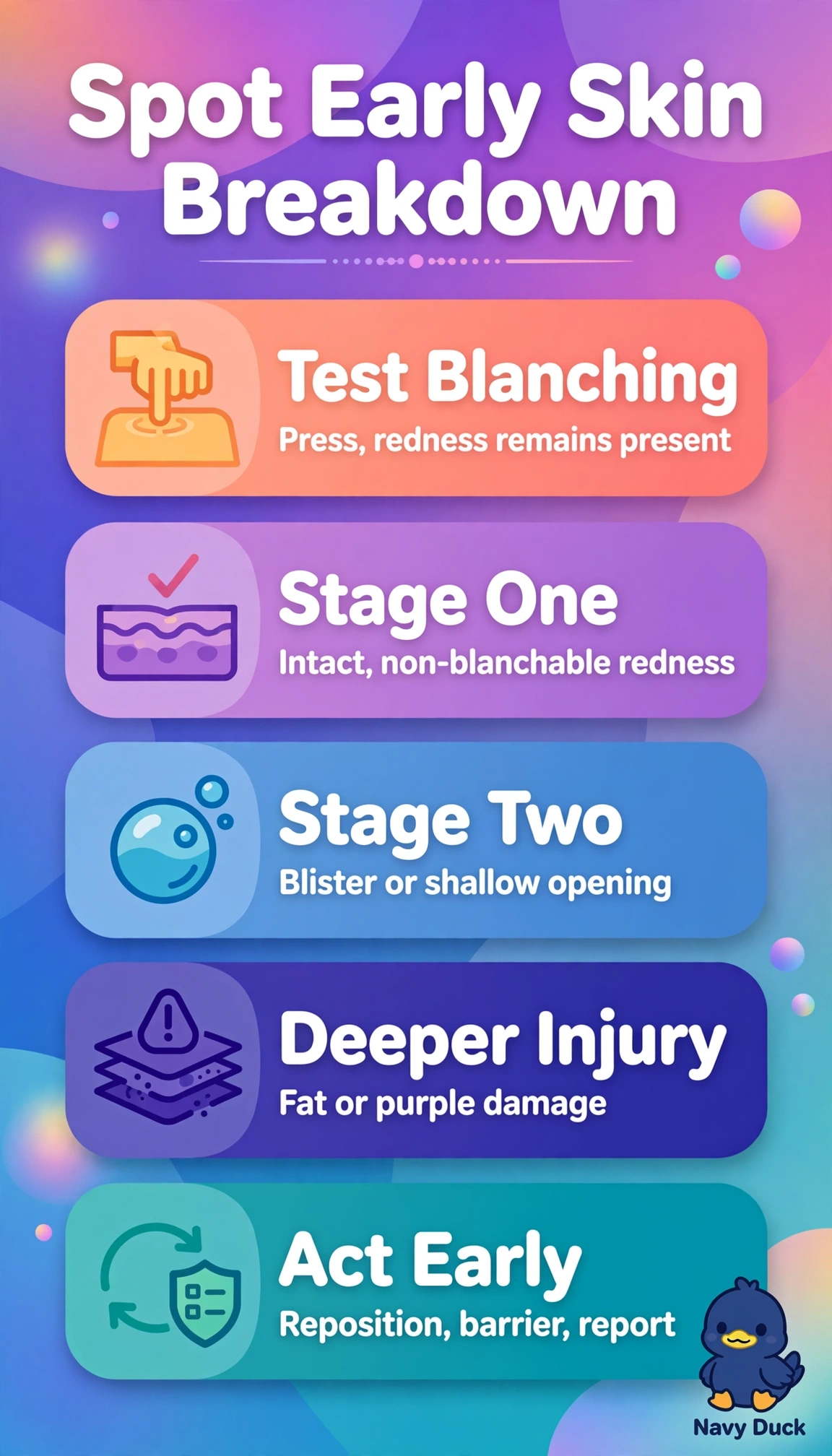
You’re catching trouble while the skin is still closed. Pressing and watching for that stay-red spot tells the story. That blanching test separates early pressure injury from simple irritation.
Full Explanation
Early pressure injury staging hinges on skin integrity and tissue exposure, where stage 1 is intact skin with non-blanchable erythema, stage 2 is partial-thickness loss with exposed dermis or blister, stage 3 involves full-thickness loss with visible fat, and suspected deep tissue injury shows purple or maroon intact skin or blood blister. Documenting intact non-blanchable sacral redness as suspected stage 1 correctly applies blanch testing and pressure location with incontinence as a risk factor. An intact serum-filled blister represents stage 2 partial-thickness injury, not stage 1, while a shallow open ulcer with visible fat indicates stage 3 full-thickness loss. Purple intact skin with blood blister suggests deep tissue injury, not stage 1 redness. Exam caveat: do not call every red area a pressure injury without pressure location and blanch response, and practical check: press the area, relieve pressure, provide gentle cleansing and moisture barrier, reposition, and report promptly.