
An alert long-term care resident refuses a scheduled shower, states a wish to remain in bed, and becomes upset when the PCT insists that the task must be done now for the unit routine. The resident asks to speak with the nurse supervisor about personal choice. Which response best applies the Patients' Bill of Rights and chain of command?
Select an answer to reveal the explanation.
Short Explanation
Choice comes first, even when the schedule feels tight. Honoring the refusal and looping in your supervisor protects dignity, a bit like pausing a playlist when someone asks for quiet.
Full Explanation
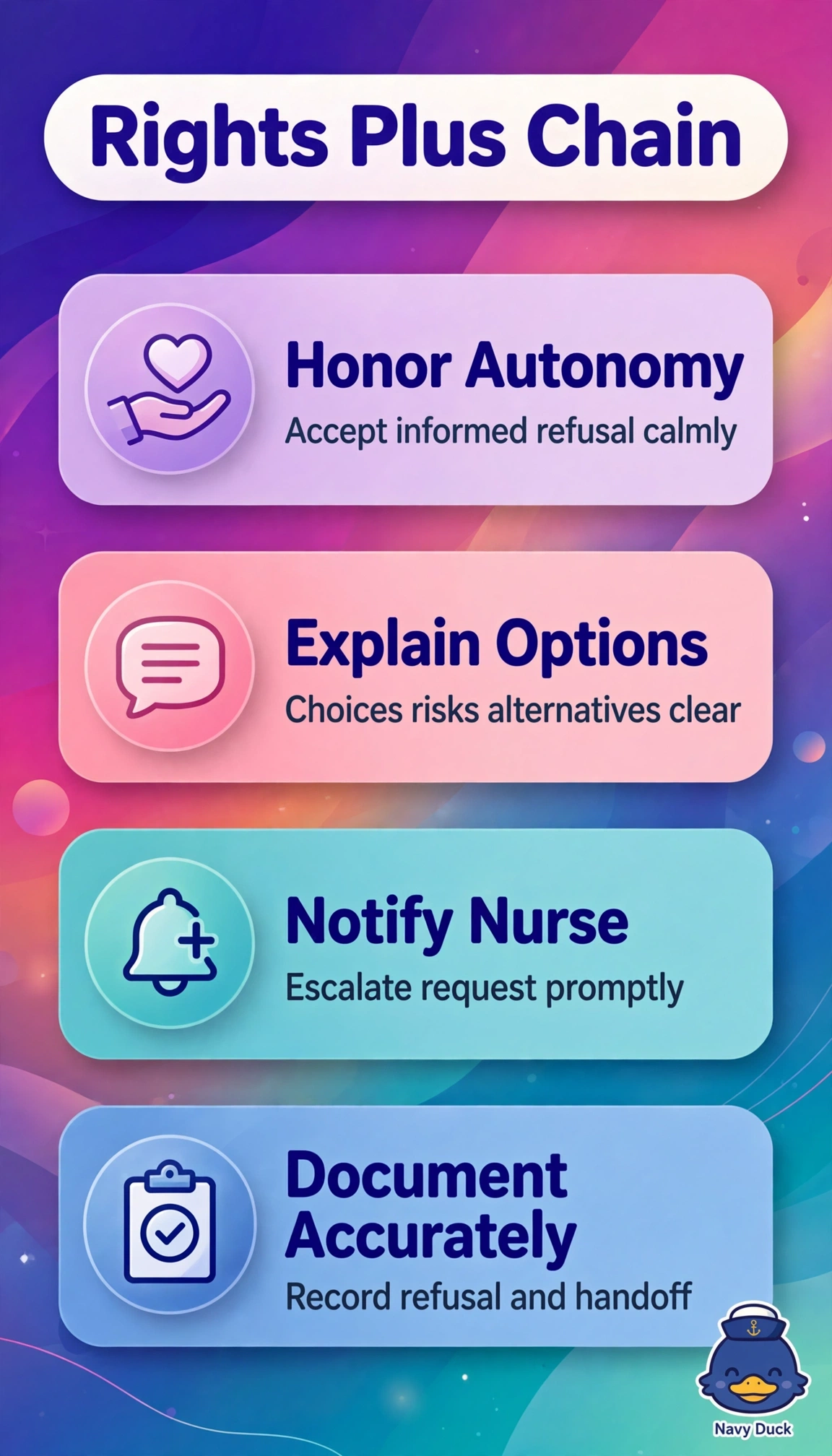
The correct response upholds autonomy under the Patients' Bill of Rights while following chain of command because an alert resident may refuse non-emergent care, requires information about choices to make an informed decision, and has explicitly requested supervisor review which the PCT must promptly convey without attempting to overrule. One distractor describing documentation and rescheduling without supervisor notification fails the chain-of-command concept because handling the request independently denies the resident the requested review and leaves the concern uncommunicated despite otherwise respectful care. Another distractor describing encouragement to accept the shower now before involving the supervisor fails the autonomy concept because continued persuasion after a clear refusal prioritizes unit routine and hygiene goals over the right to choose, even though encouragement and supervisor notification are otherwise appropriate. The remaining distractor describing prompt notification while deferring explanation until the next shift fails the informed-choice concept because it omits the PCT-level teaching and reassurance required at the time of refusal, even though respect and escalation are preserved. Exam caveat: when a question pairs rights with hierarchy, look for the answer that both preserves refusal and actively escalates as requested rather than substituting reassurance, delay, or independent problem-solving. Practical check: pause the task, validate feelings, briefly explain options including rescheduling and consequences, avoid insisting, relay the request to the nurse promptly, and document refusal, education, and notification accurately.