
At a crowded nurses station you need to update a post-procedure patient about discharge in a semi-private room where a visitor asks for the neighbor's diagnosis, the computer screen shows census data, and your phone holds a photo of a wound for education. Which HIPAA and PHI protection action best fits this situation?
Select an answer to reveal the explanation.
Short Explanation
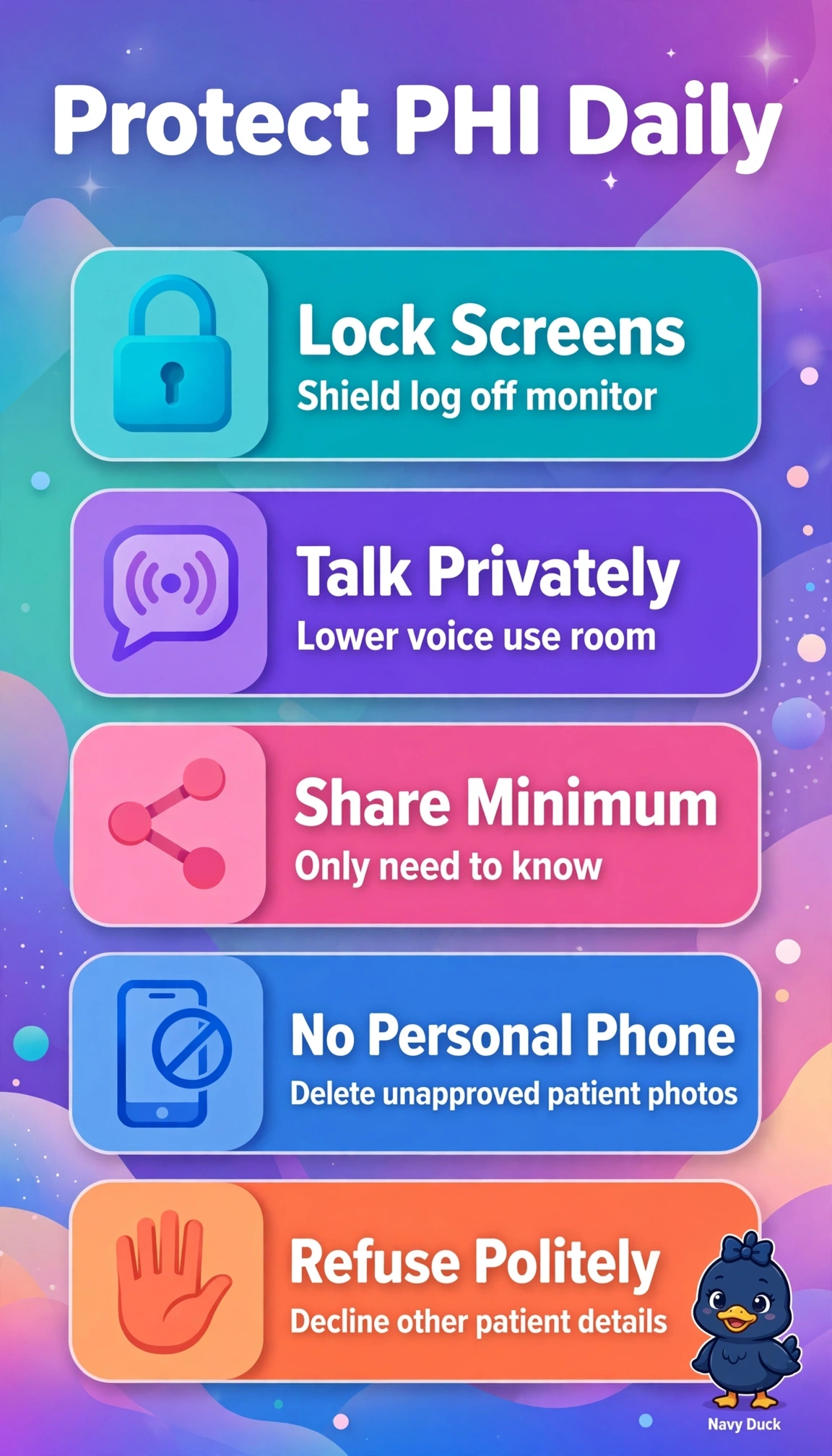
You’re protecting privacy when the unit feels anything but private. Shielding the screen, moving the conversation, declining the visitor’s request, and deleting the photo keeps confidentiality intact while you teach safely.
Full Explanation
The action that shields the census screen, moves discharge discussion to a private location, declines the visitor’s request for the neighbor’s diagnosis, and deletes the personal-phone wound photo applies reasonable HIPAA safeguards to each exposure. A brief neighbor update still discloses PHI; visitor concern does not authorize release, and only the involved care team may share information with patient permission, using the minimum necessary. Teaching behind curtains fails to provide acoustic privacy: curtains offer visual separation, but a roommate or visitors may hear the discussion. A locked personal phone is not necessarily an approved system with required encryption, access management, and audit controls, so keeping the wound image retains unsecured PHI; delete it and use institutional policy-approved media with consent. For exams, remember that incidental disclosure is acceptable only after reasonable prevention, not as planned sharing for efficiency or kindness. In practice, check who can see screens and hear conversations, lock screens, relocate sensitive discussions, politely deflect questions about other patients, and delete personal images in favor of secure media.