
A PCT in a rehabilitation unit is asked to apply a warm moist pack to a patient's knee and a cold pack to another patient's sprained ankle. The knee patient has reduced sensation from neuropathy, and the ankle patient has a small open blister near the site. Both want fast relief and ask for extra-hot or extra-cold packs. Which application plan best applies hot and cold therapies safely for these conditions?
Select an answer to reveal the explanation.
Short Explanation
You’re protecting skin that can’t protect itself — that’s excellent judgment. Barriers and time checks let temperature soothe without burning or chilling tissue.
Full Explanation
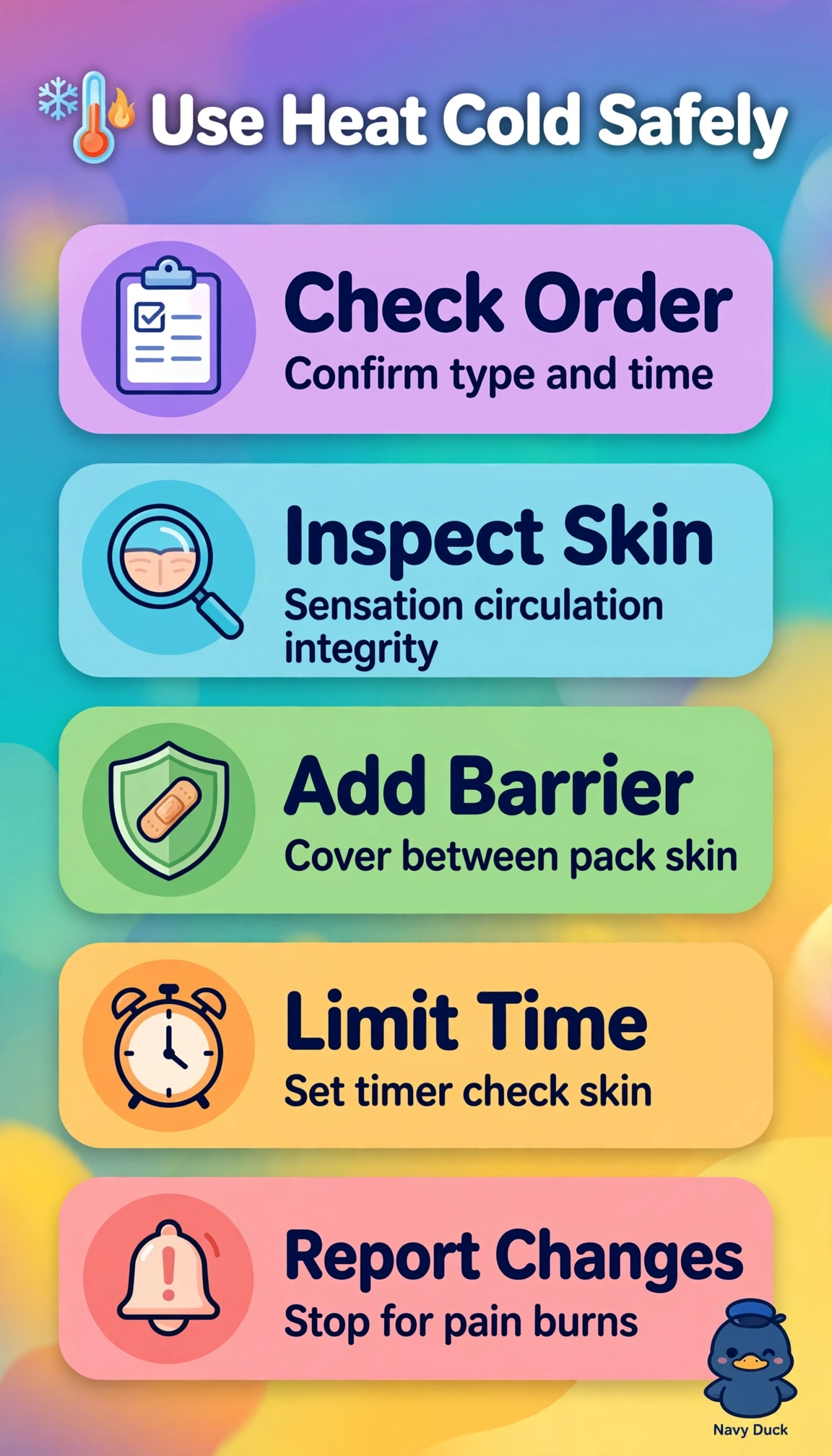
The correct plan is safe because it verifies orders, screens sensation and skin, uses a protective barrier, limits temperature and time with scheduled rechecks, withholds heat where neuropathy blocks protective feedback and withholds cold from open blistered skin, and reports redness, pain, burning, numbness, pallor, or breakdown. The heat-contraindication approach fails by warming the neuropathic knee despite correct monitoring, remaining unsafe because impaired sensation prevents early burn warning while heat increases tissue demand without reliable feedback. The cold-contraindication approach fails by icing the ankle over the open blister, remaining unsafe because cold causes vasoconstriction and impairs healing while moisture and pressure on broken skin increase maceration and infection risk. The surveillance-omission approach fails by making correct withhold decisions but using only a barrier without timed rechecks, missing progressive injury because thermal injury evolves during exposure and requires timely interruption. As an exam caveat, requests for extra-hot or extra-cold never override contraindications, temperature limits, placement, or timing. As a practical check, confirm the order, assess sensation and skin, ensure a cover, set a timer, inspect color and ask comfort each interval, keep heat off insensate areas and cold off open areas, and stop and report blistering, mottling, severe pain, or non-blanching redness.