
A PCT must prepare a 68-year-old adult for a morning cholecystectomy and for a fasting abdominal ultrasound, with orders for NPO after midnight, surgical site marking, allergy review, and voiding before transfer. The patient ate a snack and wears jewelry and dentures. Which pre-operative and pre-diagnostic preparation should the PCT complete?
Select an answer to reveal the explanation.
Short Explanation
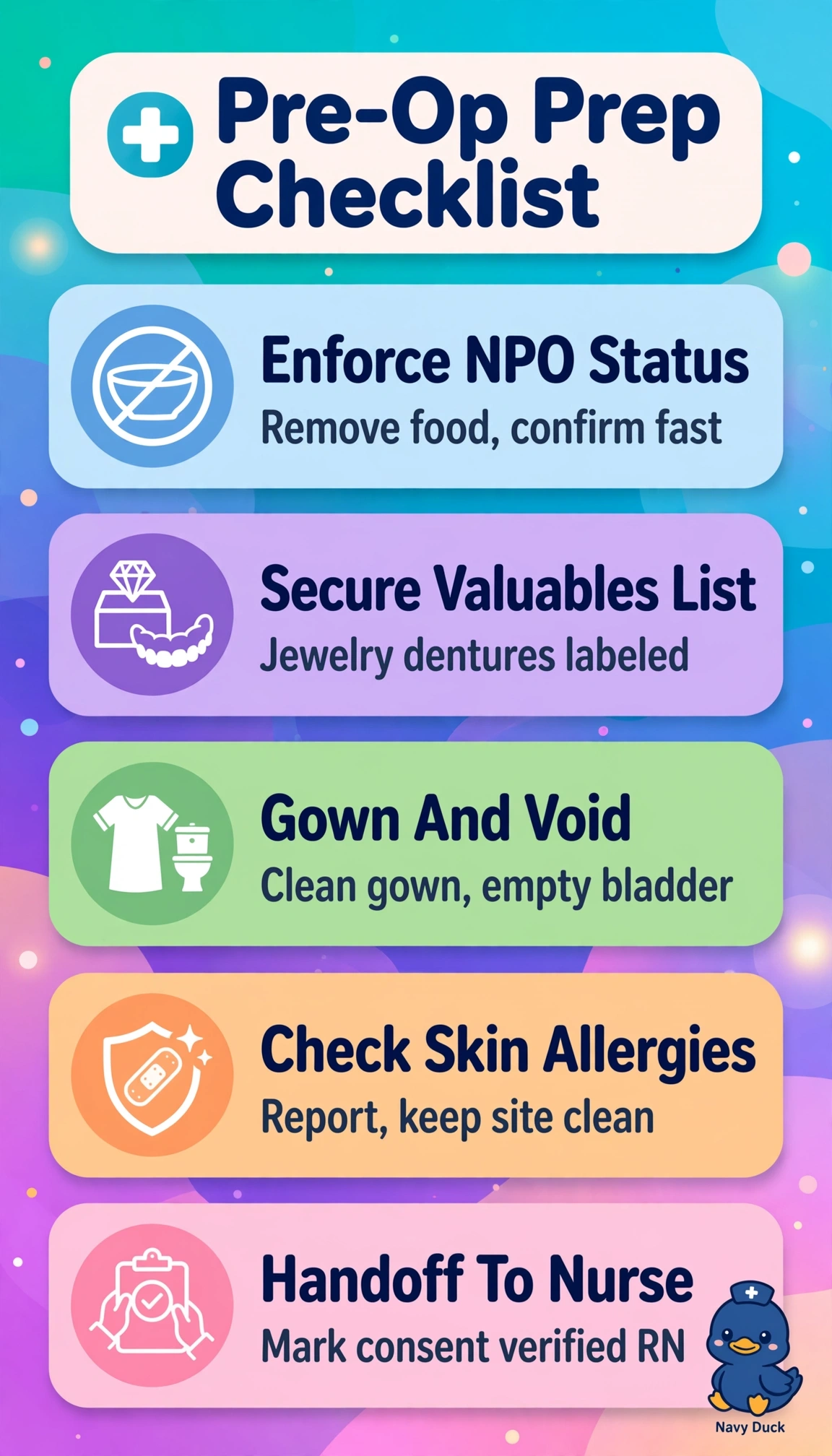
You can make the transfer safer by keeping the patient fasting and securing belongings and prostheses. NPO means no food or drink after midnight, and checking the gown and voiding helps ensure readiness for transfer.
Full Explanation
Reinforcing NPO and removing the snack supports both procedures: fasting after midnight reduces aspiration risk during anesthesia and helps preserve abdominal ultrasound accuracy. Secure jewelry and remove dentures according to the inventory so they are not lost or cause injury or airway obstruction. Verify that the patient has voided and is in a gown, and complete the ordered allergy review before transfer so the team can plan for medication, latex, or other allergy risks. Allowing small sips of juice fails the NPO requirement and may compromise anesthesia safety and imaging. Leaving dentures in place fails prosthesis management because dentures can become dislodged and cause injury or aspiration. Deferring allergy review fails pre-procedure verification because the team needs that information before transfer. An exam caveat: clear fluids, retaining dentures for communication, or completing documentation in holding may be appropriate in other circumstances, but not when these orders and fasting requirements apply. A practical check is to use two identifiers and a pre-transfer checklist for NPO status, allergies, valuables and prostheses, voiding, gown readiness, and the verified site mark; report any gap to the nurse.