
An adult who uses a wheelchair needs a weekly weight in a long-term care facility, cannot stand safely, wears a light gown, and has mild edema in the legs. The unit has a calibrated wheelchair scale available for use. Which weighing procedure ensures accurate weight using a wheelchair scale?
Select an answer to reveal the explanation.
Short Explanation
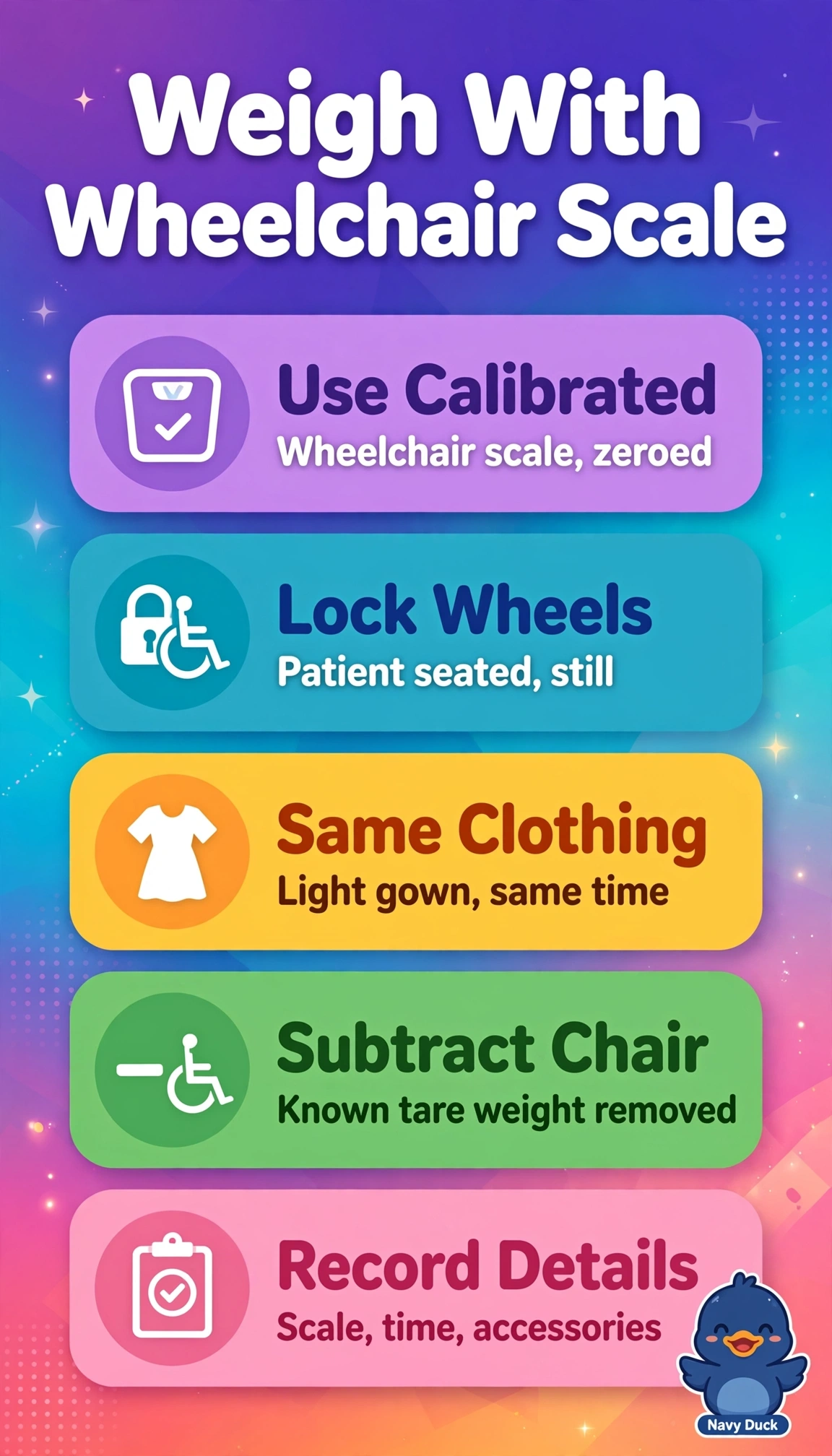
You want weights you can actually compare week to week. Same setup minus the chair keeps the trend honest. That consistency lets small fluid changes show up clearly.
Full Explanation
The correct procedure is accurate because it controls major variables while ensuring safety: the calibrated wheelchair scale avoids an unsafe standing transfer, weekly measurement in a light gown at a consistent time standardizes clothing and fluid-related variability important with mild leg edema, and using the same chair with its measured known weight subtracted consistently isolates true body-weight change from equipment weight. The manufacturer's-weight approach fails by the concept of taring because listed weights do not reflect the actual in-service chair with cushion, footrests, repairs, soil or modifications, so subtraction introduces systematic error that can mask important loss or gain; the chair itself must be weighed on the same scale. The street-clothes approach fails by the concept of standardization because variable garments, shoes, pockets and moisture add unpredictable weight that obscures trends and reduces sensitivity for fluid retention or nutritional decline, whereas a light gown minimizes and stabilizes textile weight. The monthly approach fails by the concept of ordered monitoring frequency because monthly weights suit stable long-term-care routines, yet this resident has a weekly order plus edema requiring closer surveillance, so less frequent measurement delays detection of diuretic response, cardiac exacerbation or malnutrition. An exam caveat is to verify every stem qualifier beyond a plausible scale and subtraction — ability to stand safely, exact frequency, gown versus clothes, same versus any chair, and measured versus listed tare — since one subtle element makes a sound routine wrong for this case. A practical check is to document the chair identifier and measured weight, zero the calibrated scale, weigh at the same time of day after voiding, note edema and intake, and reweigh the chair after any repair or accessory change.