
A bed-bound older adult with incontinence has persistent sacral redness that does not blanch with fingertip pressure, skin remains intact without blisters, and the area feels warm after prolonged pressure on a standard mattress. Which skin care identification and action should the PCT perform for early skin breakdown?
Select an answer to reveal the explanation.
Short Explanation
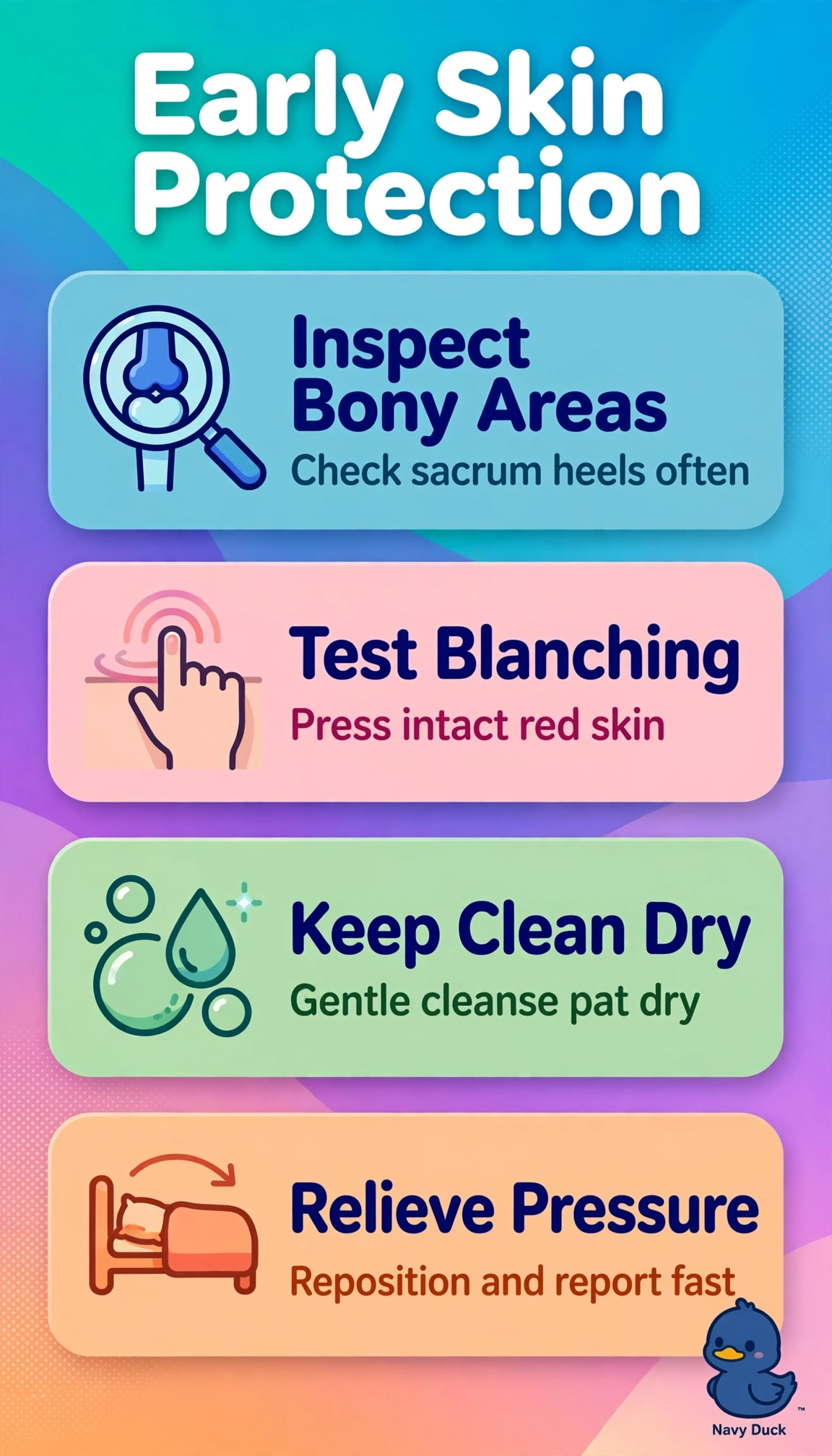
That stubborn pink that won't blanch is your early warning light. Keeping it clean, dry, and pressure-free while reporting stage 1 quickly can stop a small spot from becoming a deep wound.
Full Explanation
Persistent sacral warmth with intact redness that does not blanch with fingertip pressure after prolonged pressure on a standard mattress in a bed-bound incontinent older adult fits suspected stage 1 pressure injury, defined as intact skin with nonblanchable erythema signaling localized ischemia, so prompt reporting to the nurse with gentle skin care, prompt incontinence cleansing, patting dry, minimizing friction and pressure, and frequent repositioning is correct and within PCT scope. The choice describing suspected stage 2 with the same intact findings fails by staging concept because stage 2 requires partial-thickness loss with exposed dermis or an intact or ruptured serum-filled blister, which the stem explicitly excludes, so intact redness alone cannot be stage 2 even with correct gentle care. The choice describing blanchable pinkness as normal reactive hyperemia fails by perfusion concept because blanchable redness that fades quickly reflects normal capillary refill while persistent nonblanchable redness indicates tissue injury that will not resolve with routine turning alone and requires escalation. The choice that correctly names stage 1 but defers reassessment to the next weekly check fails by urgency concept because early breakdown with moisture and ongoing pressure needs immediate notification and protective interventions rather than routine surveillance. Exam caveat is to distinguish stage 1 redness from suspected deep tissue purple or maroon discoloration and to remember the PCT reports and describes findings rather than independently diagnosing or restaging. Practical check is to retest with light fingertip pressure, note pain, warmth, incontinence status, repositioning history and mattress type, then promptly notify the nurse while keeping the area clean, dry and offloaded.