
An RN asks a hospital PCT to help with a scheduled aseptic abdominal dressing change and then to remove a discontinued peripheral IV from a stable adult forearm with no complications, with a supply cart and sharps container available. Which combined assistance and removal technique should the PCT perform within scope?
Select an answer to reveal the explanation.
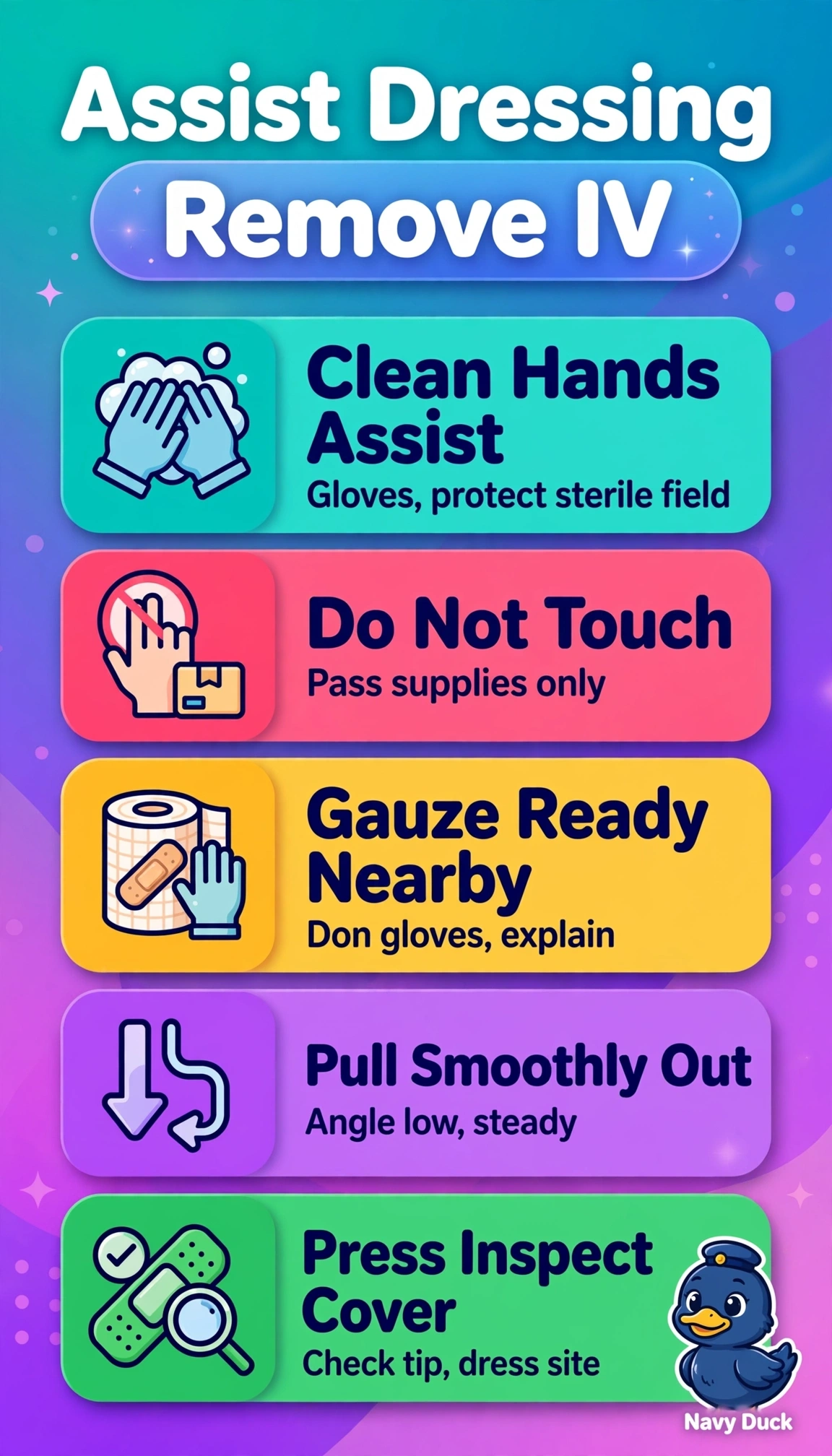
Short Explanation
You keep it clean and close vessels gently. Sterile help is like being a careful sous-chef — aseptic field stays untouched, then steady pressure seals the vein.
Full Explanation
The correct combined technique reflects PCT scope and safe peripheral IV removal: the PCT assists the RN with the aseptic abdominal dressing by maintaining hand hygiene and a clean field, preparing supplies, and following direction rather than performing the dressing independently, then for the discontinued uncomplicated peripheral forearm IV applies gauze pressure, withdraws the catheter smoothly at the insertion angle while maintaining pressure for hemostasis, and inspects the tip to confirm intactness with immediate sharps disposal and RN notification. The prepare sterile field and change abdominal dressing independently approach fails on delegation and scope because scheduled aseptic assessment, sterile technique, and care decisions require the RN while the PCT assists, even though its IV removal steps are correct. The withdraw smoothly without inspecting tip approach fails on safety and completeness because verifying an intact tip detects fracture, retention, or embolus risk and triggers escalation if incomplete, so omission makes otherwise correct care unsafe. The lay patient flat, withdraw on exhalation, apply occlusive dressing approach fails on device concept because supine positioning, exhalation coordination, and occlusive dressings are air-embolism precautions for central venous removal, not low-pressure peripheral IV where direct pressure and small adhesive dressing are indicated. For exams, distinguish assist versus perform, peripheral versus central/PICC, discontinued versus infusing, and uncomplicated versus phlebitis, infiltration, infection, or bleeding requiring RN assessment. As a practical check, verify discontinuation order and stable site, ensure gauze, tape, dressing, and sharps container at bedside, maintain pressure, show intact tip to RN, cover puncture, and report bleeding, tip integrity, and response.