
A PCT is assigned to a patient with new watery diarrhea testing positive for C. difficile and a roommate with a urinary catheter and a healing MRSA wound. The PCT must check vital signs in both beds, empty the catheter bag, and tidy the shared bathroom. Which infection-control sequence best reflects the chain of infection and precautions for common HAIs such as CAUTI, MRSA, and C. difficile?
Select an answer to reveal the explanation.
Short Explanation
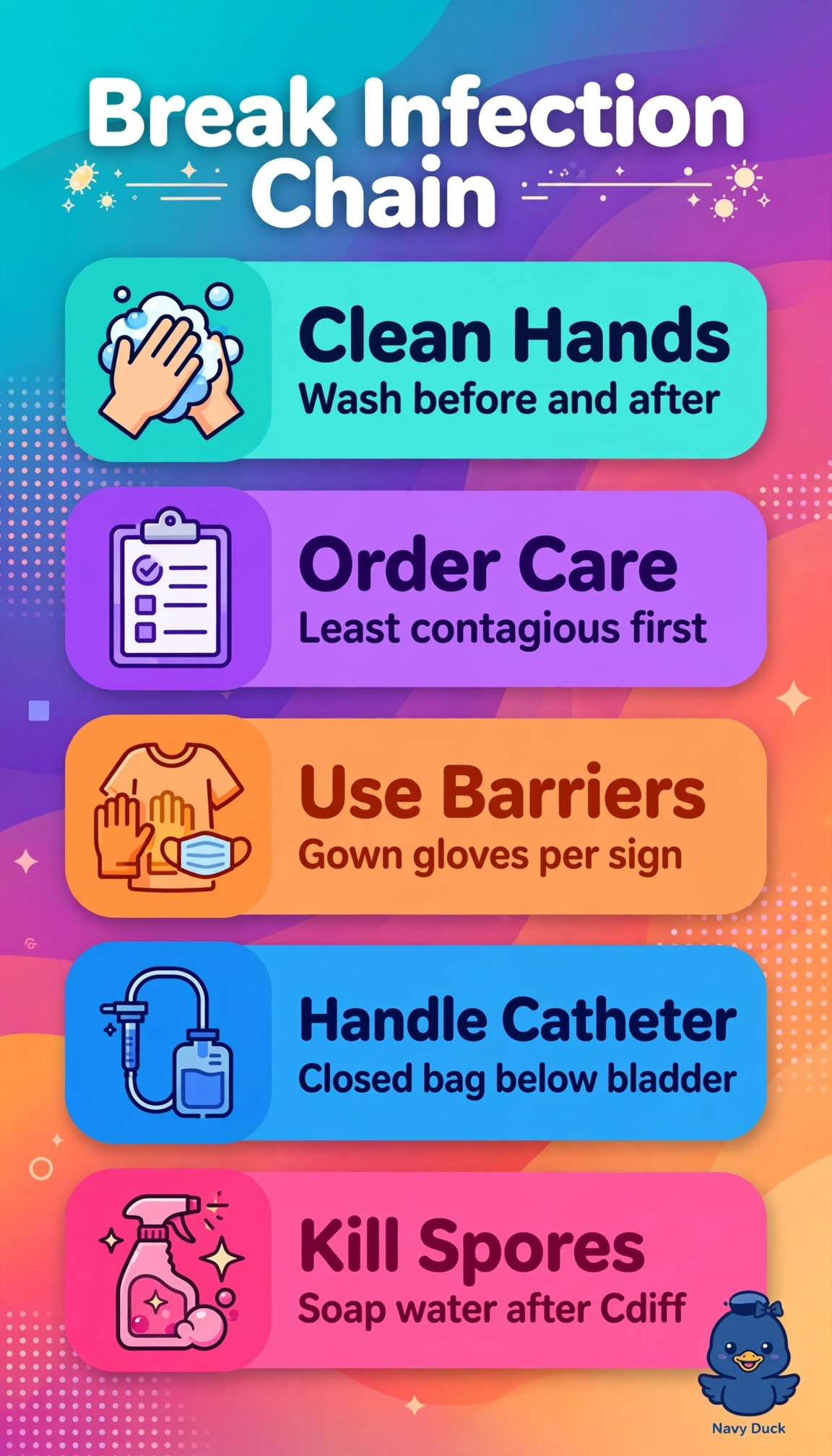
You’re breaking the germ relay at just the right links. Sequence plus soap-and-water after C. difficile stops spores from hitching a ride.
Full Explanation
The correct sequence applies chain-of-infection control by protecting the most susceptible host first, blocking transmission routes, and matching removal to pathogen biology, performing hand hygiene then caring for the catheter patient with healing MRSA wound first using standard plus contact precautions with gown and gloves, keeping closed drainage below bladder without loops or floor contact during emptying, changing PPE and hand hygiene between spaces and after bathroom tidying, then caring for the C. difficile diarrhea patient last with thorough soap-and-water handwashing because friction and rinsing remove alcohol-resistant spores. The diarrhea-first sequence fails susceptible-host protection and clean-to-contaminated workflow because even with contact precautions it carries spores to the catheter patient highly vulnerable to CAUTI and MRSA superinfection. The alcohol-rub-finish sequence fails pathogen-specific elimination because alcohol does not kill C. difficile spores and cannot substitute for soap and water after known contact, though appropriate for MRSA and routine CAUTI care. The standard-precautions-only diarrhea sequence fails transmission-based precautions because standard precautions alone do not contain fecal fomite spread, bathroom contamination, and wound colonization requiring gown, gloves, and dedicated equipment cleaning. An exam caveat is all choices mention hand hygiene and drainage to look correct, so focus on order, soap versus alcohol, and standard versus contact wording. A practical check is pausing at the curtain to confirm clean hands, fresh gown and gloves, dedicated equipment, bag below bladder, and planned soap wash after C. difficile contact.